
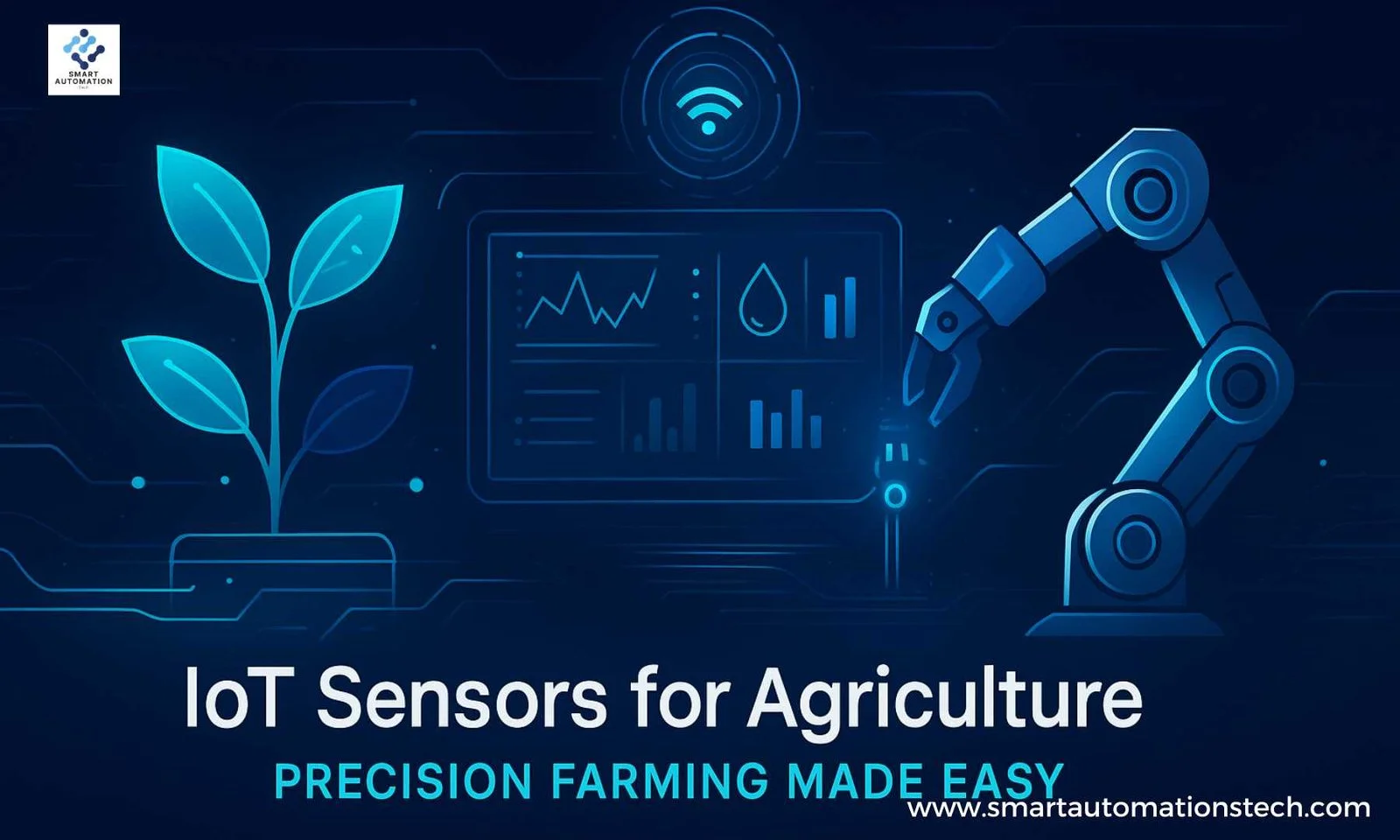
Agriculture is becoming smarter as farmers increasingly use technology to improve crop management and resource efficiency. One of the technologies making this possible is the Internet of Things (IoT).
IoT sensors for agriculture collect real-time information about soil, weather, water, and crop conditions. This information can help farmers understand what is happening in their fields and make better decisions at the right time.
Instead of depending only on manual observation, farmers can use connected sensors and digital platforms to monitor important farming conditions more efficiently.
What Are IoT Sensors for Agriculture?
IoT sensors are connected devices that collect information from their surroundings and send it to a central system or cloud platform.
In agriculture, sensors can monitor:
- Soil moisture
- Soil temperature
- Air temperature
- Humidity
- Soil pH
- Rainfall
- Water levels
- Light intensity
- Crop conditions
The collected information can be displayed through a computer dashboard or mobile application, allowing farmers to monitor their fields remotely.
How IoT Supports Precision Farming
Precision farming focuses on giving crops the resources they need based on actual field conditions.
For example, different areas of the same field may have different moisture levels. Instead of watering the entire field equally, farmers can use sensor information to identify areas that need more attention.
The basic process is:
Sense → Collect → Analyze → Decide → Act
This approach can help farmers use data alongside their experience to manage crops more effectively.
1. Smart Irrigation
Water management is one of the most useful applications of IoT in agriculture.
Soil moisture sensors can show whether the soil is becoming too dry or already contains enough moisture. This information can help farmers decide when irrigation is necessary.
When sensors are connected to automated irrigation systems, watering can become more responsive to actual soil conditions.
2. Soil Monitoring
Healthy soil is essential for good crop growth.
IoT systems can help monitor factors such as soil moisture, temperature, pH, and electrical conductivity. Tracking these conditions over time can help farmers understand how soil conditions change across different areas of a farm.
This can support better decisions about irrigation and other crop-management activities.
3. Weather Monitoring
Local weather conditions can have a major impact on crops.
IoT weather sensors can monitor temperature, humidity, rainfall, wind, and other environmental factors. Farmers can use this information to plan activities and respond to changing conditions.
Combining weather data with soil information can provide a more complete picture of what is happening in the field.
4. Crop Health Monitoring
IoT sensors can help identify changes that may indicate crop stress.
For example, unusual moisture, temperature, or humidity levels can alert farmers to inspect a particular area more closely.
Advanced systems can combine IoT sensors with cameras, drones, and artificial intelligence to support crop monitoring and identify potential problems earlier.
5. Better Resource Management
Farming requires careful management of water, fertilizer, energy, and labor.
IoT data can help farmers understand where resources are being used and where adjustments may be needed.
The goal is not simply to use fewer resources. It is to use them more precisely and efficiently.
Benefits of IoT Sensors in Agriculture
Some key benefits include:
- Real-time field monitoring
- More informed irrigation decisions
- Better resource management
- Faster identification of changing conditions
- Remote access to farm data
- Improved record keeping
- Support for automated farming systems
- Better decision-making through data
Challenges of Agricultural IoT
IoT technology also comes with some challenges.
The initial cost of sensors and connected equipment can be significant. Farms in remote areas may also face connectivity problems. Sensors require proper installation, calibration, and maintenance to provide reliable information.
Data security is another important consideration because connected farming systems can collect and transmit valuable information.
Farmers may also need training to understand sensor data and use digital platforms effectively.
The Future of IoT in Agriculture
The future of smart farming will likely involve IoT working together with artificial intelligence, drones, robotics, satellite imagery, and automation.
For example, sensors could monitor soil conditions while AI analyzes the information and automated equipment responds to specific field requirements.
This combination could make farming more data-driven while allowing farmers to focus on important decisions and overall farm management.
Conclusion
IoT sensors for agriculture are helping transform traditional farming into a more connected and data-driven process. By monitoring soil, weather, water, and crop conditions, these sensors can give farmers useful information when they need it.
When IoT is combined with AI, analytics, and automation, it can support smarter irrigation, better resource management, and more efficient precision farming.
The future of agriculture will not depend on technology alone. The strongest results will come from combining smart technology with farmer knowledge and practical experience.
Frequently Asked Questions
1. What are IoT sensors used for in agriculture?
IoT sensors monitor soil moisture, temperature, humidity, weather, water levels, and other conditions to help farmers make data-driven decisions.
2. How do IoT sensors improve precision farming?
IoT sensors provide real-time field data, allowing farmers to manage irrigation, resources, and crop conditions more accurately.
3. Can IoT sensors help reduce water usage?
Yes. Soil moisture sensors can show when crops need water, helping farmers avoid unnecessary irrigation and use water more efficiently.
4. What is the future of IoT in agriculture?
IoT is expected to work increasingly with AI, drones, robotics, and automation to create smarter and more efficient farming systems.


