

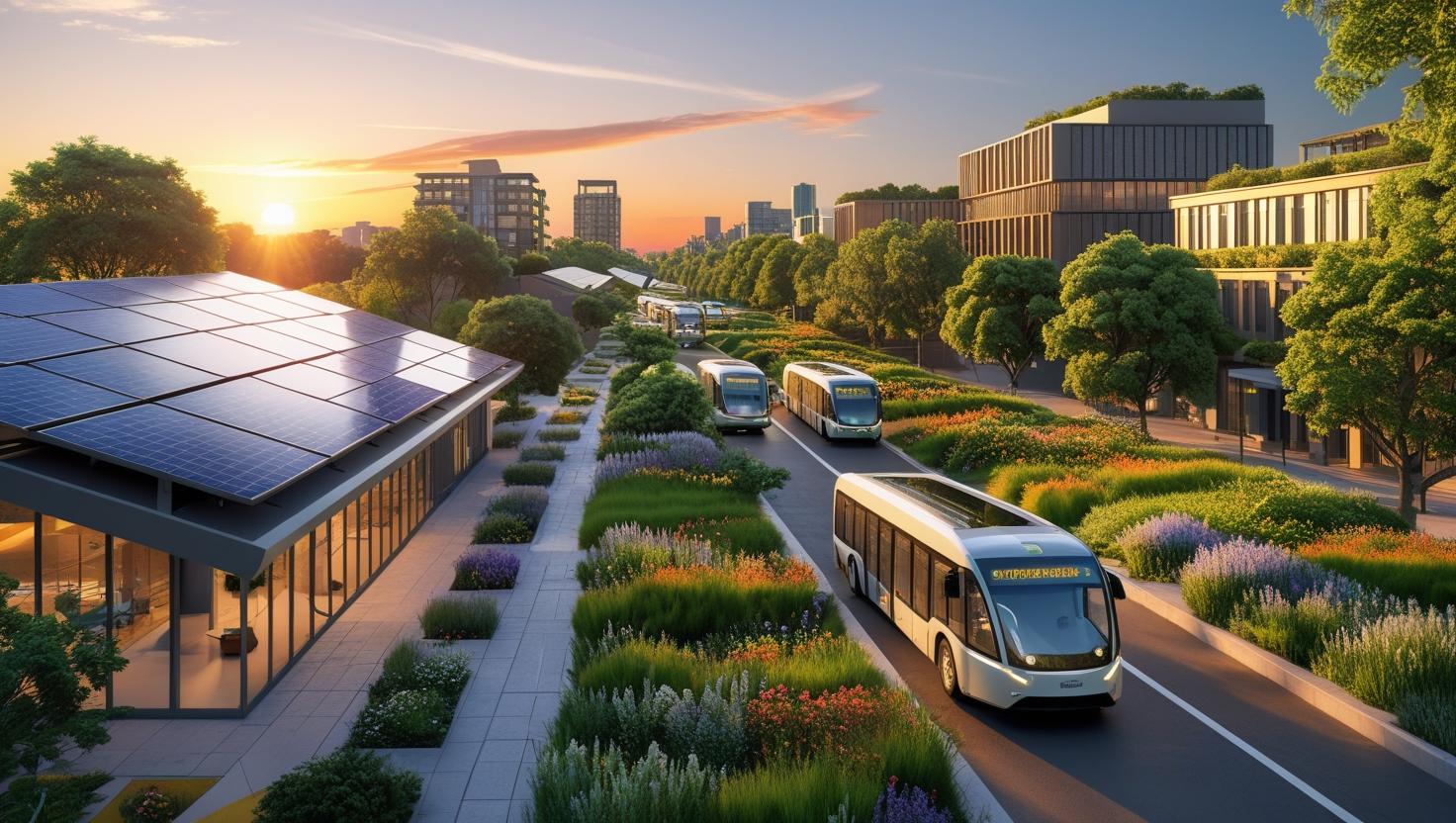
Cities are growing faster than ever. More people are moving into urban areas, increasing the demand for energy, transportation, housing, water, and other essential services. At the same time, cities are dealing with pollution, traffic congestion, rising energy consumption, waste, and the effects of climate change.
This is where smart cities and the Sustainable Development Goals (SDGs) come together.
A smart city is not simply a city filled with connected devices and advanced technology. Its real purpose is to use technology, data, infrastructure, and sustainable practices to make urban life more efficient, resilient, and environmentally responsible.
Green technology is becoming an important part of this transformation. From renewable energy and intelligent transportation to smart buildings and automated waste management, cities are finding new ways to improve everyday life while reducing their environmental impact.
What Is a Smart City?
A smart city uses digital technologies and connected infrastructure to improve how urban services operate. Sensors, Internet of Things (IoT) devices, artificial intelligence, cloud platforms, automation, and data analytics can help city authorities understand what is happening across different parts of the urban environment.
For example, smart sensors can monitor traffic conditions, detect changes in air quality, track water usage, or identify problems with public infrastructure.
The goal is not technology for its own sake. The goal is to use technology to solve practical urban challenges.
A successful smart city can help improve:
- Energy efficiency
- Public transportation
- Waste management
- Water conservation
- Air quality monitoring
- Public safety
- Infrastructure management
- Citizen services
- Disaster preparedness
- Environmental sustainability
How Smart Cities Support the SDGs
The United Nations Sustainable Development Goals provide a global framework for addressing social, economic, and environmental challenges. Smart-city technologies can contribute to several of these goals, particularly those connected with sustainable communities, clean energy, responsible consumption, climate action, and resilient infrastructure.
SDG 11, which focuses on sustainable cities and communities, is especially relevant. As urban populations continue to expand, cities need infrastructure that can support people without placing unnecessary pressure on natural resources.
Technology can help cities make better decisions by providing real-time information about energy use, transportation, water consumption, waste generation, and environmental conditions.
However, technology alone cannot achieve the SDGs. Effective planning, responsible governance, public participation, accessibility, and long-term investment are equally important.
The Role of Green Technology in Smart Cities
Green technology focuses on reducing environmental impact while improving efficiency and resource management. When combined with smart-city infrastructure, it can create systems that are both digitally connected and environmentally sustainable.
1. Renewable Energy and Smart Grids
Energy is one of the biggest challenges for growing cities. Solar, wind, and other renewable energy sources can help reduce dependence on fossil fuels.
Smart grids can make energy management more responsive. Digital monitoring systems can track electricity demand and help balance supply and consumption.
For example, connected systems can identify periods of high demand and provide useful information for managing energy distribution. Buildings equipped with smart energy systems can also automatically adjust lighting, heating, cooling, and other functions according to occupancy and usage patterns.
This combination of renewable energy and intelligent management can help cities move toward cleaner and more efficient energy systems.
2. Smart and Sustainable Transportation
Transportation has a major influence on urban air quality, congestion, and energy consumption.
Smart transportation systems use data and connected technologies to improve how people and vehicles move through cities. Intelligent traffic signals can respond to changing traffic conditions, while real-time public transport information can help commuters plan journeys more efficiently.
Electric buses, electric vehicles, charging infrastructure, cycling networks, and improved public transportation can further support cleaner urban mobility.
The broader objective is to create transportation systems that are convenient for residents while reducing unnecessary emissions and congestion.
3. Energy-Efficient Smart Buildings
Buildings consume significant amounts of energy for lighting, cooling, heating, ventilation, and other operations.
Smart building technology can help reduce this consumption by using sensors and automation. Occupancy sensors, for example, can determine whether a room is being used and adjust lighting or climate controls accordingly.
Building management systems can also monitor energy performance and identify unusual consumption patterns.
When these systems are combined with efficient building materials and renewable energy, buildings can become an important part of a city’s sustainability strategy.
4. Smarter Waste Management
Traditional waste collection can be inefficient because collection vehicles may visit containers before they are full or after they have already overflowed.
Smart waste-management systems can use sensors to monitor container levels and provide information to collection teams. This allows routes to be planned according to actual demand rather than fixed schedules.
Automation and data analytics can also support recycling programs by helping cities understand waste-generation patterns.
Better waste management can reduce unnecessary vehicle movement, improve collection efficiency, and support cleaner neighborhoods.
5. Intelligent Water Management
Water resources are under pressure in many growing urban areas. Leaking pipelines, inefficient irrigation, and excessive consumption can result in significant water losses.
Smart water systems can use connected meters and sensors to monitor consumption and identify unusual patterns.
Early detection of leaks can help reduce water waste. Smart irrigation systems can also use environmental information to determine when watering is actually needed.
These technologies can help cities manage limited water resources more responsibly.
6. Using IoT for Environmental Monitoring
The Internet of Things is an important technology behind many smart-city applications.
Connected sensors can collect information about:
- Air pollution
- Temperature
- Noise levels
- Traffic
- Water quality
- Energy consumption
- Waste levels
- Weather conditions
This information can help city planners understand changing conditions and respond more quickly.
For example, air-quality sensors placed across different areas can provide detailed information about pollution levels. Authorities can use this data to identify patterns and investigate potential sources of pollution.
7. Artificial Intelligence for Smarter Urban Decisions
Artificial intelligence can turn large volumes of urban data into useful insights.
AI systems can identify patterns that may be difficult to detect manually. Cities can use predictive analytics to anticipate traffic demand, forecast energy requirements, identify infrastructure problems, or improve resource allocation.
AI can also support predictive maintenance. Instead of waiting for equipment or infrastructure to fail, cities can analyze operational data to identify signs of potential problems.
This approach can reduce downtime and help infrastructure teams plan maintenance more effectively.
8. Smart Green Spaces and Urban Sustainability
Technology does not have to replace nature. In a sustainable smart city, technology can help protect and manage natural spaces.
Connected irrigation systems can optimize water use in parks and gardens. Environmental sensors can monitor soil conditions, temperature, and moisture levels.
Cities can also use data to understand how green spaces are being used and where additional parks, trees, or recreational areas may be needed.
Urban greenery can contribute to healthier and more comfortable environments while supporting broader sustainability goals.
Benefits of Combining Smart Technology With Green Tech
The integration of digital and green technologies can provide several potential benefits for cities.
Improved Resource Efficiency
Real-time monitoring helps cities understand how resources are being consumed and where waste may be occurring.
Lower Environmental Impact
Renewable energy, efficient transportation, intelligent buildings, and better waste management can contribute to reducing environmental pressures.
Better Urban Services
Data-driven systems can help authorities improve transportation, water services, energy management, and infrastructure maintenance.
Faster Response to Problems
Connected sensors can identify issues more quickly, allowing relevant teams to respond before small problems become larger ones.
Greater Urban Resilience
Smart infrastructure can help cities prepare for and respond to environmental and infrastructure-related disruptions.
Challenges Smart Cities Need to Address
Although smart-city technology offers many opportunities, implementation is not always simple.
High Initial Investment
Installing sensors, communication networks, renewable-energy infrastructure, and smart systems can require significant investment.
Data Privacy and Security
Connected urban systems collect large amounts of information. Cities need strong cybersecurity and responsible data-management practices to protect systems and citizens.
Digital Inequality
Not everyone has equal access to digital technology. Smart-city programs should avoid creating systems that benefit only people with strong digital access.
Integration Problems
Different technologies and platforms may not always communicate effectively. Interoperability is important when cities are connecting systems from multiple vendors.
Maintenance and Long-Term Planning
Smart infrastructure needs ongoing maintenance, software updates, security management, and skilled professionals. A smart-city project should therefore be designed with long-term operational requirements in mind.
What the Future of Smart Cities Could Look Like
The future city will likely involve greater interaction between physical infrastructure and digital systems.
Buildings may automatically optimize their energy consumption. Public transportation networks may respond dynamically to demand. AI systems may help identify infrastructure problems before they become major failures. Renewable-energy systems may become increasingly integrated with intelligent energy management.
At the same time, sustainability should remain at the center of this transformation.
A city should not be considered smart simply because it has more sensors or connected devices. A truly sustainable smart city uses technology to create measurable improvements in resource efficiency, environmental performance, accessibility, resilience, and quality of life.
Final Thoughts
The connection between smart cities and SDGs represents an important opportunity to rethink how urban areas grow and operate.
Green technology, IoT, artificial intelligence, renewable energy, automation, and data analytics can help cities address complex challenges. But successful transformation requires more than installing new technology. It requires thoughtful planning, responsible data use, sustainable infrastructure, public participation, and long-term commitment.
As urban populations continue to grow, the cities that combine technological innovation with environmental responsibility can create more efficient and resilient systems for the future.
Frequently Asked Questions
1. What is a smart city?
A smart city uses technologies such as IoT, artificial intelligence, sensors, automation, and data analytics to improve urban services, manage resources efficiently, and create a more sustainable environment for residents.
2. How does green technology support smart cities?
Green technology helps smart cities reduce environmental impact through renewable energy, energy-efficient buildings, electric transportation, smart waste management, water conservation, and intelligent resource monitoring.
3. How do smart cities contribute to the Sustainable Development Goals?
Smart cities can support several Sustainable Development Goals by improving energy efficiency, transportation, waste management, water use, infrastructure, environmental monitoring, and access to sustainable urban services. SDG 11 is particularly relevant because it focuses on sustainable and resilient cities and communities.
4. What technologies are commonly used in sustainable smart cities?
Common technologies include Internet of Things (IoT) sensors, artificial intelligence, cloud computing, automation, smart grids, renewable energy systems, intelligent transportation platforms, connected water systems, and data analytics.


