
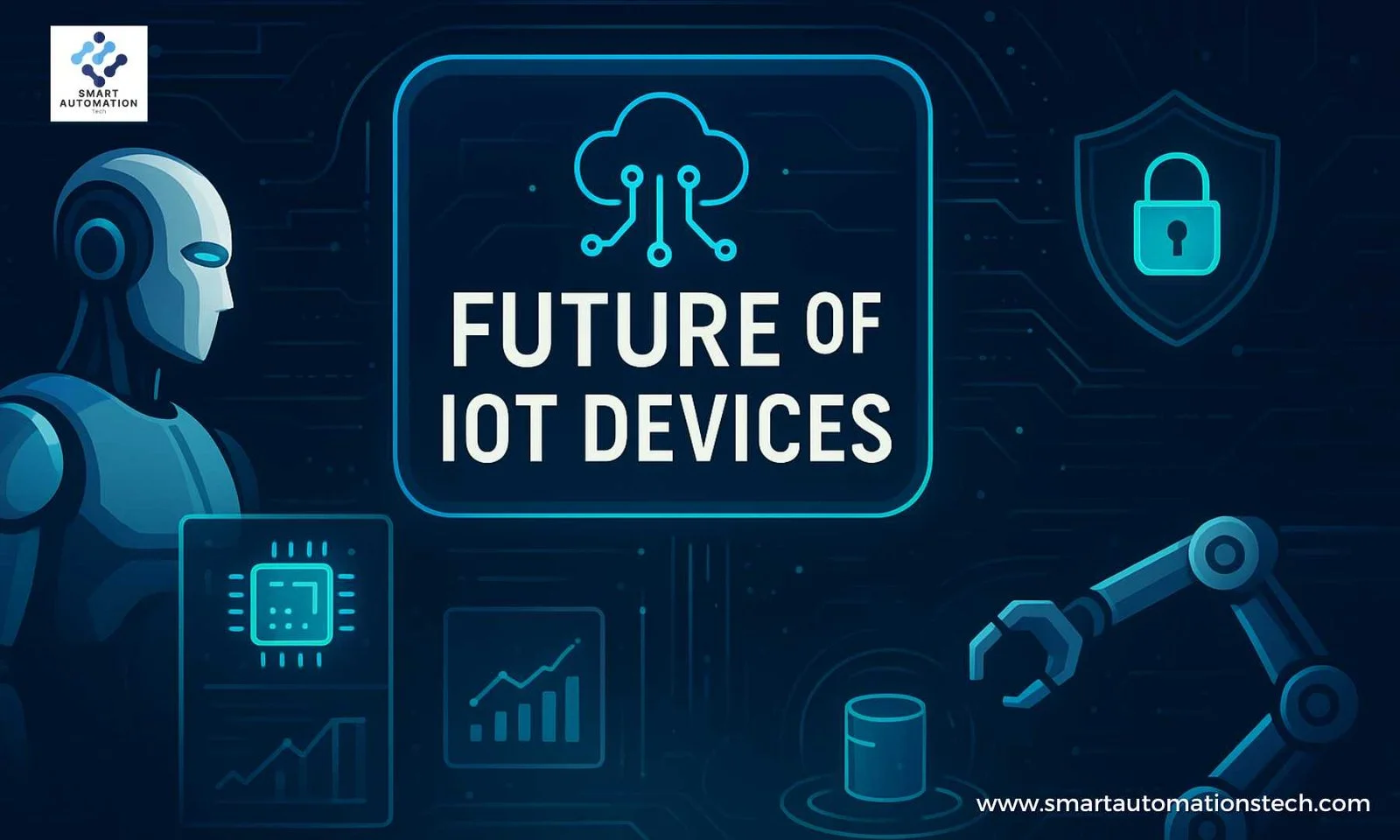
The way we use technology is changing quickly. Devices that once worked independently are now becoming connected, sharing information, and responding to what is happening around them. This shift is largely being driven by the Internet of Things (IoT).
From smart watches and home appliances to connected cars, factory equipment, and healthcare devices, IoT is becoming part of everyday life. But the future of IoT is not simply about connecting more devices. It is about making those devices more useful, intelligent, secure, and capable of working together.
As artificial intelligence, edge computing, advanced connectivity, and cloud technology continue to develop, the next generation of IoT devices could change how businesses and consumers interact with technology.
What Are IoT Devices?
IoT devices are physical objects that can connect to a network and exchange information. They typically use sensors, software, processors, or communication technologies to collect and share data.
A smart thermostat, for example, can monitor temperature and adjust settings automatically. Similarly, an industrial sensor can monitor a machine and provide information about its condition.
Common examples of IoT devices include:
- Smart home appliances
- Fitness trackers and smart watches
- Connected vehicles
- Industrial sensors
- Smart energy meters
- Healthcare monitoring equipment
- Agricultural monitoring systems
- Smart city infrastructure
The important part is not just the device itself. The real value comes from the data it collects and how that information is used.
IoT Is Becoming More Intelligent
Earlier IoT systems were often designed to collect data and send it somewhere for analysis. Today, connected devices are becoming capable of doing much more.
Artificial intelligence can help IoT systems identify patterns, detect unusual activity, and support automated decisions. This combination is sometimes referred to as AIoT, or AI-powered IoT.
For example, a factory sensor could notice that a machine is behaving differently from normal. Instead of waiting for the equipment to fail, the system could alert maintenance teams that something may need attention.
This kind of intelligence can make IoT more practical for real-world applications.
Edge Computing Will Bring Data Processing Closer
Sending every piece of IoT data to a distant cloud server is not always practical. Some applications need information to be processed almost immediately.
This is where edge computing becomes useful.
Edge computing allows certain data-processing tasks to happen closer to where the data is generated. A connected vehicle, factory machine, or security system can therefore process important information locally instead of sending everything to the cloud first.
This approach can help reduce delays and unnecessary data transfers. Cloud platforms will still play an important role, but future IoT environments are likely to combine cloud and edge computing rather than relying entirely on one approach.
Better Connectivity Will Support More IoT Applications
IoT depends heavily on reliable connectivity. As networks improve, businesses can connect devices across larger environments and support applications that require faster communication.
5G is one part of this development, particularly for applications that need low latency and reliable connectivity. However, it is not the only technology involved.
Wi-Fi, Bluetooth, cellular networks, and low-power connectivity technologies will continue to serve different IoT requirements.
The future will therefore involve choosing the right connectivity technology for each use case rather than expecting one network to handle everything.
IoT Security Will Become Even More Important
Connecting a device to the internet can create new security risks. A vulnerable smart device may provide an attacker with a pathway into a larger network.
As organizations deploy more connected equipment, security needs to be considered from the beginning.
Important areas include:
- Device authentication
- Secure communication
- Encryption
- Software and firmware updates
- Access management
- Network monitoring
- Vulnerability management
Security should not stop once an IoT device is installed. Devices need to be monitored and maintained throughout their operational life.
Smart Homes Are Moving Beyond Remote Control
Smart home technology has already made it possible to control lights, cameras, appliances, and thermostats through mobile applications. The next stage is more about automation.
Instead of simply allowing users to switch a device on or off remotely, connected systems can respond to information from multiple sensors.
For instance, occupancy information could help manage lighting and temperature automatically. Smart energy systems could also provide homeowners with a clearer picture of their electricity consumption.
This creates a home environment where devices can work together instead of functioning as separate products.
Industrial IoT Could Transform Everyday Operations
Industrial IoT, commonly known as IIoT, is becoming an important part of modern manufacturing and business operations.
Factories can use connected sensors to monitor machines, production processes, energy usage, and environmental conditions. The information collected can help teams identify problems and understand how equipment is performing.
Potential applications include:
- Predictive maintenance
- Equipment monitoring
- Production tracking
- Quality management
- Energy management
- Workplace safety
For businesses, the benefit is often greater visibility. Instead of relying only on periodic inspections or manual reports, teams can access more continuous information about their operations.
Healthcare Is Becoming More Connected
IoT is also finding applications in healthcare. Wearable devices and connected monitoring equipment can collect information and support remote monitoring.
Hospitals can also use connected systems to track equipment and improve operational visibility.
However, healthcare IoT comes with additional responsibilities. Medical information can be highly sensitive, so privacy, cybersecurity, reliability, and regulatory compliance must remain central to any implementation.
Smart Cities Will Use IoT on a Larger Scale
IoT can also connect systems across entire cities.
Sensors can collect information related to traffic, parking, air quality, energy consumption, waste management, and other urban services. When this information is analyzed properly, it can provide city authorities with better visibility into how infrastructure is being used.
For residents, the long-term goal could include more responsive transportation systems, improved resource management, and better-informed urban planning.
However, large-scale deployments also raise questions about privacy, data governance, cybersecurity, and infrastructure costs.
Digital Twins Will Give IoT a Virtual Perspective
Another technology gaining attention alongside IoT is the digital twin.
A digital twin is a digital representation of a physical object, machine, building, or process. Real-world information from connected sensors can be used to keep the digital representation updated.
Imagine a manufacturer monitoring a production machine through a digital model. Engineers could examine its performance, identify unusual behavior, and explore possible changes without immediately interfering with the physical equipment.
When IoT data is combined with analytics, simulation, and AI, digital twins can become useful tools for monitoring and planning.
Sustainability Will Shape the Next Generation of IoT
More connected devices also mean more hardware, energy consumption, batteries, and electronic waste. As IoT adoption grows, sustainability will become increasingly important.
Manufacturers and organizations may need to think about:
- Energy-efficient devices
- Longer product lifespans
- Low-power sensors
- Repair and upgrade options
- Responsible recycling
- Efficient data transmission
- Sustainable hardware design
For remote IoT deployments, low-power technology can be particularly valuable because replacing batteries across thousands of devices can be expensive and difficult.
The Biggest Challenges Ahead
IoT has plenty of opportunities, but it is not without complications.
One major challenge is interoperability. Organizations may use devices from several manufacturers, and getting different systems to communicate effectively can require additional integration work.
Data management is another concern. Thousands or millions of connected devices can generate huge amounts of information. Businesses need systems that can collect, store, process, and secure that data efficiently.
Privacy is equally important. Some IoT devices can collect detailed information about people, locations, environments, or behavior. Organizations therefore need clear policies around data collection and usage.
Finally, IoT requires ongoing maintenance. Devices need software updates, security monitoring, troubleshooting, and eventually replacement.
What Can We Expect From the Future of IoT?
The future of IoT is likely to be less about individual smart gadgets and more about connected ecosystems.
Consider a modern factory as an example. Sensors could collect information from machines, edge computing could process the data locally, AI could identify unusual patterns, and an automated system could trigger an appropriate response.
The same principle can apply to homes, vehicles, healthcare environments, agriculture, retail, and smart cities.
The biggest change is that devices will increasingly communicate with other systems without requiring people to manage every individual action.
Final Thoughts
The future of IoT devices is moving toward smarter, more connected, and more automated environments. Artificial intelligence, edge computing, advanced connectivity, digital twins, and industrial automation are all helping expand what connected devices can do.
At the same time, security, privacy, sustainability, interoperability, and maintenance cannot be ignored.
IoT is ultimately more than a collection of internet-connected products. Its long-term value will come from how effectively devices, data, software, and people work together.
As this technology continues to mature, the devices around us may become less noticeable—but increasingly useful in the way they quietly collect information, understand changing conditions, and help systems respond.
Frequently Asked Questions
1. What are IoT devices?
IoT devices are physical products that connect to networks to collect, share, and process data. Examples include smart appliances, wearables, connected vehicles, and industrial sensors.
2. How will AI improve IoT devices?
AI can help IoT devices identify patterns, detect unusual activity, analyze data, and support automated decisions. This can make connected systems more responsive and useful.
3. Why is IoT security important?
IoT devices can collect sensitive information and connect to larger networks. Strong authentication, encryption, software updates, and access controls can help reduce security risks.
4. What is the future of IoT devices?
The future of IoT devices is expected to focus on AI-powered automation, edge computing, advanced connectivity, smart infrastructure, stronger security, and more energy-efficient technology.


