

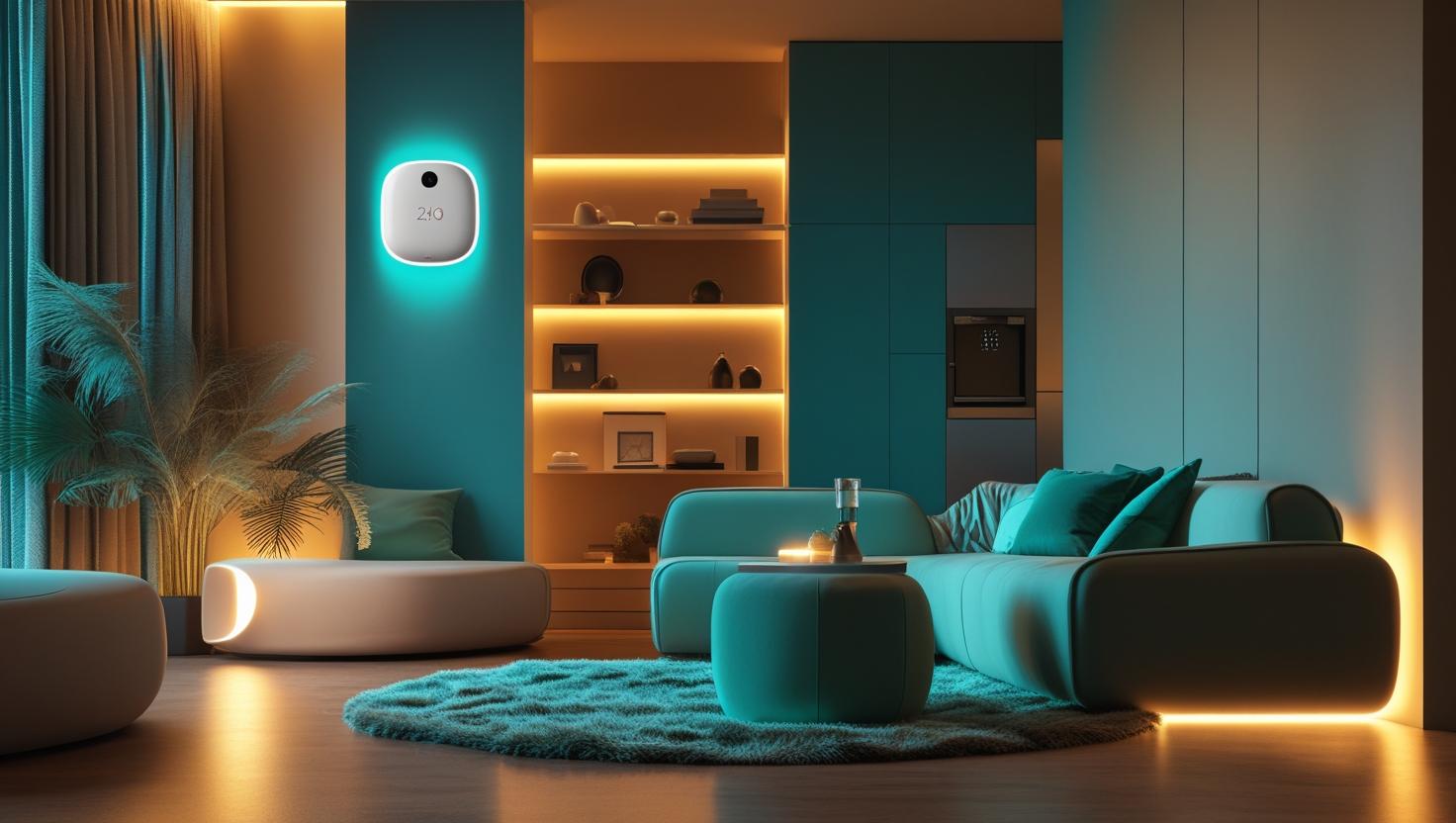
Smart home technology has moved beyond being a luxury for tech enthusiasts. Today, connected devices can help people manage lighting, security, temperature, appliances, and entertainment with much less effort. From adjusting the thermostat through a smartphone to receiving an alert when a door opens, technology is making everyday household tasks more convenient.
The real value of a smart home is not simply having more devices. It is about making those devices work together in ways that save time, improve comfort, and give homeowners better control over their living spaces.
What Is Smart Home Technology?
Smart home technology refers to connected devices and systems that can be monitored or controlled through smartphones, voice assistants, apps, sensors, or automated routines.
Common examples include:
- Smart lights
- Connected thermostats
- Smart door locks
- Security cameras
- Video doorbells
- Smart plugs
- Robot vacuum cleaners
- Smart appliances
- Home energy monitoring systems
These devices can communicate through wireless networks and, in many cases, respond automatically to specific conditions or schedules.
How Technology Makes Smart Homes Simpler
1. Control Devices From One Place
One of the biggest advantages of connected home technology is centralized control. Instead of manually operating several devices, homeowners can manage many functions through a mobile application or compatible voice assistant.
For example, lights can be turned off, the temperature can be adjusted, or selected appliances can be monitored without walking from room to room.
This can be particularly useful for people with busy schedules who want simple control over their homes.
2. Automate Everyday Routines
Automation is where smart home technology becomes especially useful.
Homeowners can create routines based on time, location, motion, or other conditions. A morning routine could gradually turn on selected lights, while an evening routine could switch off unnecessary devices and adjust the thermostat.
Instead of remembering every small task, users can allow automation to handle repetitive activities.
3. Improve Home Security
Smart security technology gives homeowners more ways to monitor their property.
Connected cameras, smart locks, motion sensors, and video doorbells can provide notifications when unusual activity is detected. Some systems also allow users to check their homes remotely.
For instance, if someone rings a connected doorbell while a homeowner is away, they may be able to view the visitor and communicate through the device.
Smart security does not eliminate every risk, but it can provide additional visibility and control.
4. Manage Energy More Efficiently
Smart technology can also help households understand how they use energy.
Smart thermostats can adjust heating or cooling based on schedules and occupancy. Smart plugs can help users monitor or control connected appliances, while energy-monitoring systems can provide information about electricity consumption.
These features can make it easier to identify unnecessary energy use and develop more efficient household habits.
5. Make Homes More Comfortable
Comfort is another major reason people adopt smart home devices.
Temperature sensors can help maintain preferred conditions, while smart lighting can change according to different activities or times of day. Connected blinds and other devices can also be incorporated into automated routines.
The result is a home environment that can adapt to the needs of its occupants rather than requiring constant manual adjustment.
The Role of Artificial Intelligence in Smart Homes
Artificial intelligence is gradually making smart homes more responsive.
Traditional automation often follows predefined instructions. AI-powered systems can analyze information from sensors and connected devices to understand patterns and make more context-aware decisions.
For example, a smart system may learn when a household typically uses certain lights or adjusts the temperature. Over time, this information can support more personalized automation.
However, AI should complement human control rather than remove it. Users should still have clear settings, manual controls, and the ability to change automated decisions.
Smart Homes Can Help Older Adults and People With Disabilities
Smart home technology can also support greater independence.
Voice-controlled lights, automated doors, smart locks, connected appliances, and remote monitoring can reduce the need for physically demanding tasks. Caregivers or family members may also be able to receive selected alerts when appropriate.
The usefulness of these systems depends on good design. Devices should be easy to operate, accessible, and reliable rather than adding unnecessary complexity.
Challenges to Consider
Despite their benefits, smart homes are not completely problem-free.
Privacy
Connected devices can collect information about household activity. Users should understand what data a device collects, how it is stored, and which services can access it.
Cybersecurity
Every internet-connected device can introduce another potential security point. Strong passwords, software updates, secure Wi-Fi, and reputable device manufacturers are important parts of maintaining a safer smart home.
Compatibility
Not every smart device works with every ecosystem. Before purchasing new products, homeowners should check whether devices can communicate with their existing platforms.
Internet Dependence
Some smart home features rely heavily on internet connectivity. A network outage may temporarily affect remote controls, notifications, or cloud-based functions.
Choosing Smart Home Technology Wisely
A smart home does not need dozens of connected devices. Starting with a few useful products can often provide more value than filling every room with technology.
Homeowners can begin by identifying repetitive tasks they would like to simplify. For one household, that might be lighting and security. For another, energy management or temperature control may be more useful.
It is also important to consider security updates, privacy policies, compatibility, installation requirements, and long-term support before buying a device.
The Future of Smart Homes
Smart homes are likely to become increasingly connected as AI, sensors, automation, and energy-management technologies continue to develop.
Future systems may coordinate different household functions more intelligently, allowing lighting, climate control, security, and appliances to respond to changing circumstances with less manual input.
The focus, however, should remain on usefulness. Technology is most valuable when it quietly solves everyday problems instead of creating additional work.
Conclusion
Technology in smart homes is changing how people interact with their living spaces. Automated routines, connected security, energy monitoring, smart appliances, and AI-powered features can make everyday activities more convenient and manageable.
The best smart home is not necessarily the one with the most devices. It is the one where technology works naturally in the background, giving people greater control, comfort, security, and efficiency without making daily life more complicated.
Frequently Asked Questions
1. What is smart home technology?
Smart home technology uses connected devices, sensors, apps, and automation to help homeowners control and manage everyday household functions more easily.
2. How can smart home technology make daily life easier?
It can automate routine tasks such as adjusting lights, controlling temperature, monitoring security, and managing compatible appliances, saving time and effort.
3. Is smart home technology useful for home security?
Yes. Smart cameras, video doorbells, motion sensors, and connected locks can provide alerts and remote monitoring, giving homeowners greater visibility over their property.
4. Can smart home technology help reduce energy use?
Yes. Smart thermostats, plugs, lighting systems, and energy monitors can help users track consumption and automate devices to avoid unnecessary energy use.


