
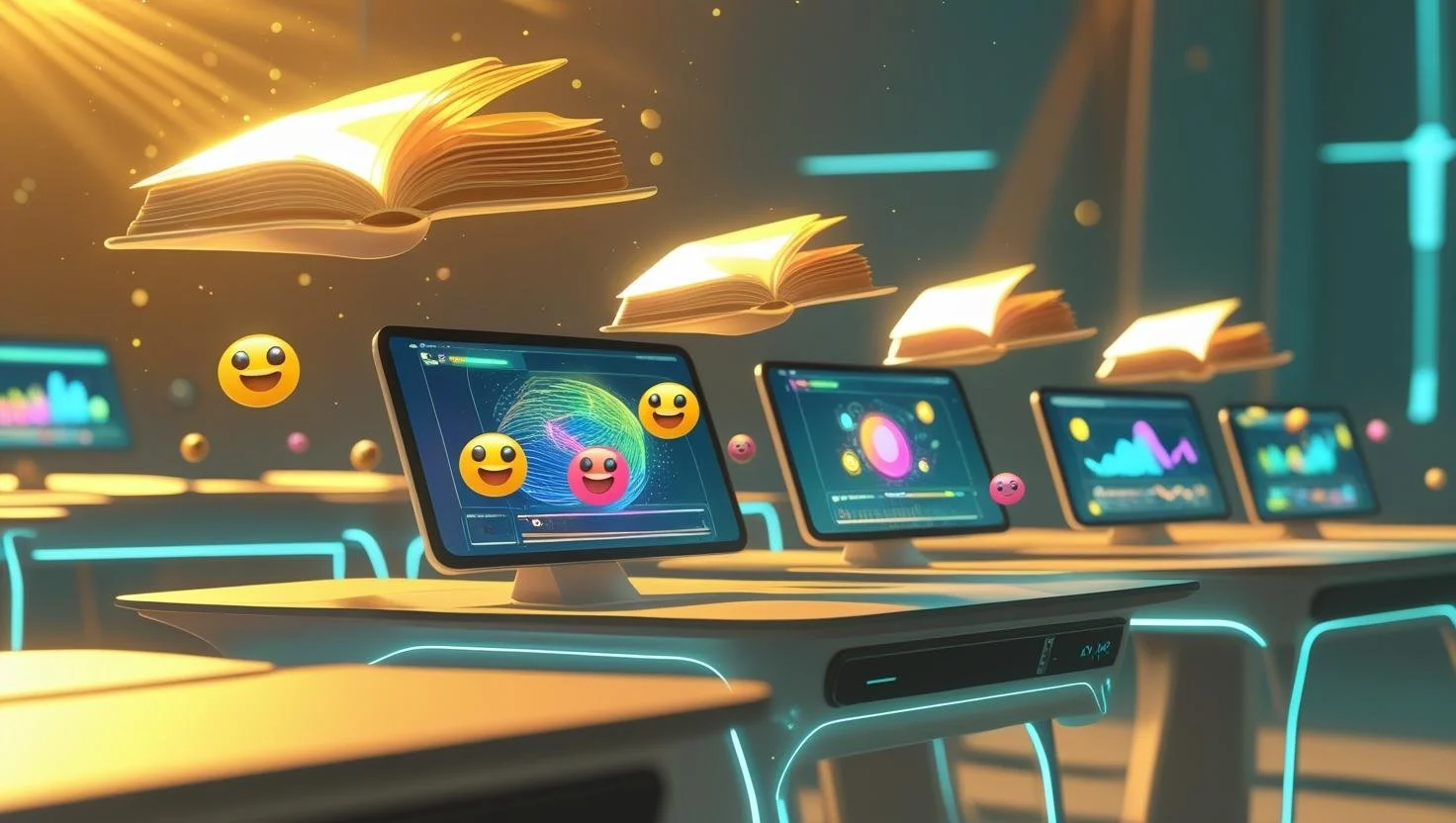
Virtual classrooms have changed the way students learn and teachers deliver lessons. A student can now attend a class from almost anywhere, access study material online, and communicate with teachers without being physically present in a classroom.
However, online teaching also comes with its own challenges. Teachers need to keep students engaged, answer questions, evaluate assignments, and understand whether learners are actually following the lesson. Managing all of this can become difficult, especially when a teacher is handling a large online class.
This is where AI in virtual classrooms can make a difference.
Artificial intelligence can help teachers with repetitive tasks, provide personalized learning support, analyze student performance, and make online lessons more interactive. The important point is that AI is not meant to replace teachers. Instead, it can work alongside them as a digital assistant.
What Is AI in Virtual Classrooms?
AI in virtual classrooms means using artificial intelligence tools and systems to improve different parts of online education.
These tools can help identify learning patterns, recommend study resources, answer common questions, assist with assessments, and provide useful information about student progress.
For example, if several students repeatedly make mistakes in the same topic, an AI-powered learning platform can highlight that pattern. The teacher can then revisit the topic and explain it in a different way.
This gives educators more information about what is happening inside their virtual classroom.
How AI Can Help Teachers
1. Create More Personalized Learning
Every student has a different learning style and pace. In a traditional or virtual classroom, it can be difficult for teachers to provide completely individual attention to everyone.
AI can analyze learning activity, quiz results, and assignment performance to identify areas where students may need additional help.
Based on these insights, teachers can provide:
- Additional practice questions
- Revision material
- Relevant videos or resources
- Extra explanations
- Topic-specific assignments
Instead of giving exactly the same learning path to every student, educators can use AI-supported insights to make learning more personalized.
2. Reduce Repetitive Work
Teachers spend a significant amount of time on administrative and repetitive activities.
AI tools can assist with tasks such as organizing learning materials, creating basic quizzes, answering frequently asked questions, and analyzing assessment results.
For example, an AI assistant could answer a student’s common question about an assignment deadline while the teacher focuses on explaining a difficult concept to the class.
This does not remove the teacher’s role. It simply gives educators more time for work that requires human judgment and interaction.
3. Provide Faster Feedback
Feedback is an important part of learning. Students often need to know quickly whether they understand a concept correctly.
AI-powered educational platforms can provide instant feedback for certain types of quizzes and assessments. They can also identify frequently occurring mistakes and point students toward relevant learning resources.
Teachers can then spend their time reviewing assignments that require deeper evaluation rather than manually handling every simple assessment.
4. Make Virtual Classes More Interactive
One of the biggest challenges of online education is maintaining student attention.
A long video lecture can become difficult to follow if students have limited opportunities to participate.
AI can support more interactive learning through:
- Personalized quizzes
- Interactive exercises
- AI-based tutoring
- Practice activities
- Learning recommendations
- Automated question-and-answer support
These features can turn a passive online lesson into a more engaging learning experience.
5. Support Students Outside Class Hours
Students do not always have questions during scheduled class time.
An AI-powered virtual assistant can provide support for common questions outside regular teaching hours. For example, students may ask where to find a particular lesson, how to access an assignment, or what a specific term means.
The AI assistant can provide an immediate response when the answer is available within the approved course information.
Teachers can then focus on questions that require detailed explanations or personal guidance.
AI Can Help Identify Learning Gaps
One of the most useful applications of AI is analyzing learning patterns.
Imagine a virtual class where most students understand four chapters but struggle with one particular topic. Without data, the teacher may only notice the problem after several assignments or tests.
An AI-powered system can identify unusual patterns in quiz scores, repeated mistakes, or reduced participation.
The teacher can use these insights to decide whether students need:
- A revision session
- More examples
- Additional exercises
- A simpler explanation
- One-to-one support
The technology provides the information, while the teacher decides what action to take.
AI and Accessibility
Virtual learning can also become more accessible with the help of AI-supported technologies.
Depending on the platform, features such as automated captions, speech-to-text, translation assistance, and content summarization can make digital lessons easier to access.
For students who prefer reading instead of listening, a lecture transcript may be useful. Similarly, captions can help students follow video lessons more easily.
These tools should still be reviewed by educators because automated systems can occasionally produce inaccurate results.
Challenges of Using AI in Virtual Classrooms
AI can provide valuable support, but it is not a perfect solution.
Data Privacy
Educational platforms may process information about student activity, assignments, and performance. Schools and institutions need to understand how this information is collected, stored, and protected.
Accuracy
AI systems can sometimes generate incorrect or incomplete information. Teachers should verify important educational content before sharing it with students.
Lack of Human Interaction
Learning is not only about receiving information. Students also need encouragement, discussion, feedback, and personal guidance.
AI can support these activities, but it cannot completely replace the relationship between a teacher and a student.
Digital Inequality
Not every student has access to the same internet connection, devices, or digital resources. Educational institutions should consider accessibility and affordability when introducing AI-powered learning systems.
How Teachers Can Use AI Responsibly
The most effective approach is to treat AI as a supporting tool rather than the decision-maker.
Teachers can use AI to handle repetitive work, discover learning patterns, generate ideas, and organize information. At the same time, educators should review AI-generated content and make the final decisions about teaching methods and student support.
A simple approach is:
AI provides assistance → Teacher reviews the information → Teacher makes the decision → Student receives personalized support.
This keeps human judgment at the center of education.
The Future of AI in Virtual Education
AI is likely to become more closely integrated with online learning platforms in the coming years.
Virtual classrooms may increasingly use adaptive learning systems, AI tutors, intelligent assessments, real-time analytics, and personalized educational recommendations.
The technology will continue to evolve, but the purpose should remain simple: help students learn more effectively and help teachers teach more efficiently.
The classroom of the future does not necessarily have to be fully automated. Instead, it can combine the strengths of technology with the experience and empathy of human educators.
Conclusion
AI in virtual classrooms is changing how teachers manage online education and how students interact with digital learning resources.
From personalized learning and faster feedback to virtual assistants and learning analytics, AI can take care of many repetitive tasks and provide teachers with useful insights.
But technology works best when it supports people rather than replaces them. Teachers still play the central role in explaining ideas, motivating students, understanding individual needs, and making important educational decisions.
As virtual education continues to grow, the combination of AI-powered tools and human teaching can create smarter, more flexible, and more engaging learning experiences.
Frequently Asked Questions
1. How does AI help in virtual classrooms?
AI can help teachers personalize learning, provide faster feedback, answer common questions, analyze student progress, and automate repetitive classroom tasks.
2. Can AI replace teachers in virtual classrooms?
No. AI is designed to support teachers by handling repetitive tasks and providing useful learning insights, while teachers remain responsible for instruction, guidance, and important decisions.
3. How can AI personalize online learning?
AI can analyze student performance and learning patterns to recommend relevant resources, practice activities, revision material, and additional support based on individual needs.
4. What are the challenges of using AI in virtual classrooms?
Common challenges include data privacy, inaccurate AI-generated information, unequal access to technology, and maintaining meaningful human interaction between teachers and students.


