

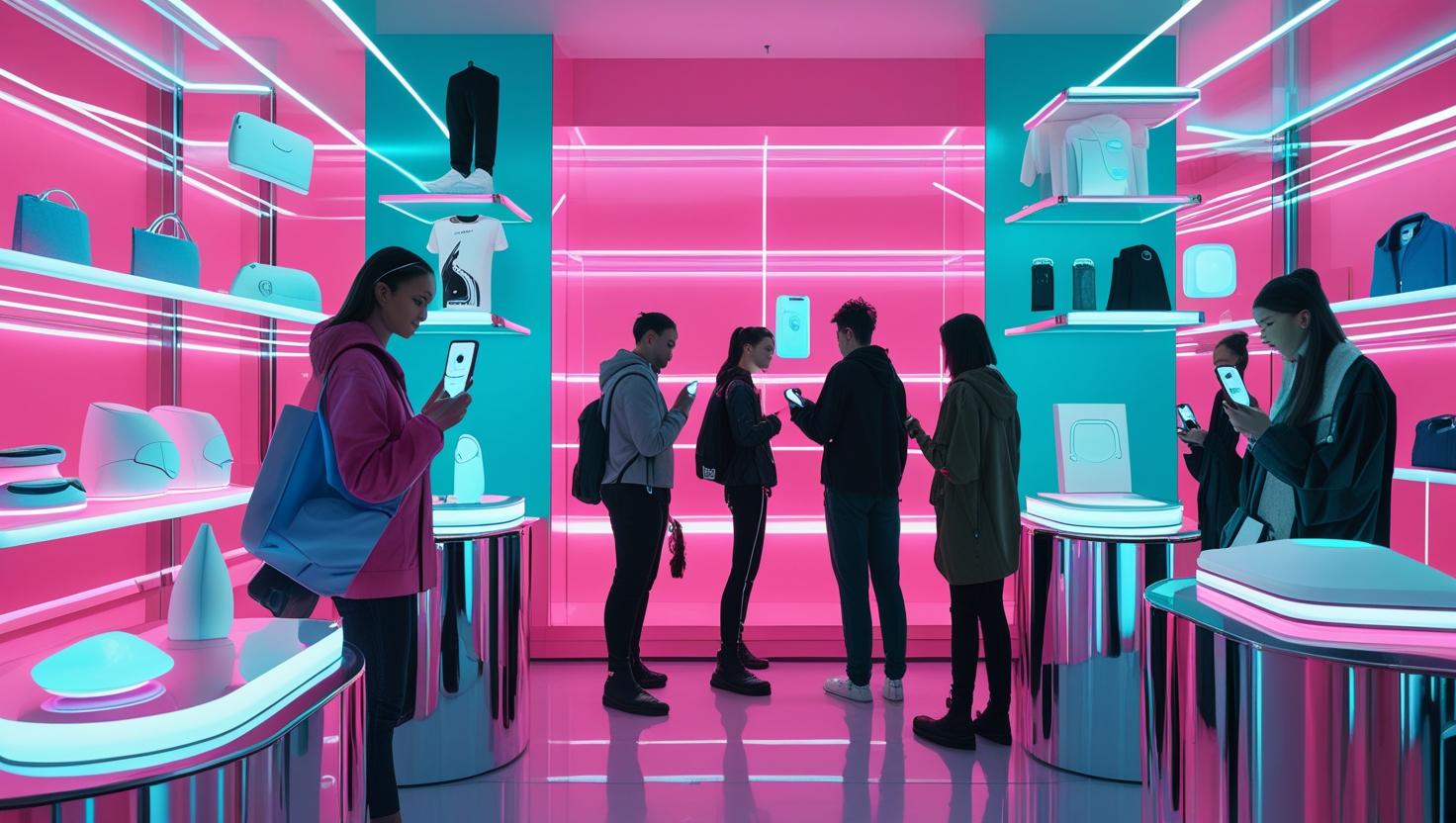
Shopping has changed significantly with the growth of smartphones, e-commerce, and digital experiences. Customers no longer want to simply look at a product image and make a decision. They want to understand how a product will look, fit, or work before spending their money.
This is where augmented reality (AR) in retail is becoming increasingly useful.
Augmented reality allows shoppers to see digital products or information within their real surroundings. Using a smartphone or another compatible device, customers can virtually try on products, place furniture inside their homes, preview accessories, or explore products in greater detail.
Instead of asking customers to imagine what a product might look like, AR can give them a more interactive way to experience it.
What Is Augmented Reality in Retail?
Augmented reality in retail combines digital content with the physical world. A shopper can use a smartphone camera to view a product or experience additional information without leaving their surroundings.
For example, a furniture retailer can allow a customer to place a virtual sofa inside their living room. A fashion brand can offer a virtual try-on that lets shoppers see how glasses, makeup, or clothing may look on them.
This makes the shopping journey more interactive and can help customers evaluate products before purchasing them. Research published in 2026 also found that product visualization quality can have a significant relationship with consumers’ AR shopping experiences and purchase behavior.
How AR Is Changing the Retail Experience
Traditional online shopping often depends on product photographs, descriptions, reviews, and videos. While these elements remain important, they cannot always answer a customer’s biggest question: “How will this product look in my situation?”
AR helps address this gap in several ways.
1. Virtual Product Try-Ons
Virtual try-ons are one of the most recognizable applications of AR in retail.
Customers can use their device camera to preview products such as:
- Eyeglasses
- Makeup
- Jewellery
- Shoes
- Clothing
- Accessories
Instead of purchasing first and discovering later that the product does not suit them, shoppers can interact with a digital representation before completing their purchase.
Studies in 2026 have also examined how AR virtual try-on experiences can influence purchase decisions in online fashion shopping.
2. Visualizing Products at Home
AR can be particularly useful for products where size, appearance, and placement matter.
Furniture and home-decor retailers can let shoppers see how a table, chair, sofa, lamp, or other product could appear in a room.
This creates a more practical shopping experience because customers can consider the product within their own surroundings rather than relying only on catalogue photographs.
3. More Interactive Product Discovery
AR can turn product discovery into an interactive experience.
Instead of scrolling through static images, shoppers may rotate a digital product, examine different details, change colours, or view it from different angles.
This can make the product page more engaging while giving customers additional information during the decision-making process.
4. Helping Customers Shop With More Confidence
One of the biggest challenges in online shopping is uncertainty.
Customers may wonder:
- Will it fit?
- Will the colour look right?
- Will it match my room?
- Is the product the right size?
- Will it suit my appearance?
AR cannot answer every question perfectly, but it can reduce some of the uncertainty by giving shoppers a more visual and interactive reference point.
Current ecommerce guidance identifies virtual try-ons and 3D product visualization as important AR applications for helping shoppers evaluate products before buying.
Benefits of Augmented Reality for Retailers
AR is not only about creating an impressive customer experience. When implemented carefully, it can also support several retail objectives.
Better Customer Engagement
Interactive experiences can encourage shoppers to spend more time exploring products.
Instead of simply reading product information, customers can actively interact with the product through their device.
Improved Product Understanding
A photograph may not communicate dimensions, placement, or appearance as clearly as an interactive visualization.
AR gives customers another way to understand what they are considering.
Potentially Fewer Product Returns
Returns can happen when a product does not meet a customer’s expectations.
By allowing shoppers to preview certain products before purchasing, AR may help reduce some mismatches between expectations and reality. Shopify notes that AR viewers can support customer confidence and help reduce returns, particularly for categories such as furniture and apparel.
However, AR should be viewed as one part of a broader product-information strategy rather than a guarantee against returns.
Stronger Brand Experiences
Retail brands are increasingly competing on experience as well as price and product selection.
A useful AR experience can make a brand feel more interactive and digitally mature while giving customers another reason to engage with its products.
AR in Physical Stores
Augmented reality is not limited to online shopping.
Physical retailers can also use AR to add digital information to the in-store experience. For example, customers could scan a product and receive additional specifications, demonstrations, styling ideas, or related recommendations.
This creates a connection between physical shopping and digital information.
The result is a retail experience where the store and the customer’s smartphone work together instead of functioning as completely separate channels.
Challenges Retailers Need to Consider
Although AR offers interesting possibilities, implementing it successfully requires more than adding a camera feature to a shopping application.
Accurate Product Visualization
The digital representation needs to be reasonably accurate. Poorly scaled or unrealistic products can create confusion rather than confidence.
Easy User Experience
Customers should not have to complete a complicated setup process just to try an AR feature.
If the experience takes too long or requires unnecessary steps, shoppers may simply stop using it.
Device Compatibility
Not every customer uses the same smartphone, browser, or operating system. Retailers need to consider compatibility and performance across different devices.
Privacy Considerations
Some AR experiences rely on cameras or other forms of user interaction. Retailers should clearly explain how relevant data is handled and provide appropriate privacy controls.
High-Quality 3D Assets
Creating accurate digital versions of products can require additional photography, modelling, testing, and technical work. Retailers need a reliable process for maintaining these assets as their product catalogues change.
The Future of AR in Retail
The future of retail is likely to become increasingly interactive.
AR may become more closely connected with artificial intelligence, personalization, computer vision, recommendation systems, and real-time product information.
Imagine opening a shopping application and seeing products selected based on your preferences. You could then place those products in your room, change their appearance, compare alternatives, and receive useful product information without switching between multiple tools.
This type of experience could make digital shopping feel less like browsing a catalogue and more like interacting with a knowledgeable retail environment.
At the same time, retailers need to focus on usefulness rather than technology for its own sake. A visually impressive AR feature is unlikely to create lasting value if it is difficult to use or does not solve a genuine shopping problem.
Final Thoughts
Augmented reality in retail is changing the way customers interact with products.
From virtual try-ons to furniture visualization and interactive product discovery, AR gives shoppers new ways to understand products before making a purchase. It can help bridge the gap between the convenience of online shopping and the visual experience of visiting a physical store.
For retailers, the opportunity is not simply to make shopping more futuristic. The real value comes from using AR to answer practical customer questions, reduce uncertainty, and create a smoother buying journey.
As AR technology becomes easier to access, retailers that focus on simple, useful, and customer-friendly experiences can use it as an important part of their broader digital shopping strategy.
Frequently Asked Questions
1. What is augmented reality in retail?
Augmented reality in retail combines digital content with the physical world. It allows shoppers to virtually try products, visualize items in their surroundings, and explore products interactively.
2. How does AR improve the shopping experience?
AR helps customers understand products before purchasing by allowing them to preview appearance, size, placement, or fit. This can make online shopping more interactive and informed.
3. How can retailers use augmented reality?
Retailers can use AR for virtual try-ons, furniture visualization, interactive product demonstrations, product information, and in-store experiences that connect physical and digital shopping.
4. Can augmented reality help reduce product returns?
AR can help customers visualize certain products before buying, which may reduce mismatches between expectations and the product received. Its effectiveness depends on the quality and accuracy of the AR experience.


