
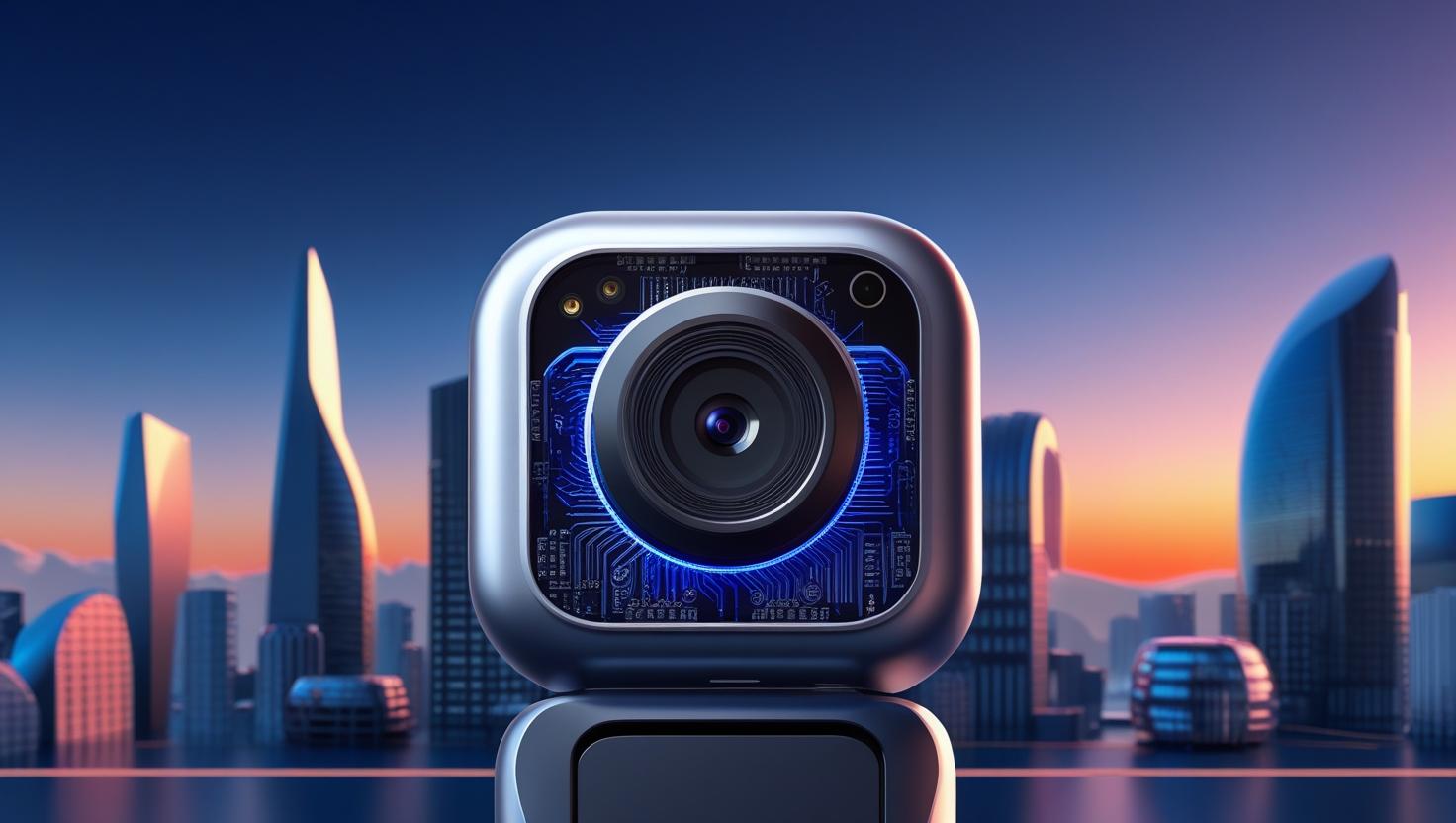
Smart cameras are no longer limited to recording video and storing footage for later review. With the help of artificial intelligence (AI), cameras can now understand what is happening in front of them, identify unusual activity, and provide useful information in real time.
This shift is changing how businesses, cities, homes, and industrial facilities approach security and monitoring. Instead of requiring people to watch multiple camera feeds continuously, AI-powered systems can analyze video automatically and highlight events that may need attention.
What Is AI in Smart Cameras?
AI in smart cameras refers to the use of artificial intelligence, computer vision, and machine learning to analyze video footage. Traditional cameras mainly capture and transmit images, while AI-enabled cameras can interpret visual information.
For example, an AI camera may recognize a person entering a restricted area, detect an object left in a particular location, identify unusual movement, or count people passing through an entrance.
This makes cameras more than simple recording devices. They become intelligent monitoring tools that can help organizations respond to situations more quickly.
How AI Makes Smart Cameras More Precise
The biggest advantage of AI is its ability to analyze large amounts of visual information without requiring constant human observation.
1. Real-Time Object Detection
AI can identify objects such as people, vehicles, packages, and other items within a camera’s field of view. This allows monitoring systems to distinguish relevant events from ordinary background activity.
For example, a warehouse camera could detect when a vehicle enters a loading area and trigger an alert for the appropriate team.
2. Improved Motion Analysis
Basic motion detection can generate alerts whenever something moves. This can result in unnecessary notifications caused by animals, weather, shadows, or other environmental changes.
AI-based cameras can analyze movement more intelligently. They can help determine whether the activity involves a person, vehicle, or another type of object before generating an alert.
3. Smarter Security Alerts
AI can help security teams focus on events that require attention. Instead of continuously reviewing hours of footage, operators can receive alerts when predefined conditions occur.
For instance, a system could notify staff when someone enters a restricted zone outside permitted hours.
4. People and Vehicle Counting
Smart cameras can also analyze traffic patterns by counting people or vehicles. Retail stores can use this information to understand customer movement, while transportation facilities can monitor traffic levels.
These insights can support planning without requiring employees to manually count activity.
5. Unusual Activity Detection
Machine learning models can identify patterns that differ from normal activity. If something unusual occurs, the system can flag the event for further investigation.
This does not mean AI can perfectly understand every situation. Environmental conditions, camera placement, and model quality can all influence accuracy. Human review remains important for significant decisions.
Where Are AI-Powered Smart Cameras Used?
AI-enabled cameras are finding applications across many industries.
Smart Cities
Cities can use intelligent cameras to monitor traffic, identify congestion, and understand movement across busy areas. When combined with other smart infrastructure, camera data can contribute to better urban planning and resource management.
Retail
Retail businesses can use AI cameras to understand customer flow, monitor store areas, and improve operational efficiency. Video analytics can provide information about busy periods and movement patterns.
Manufacturing
Factories can use smart cameras to monitor production environments and identify specific events. Computer vision can also support quality-control processes by detecting visible defects in products.
Warehouses
In warehouses, AI cameras can monitor loading areas, movement around restricted zones, and general activity. This can provide additional visibility across large facilities.
Offices and Commercial Buildings
Businesses can use smart cameras to monitor entrances, common areas, and restricted spaces. AI-based alerts can help security teams respond to unusual events more efficiently.
Homes
AI-powered security cameras are also becoming more common in residential environments. They can distinguish between different types of movement and send notifications when activity matches predefined settings.
Benefits of AI in Smart Cameras
AI can provide several practical benefits when it is implemented correctly.
Faster monitoring: Automated analysis can identify relevant events without requiring someone to watch every camera feed.
Reduced false alerts: Intelligent detection can help filter out some irrelevant movement.
Better operational visibility: Organizations can gain insights into people, vehicles, and activity patterns.
Quicker responses: Real-time notifications can help teams investigate important events sooner.
Scalable monitoring: AI can analyze multiple camera feeds, making it useful for larger facilities.
Data-driven decisions: Video analytics can provide information that supports operational planning and resource allocation.
Challenges to Consider
Despite their advantages, AI smart cameras also introduce important challenges.
Privacy
Cameras operating in public or private spaces can collect sensitive visual information. Organizations need clear policies around data collection, access, retention, and usage.
Accuracy
AI systems are not perfect. Poor lighting, crowded environments, camera angles, weather conditions, and unusual situations can affect detection accuracy.
Data Security
Recorded footage and camera-generated information need strong security controls. Unauthorized access could expose sensitive information.
Implementation Costs
Advanced cameras, computing infrastructure, software, storage, and maintenance can increase deployment costs compared with traditional surveillance systems.
Human Oversight
AI should support human operators rather than automatically replace human judgment in situations where decisions have significant consequences.
AI Cameras and Edge Computing
One important development is the combination of AI cameras with edge computing. Instead of sending every video frame to a remote server, some analysis can happen directly on the camera or on nearby computing hardware.
This can reduce the amount of data that needs to travel across a network and may help systems respond more quickly. It can also support privacy-conscious architectures when organizations design systems to process and retain only the information they actually need.
What Is the Future of AI Smart Cameras?
The future of smart cameras is likely to focus on more efficient video analysis, better edge processing, improved computer vision, and stronger integration with connected systems.
Cameras may increasingly work alongside IoT sensors, access-control systems, building-management platforms, and other smart technologies. This could create more connected monitoring environments where different systems share relevant information.
At the same time, responsible deployment will become increasingly important. Organizations will need to balance useful automation with privacy, transparency, security, and appropriate human oversight.
Final Thoughts
AI in smart cameras is changing video monitoring from passive recording into more intelligent analysis. By identifying objects, analyzing movement, detecting unusual activity, and generating useful alerts, AI can help organizations manage spaces with greater efficiency and precision.
However, successful implementation requires more than advanced technology. Camera placement, system configuration, data security, privacy practices, and human oversight all play important roles.
As AI and edge computing continue to develop, smart cameras are likely to become an increasingly important part of connected buildings, industrial environments, retail spaces, transportation systems, and smart cities.
Frequently Asked Questions
1. What is AI in smart cameras?
AI in smart cameras uses artificial intelligence and computer vision to analyze video, identify objects, detect activity, and generate useful alerts.
2. How do AI cameras improve security?
AI cameras can identify specific events, such as movement in restricted areas, and alert security teams without requiring continuous manual monitoring.
3. Where are AI-powered smart cameras used?
They are used in smart cities, retail stores, warehouses, factories, offices, transportation facilities, and residential security systems.
4. What are the challenges of AI smart cameras?
Key challenges include privacy, data security, implementation costs, environmental conditions, detection accuracy, and the need for human oversight.


