

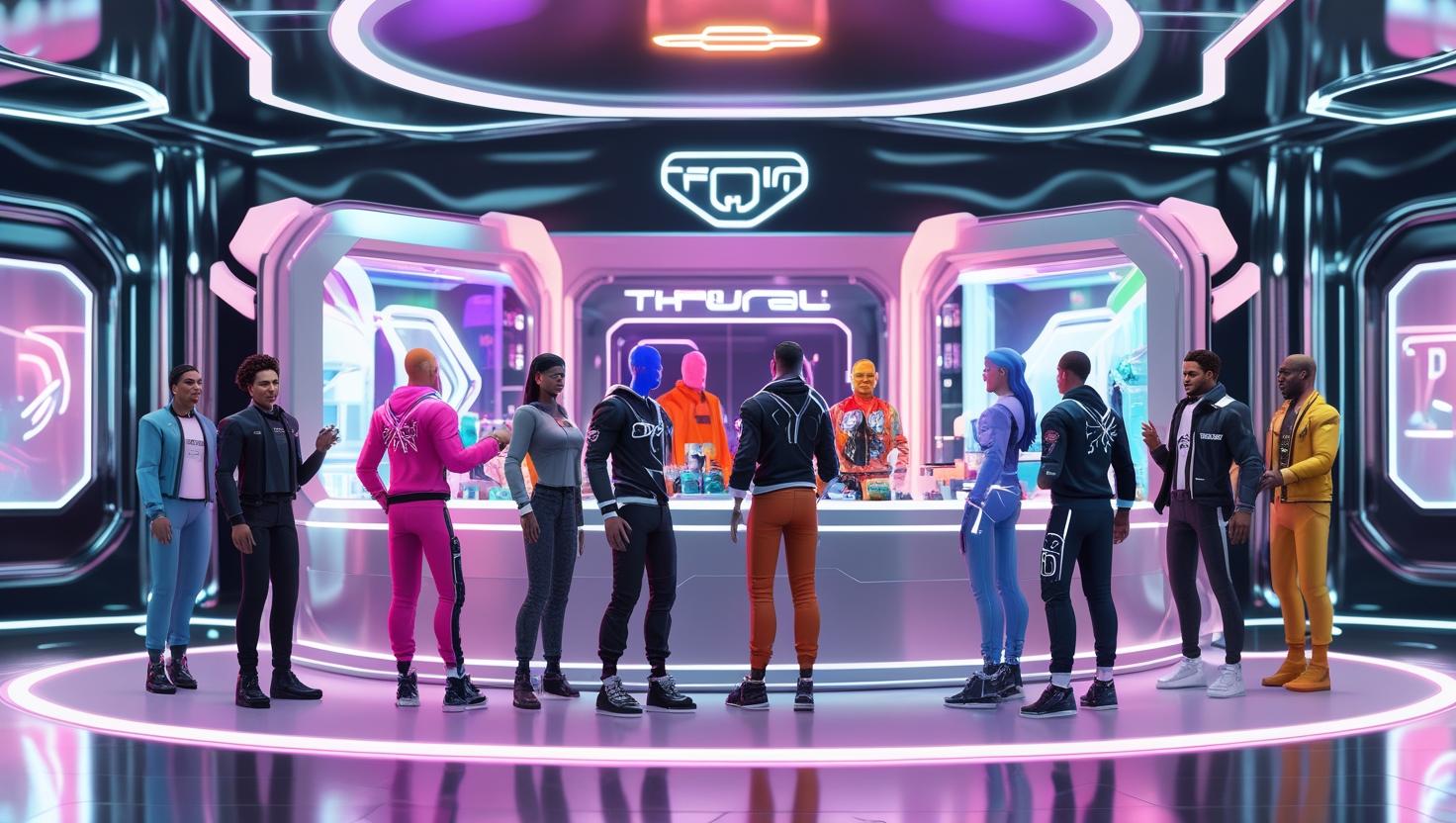
The way people discover and interact with brands is changing. Websites, social media, mobile apps, and online communities have already transformed digital marketing, but virtual environments are introducing another layer of interaction. Instead of simply viewing a brand on a screen, users can enter a digital space, interact with products, attend events, communicate through avatars, and experience branded environments.
This is where virtual branding becomes increasingly important.
The metaverse is not simply about creating a colorful 3D environment and placing a company logo inside it. Effective virtual branding requires a clear identity, consistent visual elements, meaningful interactions, and experiences that give users a reason to participate.
For businesses exploring immersive technology, the goal should be to make the brand recognizable and useful without making the experience feel like a traditional advertisement.
What Is Virtual Branding?
Virtual branding is the process of creating and communicating a brand identity inside digital and immersive environments.
Traditional branding often depends on elements such as:
- Logos
- Colors
- Typography
- Packaging
- Advertising
- Websites
- Social media content
Virtual branding expands these elements into interactive spaces. A brand can be represented through virtual stores, digital products, avatars, interactive environments, branded games, virtual events, sounds, animations, and personalized experiences.
In a metaverse environment, people do not necessarily interact with a brand in a linear way. They can explore, move around, communicate with other users, participate in activities, and make choices.
That means branding needs to become more experiential.
Recent research into metaverse advertising describes virtual brand spaces as environments where technologies such as avatars, branded games, virtual events, and other interactive elements can be combined into a broader brand experience.
Why Virtual Branding Matters
Virtual environments give brands another way to communicate with audiences.
A conventional advertisement may show a product and explain why someone should consider it. A virtual experience can allow the user to interact with the product or environment themselves.
For example, a furniture brand could create a virtual room where visitors can explore different designs. A fashion company could allow users to experiment with digital clothing for their avatars. A technology company could create an interactive demonstration where visitors explore how a product works.
The experience itself becomes part of the branding.
Research published in 2026 also found that a stronger sense of presence in branded metaverse experiences can positively affect brand attitudes and enjoyment, while negative immersive experiences can work in the opposite direction.
This highlights an important point: virtual branding should focus on experience quality, not just visual appearance.
10 Virtual Branding Tips for the Metaverse
1. Build a Recognizable Digital Identity
Your brand should remain recognizable even when users encounter it in a completely different environment.
Start by defining the elements that should remain consistent across your virtual presence.
These may include:
- Brand colors
- Logo placement
- Typography
- Visual patterns
- Avatar design
- Interface elements
- Photography or 3D visual style
- Brand voice
However, do not simply copy your traditional website into a 3D environment.
Instead, translate your existing identity into a format that works naturally in an immersive space.
For example, your brand colors could become part of the architecture, lighting, interface, avatar clothing, signage, and interactive objects.
2. Design an Experience Instead of an Advertisement
One of the biggest mistakes businesses can make is treating the metaverse like another advertising channel.
People entering a virtual environment usually expect something they can explore or participate in.
Instead of asking:
“Where should we place our advertisement?”
Ask:
“What can visitors actually do here?”
You could create:
- Interactive product demonstrations
- Virtual workshops
- Games
- Product discovery areas
- Digital exhibitions
- Live events
- Educational experiences
- Virtual showrooms
- Community spaces
The objective is to give visitors a reason to stay and interact.
3. Make Your Virtual Space Easy to Explore
A visually impressive virtual environment can still fail if users do not understand where to go.
Navigation matters.
Use recognizable landmarks, clear pathways, intuitive menus, and simple instructions. Important areas should be easy to discover without forcing users to spend too much time figuring out the interface.
Think of your virtual environment as a combination of a website, physical store, event venue, and interactive game.
Every area should have a purpose.
For example:
Entrance → Welcome Area → Product Experience → Interactive Zone → Community Area → Call to Action
This creates a natural journey rather than a confusing collection of virtual objects.
4. Use Avatars to Create Human Interaction
Avatars can become an important part of virtual brand communication.
Instead of interacting only with a logo or chatbot, users may encounter branded characters, customer-support representatives, community hosts, or digital guides.
A well-designed avatar can communicate:
- Personality
- Brand values
- Visual identity
- Professionalism
- Creativity
- Community culture
However, the avatar should feel connected to the brand rather than looking like a random digital character.
Think about how the avatar dresses, communicates, moves, and interacts with visitors.
5. Add Interactive Elements
Interaction is one of the main differences between conventional digital branding and immersive branding.
Consider adding features that encourage users to participate.
For example:
- Virtual product customization
- Quizzes
- Games
- Interactive demonstrations
- Digital collectibles
- Exploration challenges
- Virtual events
- Social activities
Interactive experiences can make users active participants instead of passive viewers.
A 2026 study of Indian extended-reality users found that immersive advertising, avatar-centered interaction, gamification, and virtual try-on experiences were associated with virtual brand experience and brand-equity measures in its research model.
6. Tell Your Brand Story Through the Environment
A strong virtual environment does not need to explain everything with text.
The environment itself can communicate the story.
Imagine an environmental technology company creating a virtual city powered by clean energy. Instead of simply displaying a message saying “We support sustainability,” visitors could explore renewable-energy systems, smart buildings, electric transportation, and interactive environmental dashboards.
The user experiences the story instead of merely reading it.
This approach can make brand messaging more memorable and natural.
7. Personalize the Virtual Experience
Personalization can make virtual environments more relevant to different users.
Depending on the platform and available data, businesses may create different experiences based on:
- User interests
- Previous interactions
- Product preferences
- Activity history
- Event participation
- Avatar preferences
For example, a technology company could provide separate virtual areas for beginners, developers, business users, and enterprise customers.
However, personalization should be transparent and respectful of privacy.
The goal should be to improve the experience rather than make users feel that they are being excessively tracked.
8. Connect Virtual Branding With Other Digital Channels
Your metaverse presence should not exist in isolation.
Connect it with your broader digital ecosystem.
For example:
Website → Social Media → Virtual Experience → Community → Product Page
A visitor might discover your virtual event through social media, enter your virtual environment, explore a product demonstration, and then visit your website for additional information.
This creates a connected customer journey.
Virtual branding can therefore become an extension of your existing digital marketing strategy rather than a completely separate activity.
9. Create Community, Not Just Traffic
A large number of visitors does not automatically create a successful virtual brand experience.
Community can be more meaningful than simple visitor numbers.
Give people reasons to return.
You could organize:
- Regular virtual events
- Product launches
- Expert discussions
- Community challenges
- Educational sessions
- Digital workshops
- Creator collaborations
- Interactive competitions
A virtual environment can become more valuable when users begin interacting with each other rather than only interacting with the brand.
10. Measure What Users Actually Do
Virtual branding needs appropriate performance measurements.
Traditional marketing metrics such as impressions and clicks may not tell the complete story.
Depending on the experience, businesses can track:
- Number of visitors
- Time spent in the environment
- Interaction rates
- Event attendance
- Product demonstrations
- Repeat visits
- Community participation
- Conversion actions
- Virtual product interactions
- User feedback
Researchers working on metaverse branding measurement have also highlighted the importance of analyzing spatial and behavioral data rather than relying only on conventional digital marketing metrics.
The important question is not only:
“How many people visited?”
It is also:
“What did they do while they were there?”
Common Virtual Branding Mistakes to Avoid
Creating a virtual presence can be exciting, but businesses should avoid several common mistakes.
Making the Environment Too Complicated
Too many animations, objects, menus, and effects can make the experience difficult to use.
Keep the journey understandable.
Focusing Only on Visuals
A beautiful environment is useful, but appearance alone does not create a strong brand experience.
Give users something meaningful to do.
Copying the Physical Store
A virtual environment does not have to reproduce a physical shop exactly.
Use the freedom of digital environments to create experiences that would be difficult or impossible in the physical world.
Ignoring Performance
Slow loading, poor navigation, uncomfortable movement, or technical problems can damage the overall experience.
Testing should happen across the devices and platforms your audience actually uses.
Forgetting Accessibility
Not every visitor will have expensive VR hardware or the same technical capabilities.
Where possible, provide accessible alternatives and straightforward navigation.
Treating Users Like Advertisers’ Targets
Virtual environments work best when people receive genuine value from participating.
Educational content, entertainment, community, creativity, and useful product experiences can all provide that value.
The Role of AI in Virtual Branding
Artificial intelligence can add another layer to virtual brand experiences.
AI-powered systems can help businesses create more responsive environments through:
- Virtual assistants
- Personalized recommendations
- AI-generated characters
- Intelligent customer support
- Automated content
- Behavioral analysis
- Dynamic experiences
For example, a visitor entering a virtual technology showroom could interact with an AI assistant that answers questions and guides them toward relevant products or demonstrations.
AI can also help brands analyze user interactions and identify which parts of a virtual experience attract the most engagement.
However, businesses should maintain clear boundaries around data collection, personalization, and automated decision-making.
How to Build a Virtual Branding Strategy
A practical virtual branding strategy can be developed in several stages.
Step 1: Define the Objective
Decide what the virtual experience is supposed to accomplish.
It could be:
- Brand awareness
- Product education
- Community building
- Customer engagement
- Product demonstrations
- Events
- Lead generation
Step 2: Understand Your Audience
Identify who will actually use the experience and what they expect from it.
A gaming audience may want a completely different experience from enterprise technology buyers.
Step 3: Translate Your Brand Identity
Determine how your existing brand colors, visual language, tone, values, and personality will work inside an immersive environment.
Step 4: Design the User Journey
Map the experience from the moment someone enters until they leave.
Keep the path natural and easy to understand.
Step 5: Add Meaningful Interaction
Introduce activities that encourage exploration, participation, learning, or community engagement.
Step 6: Test Before Launch
Test navigation, performance, accessibility, interaction, and usability before opening the environment to a larger audience.
Step 7: Measure and Improve
Review behavioral data and user feedback, then continuously improve the experience.
The Future of Virtual Branding
Virtual branding is likely to continue evolving alongside artificial intelligence, extended reality, digital communities, 3D interfaces, and interactive technologies.
The biggest opportunity may not be creating a completely separate “metaverse brand.”
Instead, businesses can think about how their identity can remain consistent across websites, social platforms, mobile applications, virtual environments, augmented experiences, and AI-powered interfaces.
This creates a broader digital identity.
Future brand experiences may become increasingly interactive, personalized, and spatial. Recent research into branded virtual environments emphasizes sensory, emotional, intellectual, behavioral, social, and empowering dimensions of brand experience, suggesting that successful virtual branding involves much more than visual design.
Final Thoughts
Virtual branding gives businesses a new way to express what their brand represents.
The strongest approach is not simply to place a logo inside a virtual world. Instead, businesses should create an environment where their identity is visible through design, interaction, storytelling, community, and useful experiences.
Start with a clear brand identity. Understand your audience. Build an environment that is easy to navigate. Give visitors meaningful reasons to interact. Connect the experience with your broader digital strategy, and continuously improve it based on real user behavior.
The metaverse may continue to evolve, but one principle remains important: people remember experiences, not just advertisements.
For brands exploring virtual environments, that principle can become the foundation of a stronger digital identity.
Frequently Asked Questions
1. What is virtual branding in the metaverse?
Virtual branding represents a brand through immersive spaces, avatars, digital products, and interactive experiences.
2. Why is virtual branding important for businesses?
It helps businesses create engaging digital experiences that encourage customers to interact with and remember their brand.
3. How can businesses create a strong virtual brand?
Businesses can use consistent branding, simple navigation, interactive features, and useful virtual experiences.
4. How does AI support virtual branding?
AI can provide virtual assistants, personalized recommendations, automated support, and intelligent customer interactions.


