

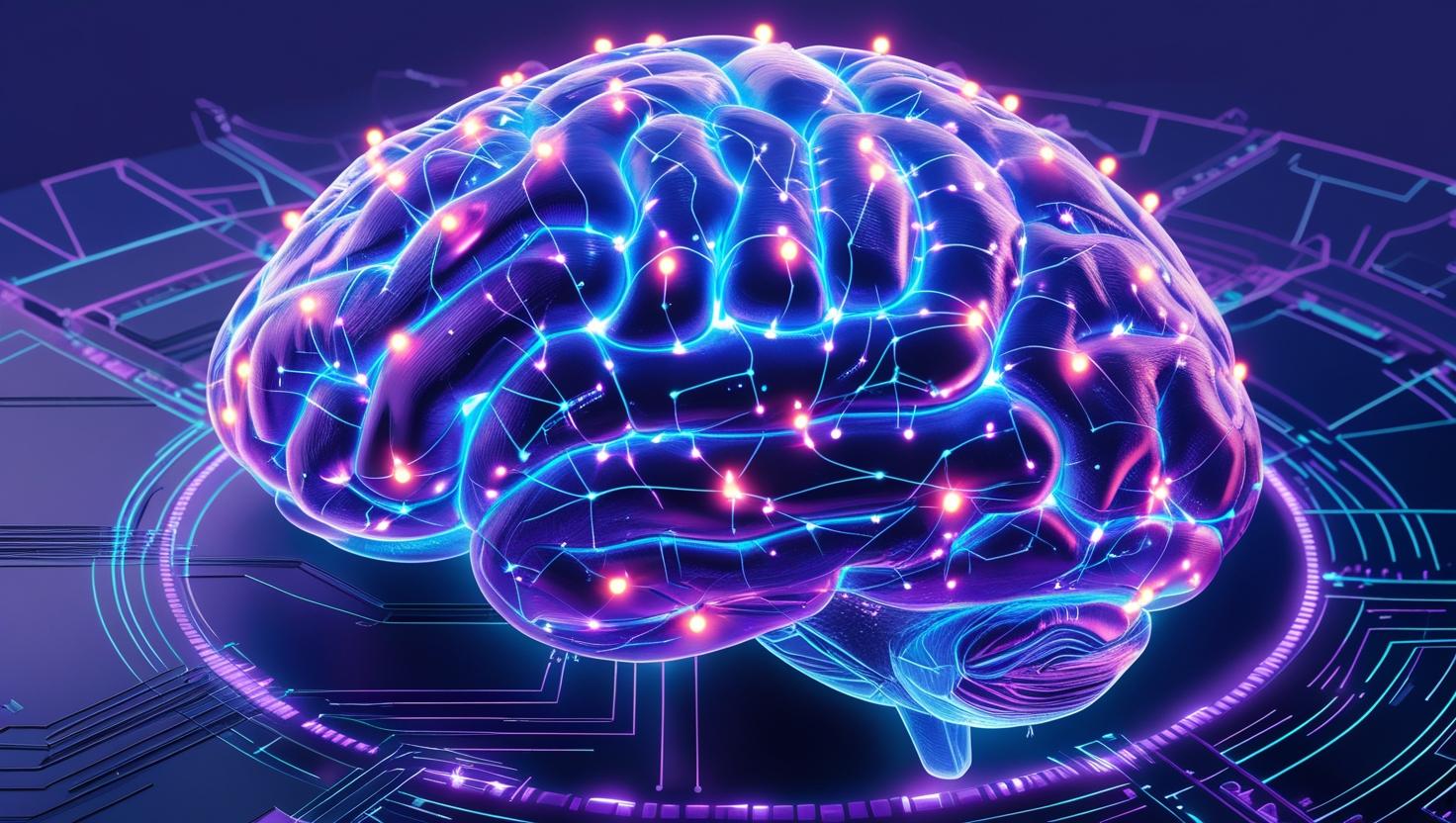
Artificial intelligence is becoming more capable, but that progress comes with a growing computing challenge. Modern AI systems often require significant processing power, memory, and energy, especially when they work with large models and continuous streams of data. As AI moves into smartphones, robots, vehicles, sensors, and other edge devices, traditional computing approaches can struggle to deliver high performance without increasing power consumption.
Neuromorphic architecture offers a different approach. Instead of processing information exactly like conventional computer systems, neuromorphic hardware is designed around principles inspired by the way biological brains handle information. It combines processing and memory in ways that can allow AI systems to respond to data efficiently while using less energy for certain workloads.
What Is Neuromorphic Architecture?
Neuromorphic architecture is a computing design inspired by the organization and operation of biological neural systems. It commonly uses artificial neurons and connections that communicate through discrete events, often called spikes.
Traditional computers generally move data between separate processing and memory components. This movement can consume considerable time and energy. Neuromorphic systems attempt to reduce this overhead by bringing computation and memory closer together and processing information only when relevant events occur.
This event-driven approach can be particularly useful for applications that need to analyze continuous information from sensors without processing every piece of data in the same way.
How Neuromorphic Computing Works
A neuromorphic system can contain networks of artificial neurons connected through programmable pathways. When incoming information reaches a certain threshold, a neuron can generate a spike that travels through the network.
Instead of continuously calculating every operation, the system can remain relatively inactive until meaningful events occur.
For example, consider a smart camera monitoring a warehouse. A conventional system may repeatedly process entire frames to determine whether something has changed. A neuromorphic vision system can instead focus on changes in the visual environment, potentially reducing unnecessary computation.
This makes neuromorphic architecture especially interesting for real-time and sensor-driven applications.
Why Neuromorphic Architecture Matters for AI
AI workloads are becoming increasingly demanding. Generative AI, computer vision, robotics, autonomous systems, and intelligent sensors all require fast processing and efficient use of computing resources.
Neuromorphic architecture can address some of these challenges through several characteristics:
Lower Energy Consumption
Because neuromorphic systems can process information only when events occur, they may avoid some unnecessary computations. This can make them attractive for battery-powered and energy-constrained devices.
Fast Response
Event-driven processing can support rapid responses to changes in the environment. This is valuable for robotics, industrial monitoring, intelligent cameras, and other applications where decisions may need to happen quickly.
Edge AI Support
Running AI directly on devices can reduce dependence on cloud servers. Neuromorphic hardware can complement edge AI by providing efficient local processing for certain workloads.
Sensor Integration
Neuromorphic systems are well suited to applications involving continuous sensor streams. They can work with information from cameras, microphones, motion sensors, and other devices where data arrives continuously.
Neuromorphic Architecture and Edge Computing
Edge computing is moving intelligence closer to where data is generated. Instead of sending every piece of information to a remote data center, an edge device can analyze data locally and transmit only relevant results.
Neuromorphic computing fits naturally into this model.
Imagine a smart factory containing thousands of sensors. These sensors may continuously monitor vibration, temperature, sound, and machine activity. A neuromorphic processor could help identify unusual patterns locally, allowing the system to react before large amounts of raw data need to be transferred.
This combination of neuromorphic architecture and edge AI could become useful for applications where bandwidth, latency, and energy efficiency are important.
Applications of Neuromorphic Computing
Neuromorphic technology is still developing, but researchers and technology companies are exploring a wide range of applications.
Robotics
Robots need to interpret their surroundings and react to changes quickly. Neuromorphic systems can support sensory processing and adaptive behavior while potentially reducing energy requirements.
Autonomous Systems
Vehicles, drones, and other autonomous machines continuously receive information from cameras and sensors. Event-driven processing could help these systems respond efficiently to changing environments.
Smart Devices
Wearables and IoT devices often operate with limited battery capacity. Efficient AI processing could allow more intelligence to run directly on these devices.
Industrial Automation
Factories can use intelligent sensors to detect equipment anomalies, monitor production processes, and identify potential problems. Neuromorphic processors could support continuous monitoring with efficient local computation.
Healthcare Technology
Neuromorphic systems may eventually support wearable and assistive technologies that need to process biological signals continuously, although many healthcare applications require extensive testing and validation before real-world deployment.
Neuromorphic Computing vs Traditional AI Hardware
Traditional AI hardware, including CPUs, GPUs, and specialized accelerators, remains highly effective for many machine-learning workloads. Neuromorphic computing is not necessarily intended to replace these technologies.
The main difference is the computing approach.
Traditional processors generally perform operations according to predefined instruction and data-processing models. AI accelerators can execute large numbers of mathematical operations in parallel, which is extremely useful for training and running neural networks.
Neuromorphic systems instead emphasize event-driven computation, artificial neural behavior, and efficient information movement.
As a result, each architecture can have different strengths depending on the workload.
Challenges Facing Neuromorphic Architecture
Despite its potential, neuromorphic computing still faces important obstacles.
Hardware Development
Designing specialized neuromorphic chips is complex. The technology requires new approaches to hardware design, memory, communication, and neural computation.
Software Ecosystem
AI developers are familiar with established frameworks and hardware platforms. Neuromorphic computing needs mature software tools that make it easier to build, train, test, and deploy applications.
Limited Compatibility
Existing AI models are not always designed specifically for neuromorphic hardware. Converting conventional neural networks into event-based systems can require additional techniques and development effort.
Measuring Performance
Comparing neuromorphic systems with traditional processors is not always straightforward. Performance depends heavily on the type of workload, data patterns, latency requirements, and energy constraints.
The Future of Neuromorphic AI
The future of neuromorphic computing will likely involve cooperation with other forms of AI hardware rather than a complete replacement of existing processors.
Cloud data centers may continue to use powerful GPUs and AI accelerators for large-scale model training and demanding workloads. At the same time, specialized neuromorphic processors could handle selected tasks at the edge where low power consumption and rapid responses are priorities.
This creates the possibility of a more diverse AI computing environment in which different processors are selected according to the job they need to perform.
As research progresses, improvements in hardware, algorithms, sensors, and software development could make neuromorphic systems more practical for commercial applications.
Why Neuromorphic Architecture Could Shape AI Computing
The next generation of AI will not only be about making models larger. It will also be about making intelligent systems more efficient, responsive, and capable of operating closer to the real world.
Neuromorphic architecture introduces a computing model designed around event-driven processing and brain-inspired principles. Its potential advantages in energy efficiency, real-time processing, and edge intelligence make it an important area to watch.
For organizations developing robotics, IoT systems, autonomous technologies, and intelligent edge devices, neuromorphic computing could become one part of the broader technology landscape.
Conclusion
Neuromorphic architecture represents a different way of thinking about AI computing. By drawing inspiration from biological neural systems, it aims to process information efficiently while reducing unnecessary computation.
The technology still has challenges related to hardware, software, compatibility, and practical deployment. However, its potential for low-power AI, real-time processing, robotics, and edge computing makes it an important area of technological research.
As AI continues to move beyond data centers and into everyday devices, neuromorphic architecture could play a meaningful role in building the next generation of efficient intelligent systems.
Frequently Asked Questions
1. What is neuromorphic architecture?
Neuromorphic architecture is a computing approach inspired by the human brain. It uses artificial neurons and event-based processing to handle information efficiently, making it useful for certain AI and edge-computing applications.
2. How can neuromorphic computing improve AI efficiency?
Neuromorphic computing can process information when relevant events occur instead of continuously performing every calculation. This can reduce unnecessary computation and may lower energy consumption for suitable AI workloads.
3. Where can neuromorphic architecture be used?
Potential applications include robotics, autonomous systems, smart devices, industrial automation, IoT sensors, and selected healthcare technologies that require fast and energy-efficient data processing.
4. Will neuromorphic computing replace GPUs and CPUs?
Neuromorphic computing is more likely to complement existing CPUs, GPUs, and AI accelerators than replace them completely. Different computing architectures can be used according to the processing, speed, and energy requirements of a particular application.


