

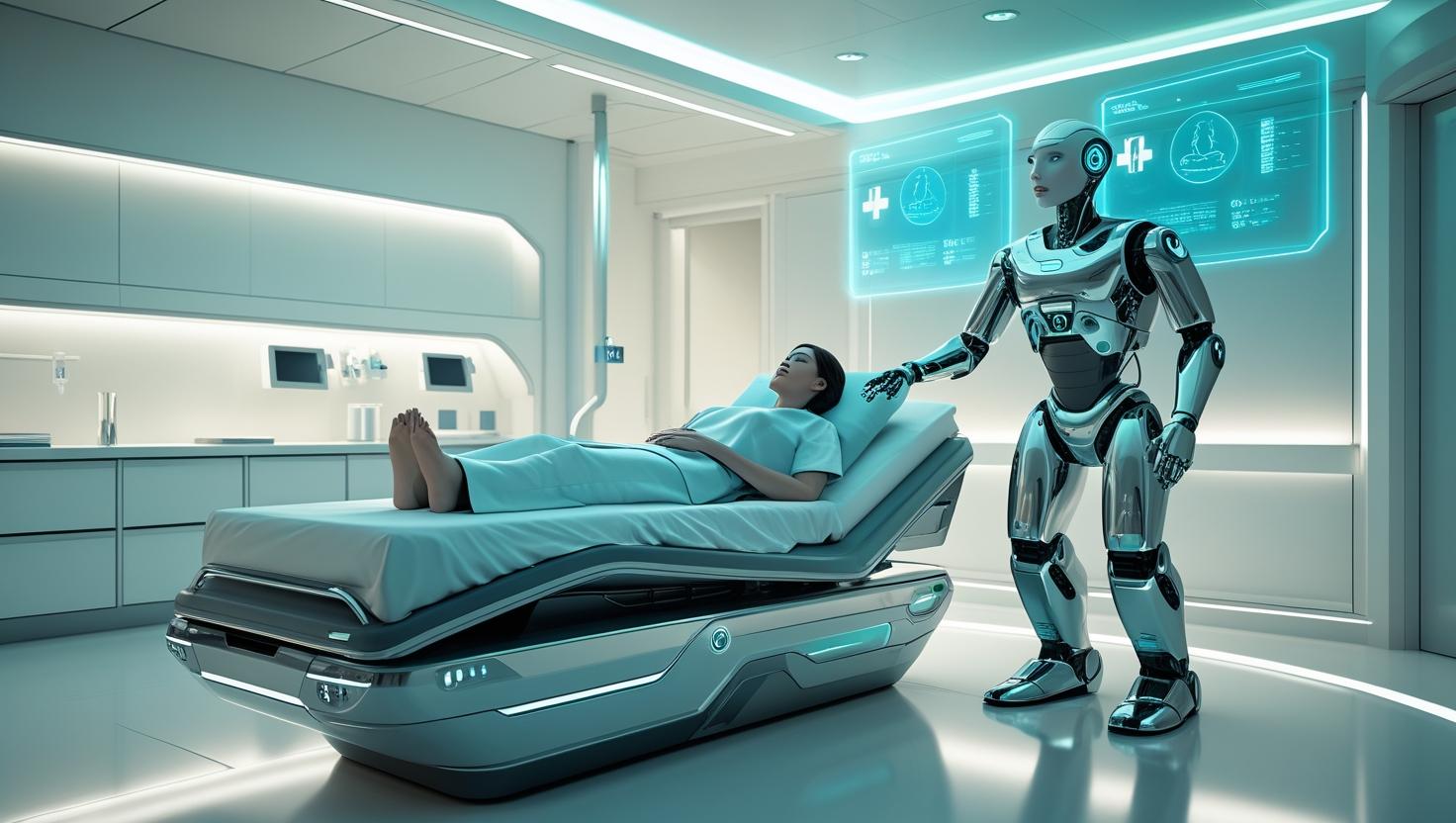
Technology is changing healthcare in ways that were difficult to imagine a few decades ago. One of the most visible examples is the rise of medical robots.
From robotic-assisted surgery to rehabilitation devices and automated hospital systems, robots are increasingly being designed to support different parts of the patient-care journey. These machines can perform highly controlled movements, repeat therapy exercises, transport materials, and assist healthcare professionals with specialized tasks.
But the real value of medical robotics is not simply about putting machines inside hospitals. The important question is how these technologies can help patients receive safer, more consistent, and more personalized care.
Medical robots are generally designed to work alongside healthcare professionals rather than remove the need for doctors, nurses, surgeons, or therapists. Recent research shows growing applications across surgery, rehabilitation, hospital logistics, and patient assistance, although clinical validation and implementation challenges remain.
1. They Can Improve Control During Complex Procedures
Surgery often requires extremely controlled movements, particularly when doctors are working through small openings or around delicate anatomical structures.
Robotic-assisted surgical systems can translate a surgeon’s hand movements into controlled movements of specialized instruments. Depending on the system, surgeons may also receive enhanced visualization and greater instrument control.
This can be useful in minimally invasive procedures where conventional instruments may have limitations.
However, it is important to understand that robotic-assisted surgery does not necessarily mean that a machine is independently operating on a patient. In many systems, the surgeon remains responsible for controlling the procedure.
Research into robotic surgical platforms continues to examine their feasibility, efficiency, precision, and clinical outcomes across different procedures.
2. They Can Give Rehabilitation Patients More Repetitive Practice
Rehabilitation can require patients to repeat the same movement many times. That repetition can be physically demanding for both patients and therapists.
Robotic rehabilitation devices can provide controlled assistance during exercises involving the arms, legs, or other movements.
For example, a rehabilitation robot may help guide a patient’s limb through a defined movement while sensors collect information about performance.
This creates an opportunity for structured and repeatable therapy sessions. It can also provide therapists with additional measurements that may help them understand how a patient is progressing.
A large umbrella review covering dozens of systematic reviews and hundreds of randomized controlled trials found evidence that robotic rehabilitation can improve certain outcomes in several conditions, although effectiveness varies by disease, device, and outcome.
3. Robots Can Assist People With Mobility Limitations
Walking and everyday movement can become difficult after neurological injuries, illnesses, or other physical conditions.
Robotic exoskeletons and wearable robotic systems are being developed to provide physical assistance during movement and rehabilitation.
Instead of simply repeating an exercise, some systems can respond to movement data and provide assistance according to the user’s needs.
This area is particularly interesting because it combines robotics, sensors, biomechanics, and software.
The aim is not merely to make movement automated. It is to provide controlled assistance that can help people participate in rehabilitation and, in some applications, support greater independence.
Recent research has identified mobility support, rehabilitation robotics, and wearable robotic technologies as significant areas of healthcare robotics development.
4. They Can Reduce Some Repetitive Hospital Work
Patient care involves many activities that do not require a clinician to perform every step manually.
Hospitals also need to move supplies, equipment, medicines, laboratory materials, and other items between locations.
Autonomous mobile robots can potentially assist with some of these logistical tasks.
For example, a robot may transport supplies between hospital departments while staff members focus on clinical responsibilities.
This type of automation can be especially useful in large healthcare facilities where materials are continuously moving throughout the day.
The benefit is not that robots replace healthcare workers. Instead, automation can take responsibility for selected repetitive tasks and allow staff to spend more time on activities that require human judgment and interaction.
Hospital logistics and telepresence are among the areas currently being investigated for healthcare robotics and embodied AI systems.
5. Robots Can Make Therapy More Consistent
Consistency matters in rehabilitation.
A therapist may need to help a patient perform a movement repeatedly while maintaining a particular range, speed, or level of assistance. A robotic device can repeat programmed movements with controlled mechanical behavior.
This can provide a predictable training environment.
Some modern systems also use sensors to measure movement and provide feedback. When combined with AI, robotics can potentially adapt assistance based on information collected during therapy.
Researchers are increasingly exploring intelligent rehabilitation systems that combine robotics, sensing, and artificial intelligence to make therapy more adaptive.
The important point is that technology should complement professional therapy rather than replace the therapist’s clinical decisions.
6. AI Is Making Medical Robots More Adaptive
The next stage of medical robotics is increasingly connected with artificial intelligence.
Traditional robots generally follow predefined instructions. AI-enabled systems can potentially use information from cameras, sensors, medical images, and other data sources to respond to changing situations.
This opens the door to more adaptive healthcare robots.
Possible applications include:
- Computer-vision-assisted procedures
- Intelligent rehabilitation
- Movement tracking
- Patient assistance
- Medical imaging support
- Autonomous hospital navigation
- Human-robot communication
Researchers are also investigating more advanced combinations of robotics with computer vision, machine learning, and large language models. These technologies could allow future systems to interact with people and clinical environments in more sophisticated ways.
However, greater intelligence also creates greater responsibility. Medical AI and robotics require careful testing, safety controls, privacy protection, and appropriate human oversight.
7. They Can Help Healthcare Professionals Focus on Human Care
Healthcare is not only about procedures and technology.
Patients also need communication, reassurance, observation, decision-making, and emotional support. These are areas where human professionals remain essential.
Robotics can potentially help by handling selected technical, repetitive, or physically demanding activities.
Imagine a rehabilitation robot assisting with repetitive exercises while a therapist evaluates the patient’s progress. Or consider an autonomous hospital robot transporting supplies while nursing staff concentrate on patients.
In these situations, automation does not eliminate the human role. It can redistribute work.
This human-machine collaboration is an important direction for modern healthcare robotics. Research increasingly describes medical robots as systems that can augment clinicians and support patient care rather than simply operate independently.
What Should Hospitals Consider Before Using Medical Robots?
Medical robotics offers opportunities, but implementation requires careful planning.
Healthcare organizations need to consider:
- Patient safety
- Clinical evidence
- Staff training
- Equipment and maintenance costs
- Cybersecurity
- Patient data privacy
- System reliability
- Workflow integration
- Regulatory requirements
- Long-term operating costs
A robot that works well in a laboratory may still require substantial testing before it can become part of everyday clinical practice.
Recent research also points to limitations such as small study populations, limited external validation, insufficient cost-effectiveness evidence, and the need for stronger clinical evaluation.
Therefore, successful medical automation requires more than buying advanced equipment. Hospitals need appropriate infrastructure, trained professionals, safety processes, and evidence-based implementation.
The Future of Medical Robots
The future of medical robotics will likely involve closer integration between machines, software, sensors, and healthcare professionals.
Robots may become better at interpreting their surroundings, measuring patient movement, assisting with procedures, and adapting rehabilitation exercises.
AI could also make these systems more responsive by helping them process different types of information in real time.
At the same time, healthcare organizations will need to address important questions about safety, accountability, privacy, cost, and human oversight.
The goal should not be automation for its own sake. The technology needs to solve real healthcare problems and provide measurable value to patients and professionals.
Conclusion
Medical robots are becoming an important part of the broader healthcare technology landscape.
Their applications range from robotic-assisted procedures and rehabilitation to mobility assistance and hospital logistics. The strongest opportunities often come from combining robotic capabilities with human expertise.
For patients, the potential value lies in more controlled procedures, structured rehabilitation, greater assistance with movement, and efficient healthcare services.
For healthcare professionals, robots can provide support with repetitive or technically demanding tasks.
As artificial intelligence and robotics continue to develop, medical automation could become increasingly capable. But the most meaningful progress will come when these technologies are introduced responsibly, tested carefully, and designed around the needs of patients.
Medical robotics ultimately shows how smart automation can support healthcare professionals while keeping patient care at the center of technological innovation.
Frequently Asked Questions
1. What are medical robots used for?
Medical robots assist with surgery, rehabilitation, mobility support, patient care, and hospital operations.
They help healthcare professionals perform selected tasks with greater precision and consistency.
2. How do medical robots improve patient care?
Medical robots can support precise procedures, structured rehabilitation, and routine hospital activities.
This can help healthcare professionals spend more time focusing on patients and clinical decisions.
3. Can medical robots replace doctors and nurses?
Medical robots are designed primarily to support doctors, nurses, surgeons, and therapists.
Human professionals remain responsible for clinical judgment, treatment decisions, and patient care.
4. What is the future of medical robotics?
Medical robotics is expected to combine more closely with AI, sensors, computer vision, and connected systems.
These technologies could provide more adaptive support while keeping safety and human oversight important.


