

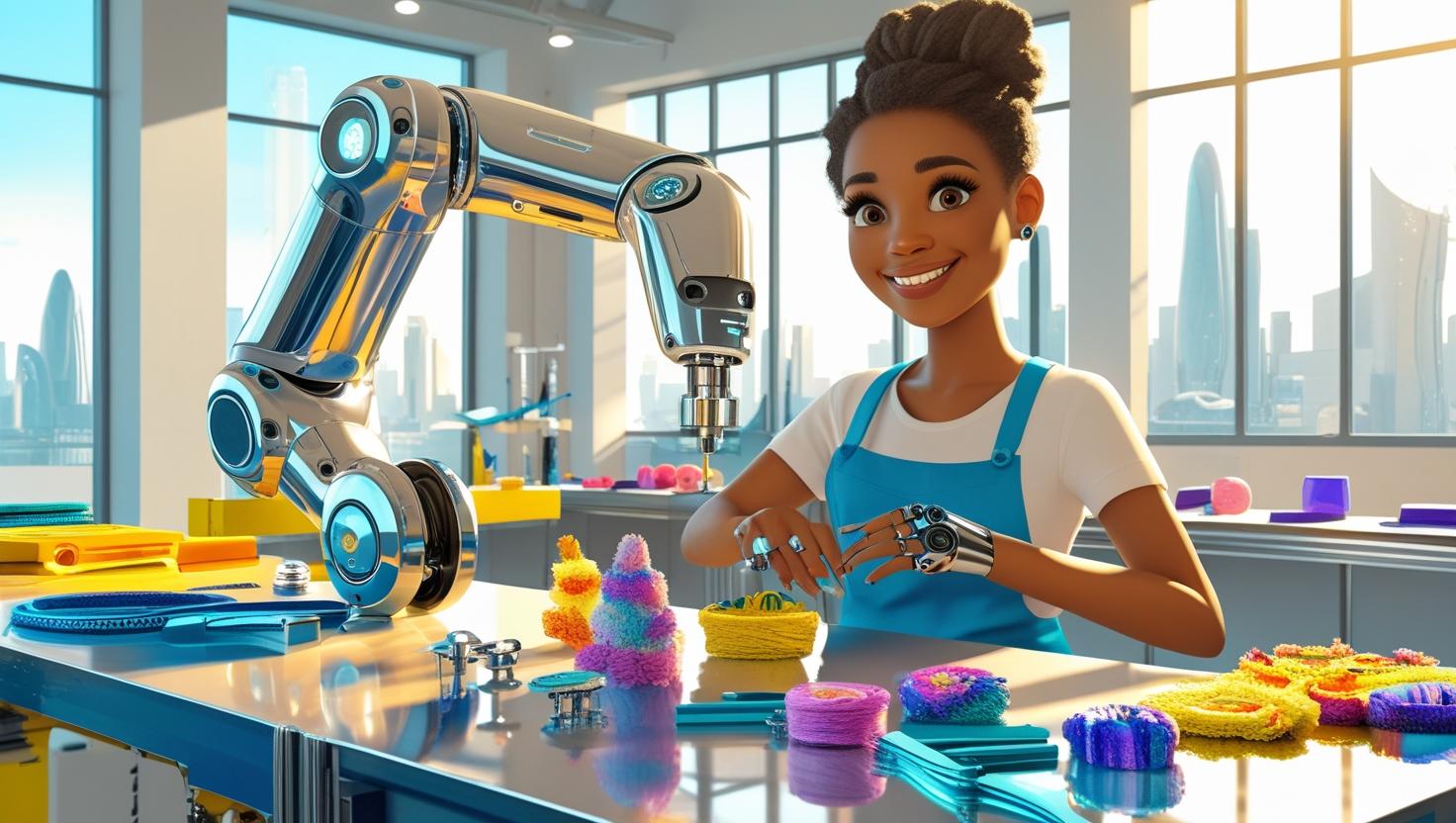
Small businesses are always looking for ways to work smarter without taking on unnecessary costs. While industrial robots were once associated mainly with large factories and expensive automation projects, that picture is changing. Collaborative robots, or cobots, are making automation more accessible to small businesses.
Unlike traditional industrial robots that often operate in isolated areas, cobots are designed to work alongside people. They can handle repetitive, physically demanding, or highly consistent tasks while employees focus on work that requires judgment, creativity, and problem-solving.
For small businesses, this combination can create meaningful improvements in productivity, workplace efficiency, and operational flexibility.
What Are Cobots?
Cobots are robots designed to collaborate with human workers. They can be programmed to perform tasks such as picking and placing products, assembling components, packaging goods, machine tending, inspection, and material handling.
Their relatively flexible design makes them useful for businesses that may not have the production volume or budget required for traditional industrial automation.
A small manufacturer, for example, could use a cobot to repeatedly move components between workstations while employees concentrate on assembly, quality checks, or customer-specific requirements.
Why Small Businesses Are Turning to Cobots
Automation is no longer only about replacing manual work. For many small businesses, it is about helping employees spend more time on valuable activities.
Cobots can support businesses in several important ways.
1. Higher Productivity
Repetitive tasks can consume a significant portion of an employee’s working day. A cobot can continuously perform suitable repetitive operations with consistent speed.
This allows human workers to spend more time on tasks that require decision-making and attention to detail.
The result can be a smoother workflow and better use of available employees and equipment.
2. More Consistent Quality
Human workers can naturally experience fatigue, especially when performing the same movement hundreds or thousands of times.
Cobots can perform programmed tasks consistently. When properly configured and monitored, they can help businesses maintain greater consistency in activities such as assembly, dispensing, packaging, and inspection.
This does not eliminate the need for human quality control. Instead, it gives employees another tool for maintaining reliable production standards.
3. Flexible Automation
One of the biggest challenges for small businesses is changing customer demand. Production requirements may shift from one product to another, making fixed automation difficult to justify.
Cobots can often be reprogrammed or moved between suitable tasks. This flexibility can make them practical for businesses producing different products or operating in smaller production batches.
For a growing company, that adaptability can be especially valuable.
4. Reduced Physical Strain
Some jobs involve repetitive lifting, reaching, or movement that can place physical strain on workers.
Cobots can take on certain repetitive material-handling activities, allowing employees to work alongside automation rather than repeatedly performing physically demanding movements.
This can contribute to a more sustainable workplace when the tasks and safety setup are appropriate.
5. Better Use of Skilled Employees
Small businesses often have limited access to skilled workers. Using experienced employees for repetitive manual work may not be the best use of their expertise.
A cobot can take over suitable routine activities while skilled employees focus on troubleshooting, process improvement, customer requirements, equipment monitoring, and other higher-value responsibilities.
This creates a partnership between people and automation rather than treating automation as a standalone system.
Cobots Can Help Small Businesses Scale
Growth can create an interesting challenge for small companies. More orders may mean longer working hours, additional equipment, or more employees.
Cobots can provide another option.
Instead of immediately redesigning an entire production line, a business can introduce automation into a specific bottleneck. If the results are positive, additional automation can be considered over time.
This gradual approach can make automation easier to manage.
For example, a business struggling with packaging delays could automate that particular stage first. Once packaging becomes more efficient, management can evaluate whether another production step would benefit from automation.
What Tasks Can Cobots Handle?
Cobots are suitable for many structured and repetitive applications. Depending on the model, tooling, software, and safety configuration, common uses include:
- Pick-and-place operations
- Product packaging
- Machine tending
- Assembly assistance
- Material handling
- Quality inspection
- Dispensing
- Sorting
- Palletizing
- Repetitive component handling
The important point is that businesses should select applications based on their actual workflow rather than adopting automation simply because the technology is available.
Are Cobots Affordable for Small Businesses?
Cost is naturally one of the first questions small-business owners ask.
The total investment is not limited to the robot itself. Businesses may also need end-of-arm tooling, sensors, software, integration, training, safety equipment, maintenance, and process changes.
However, cobots can provide a more flexible entry point into automation than some traditional robotic systems.
The right financial decision depends on factors such as task frequency, labor requirements, production volume, operating hours, maintenance costs, and expected productivity improvements.
A simple return-on-investment analysis can help determine whether a particular application makes financial sense.
Human Workers Still Matter
Automation works best when businesses treat employees as part of the implementation process.
Workers understand the practical details of a production environment that may not be obvious from a technical analysis. Their experience can help identify which tasks are suitable for automation and which require human judgment.
Employees can also be trained to operate, monitor, and maintain cobot systems.
This creates a more collaborative workplace where people and machines have different but complementary roles.
Safety Should Come First
The word “collaborative” does not mean that every cobot can automatically work safely in every environment.
A proper risk assessment is essential before deploying a cobot. Businesses need to consider the robot, tooling, materials, speed, workspace, surrounding equipment, and the specific tasks employees will perform.
Safety standards, manufacturer requirements, guarding, sensors, emergency systems, and appropriate training should all be considered during implementation.
The goal should be to create a safe human-machine workspace rather than simply installing a robot and expecting it to operate without supervision.
How Small Businesses Can Get Started
Businesses do not necessarily need to automate everything at once.
A practical starting point is to identify one repetitive task that consumes significant time or creates a production bottleneck.
Then evaluate:
- How frequently is the task performed?
- How much employee time does it require?
- Is the process predictable enough for automation?
- What equipment and tooling would be required?
- What safety measures are necessary?
- What productivity improvement could realistically be achieved?
- How long might it take to recover the investment?
Starting with a clearly defined use case makes it easier to measure results and learn from the implementation.
The Future of Cobots in Small Businesses
As robotics, artificial intelligence, sensors, and automation software continue to develop, cobots are becoming part of a broader smart-manufacturing ecosystem.
Future systems may become easier to program, monitor, and integrate with other business technologies. Data from automated processes can also help businesses identify bottlenecks and improve operations.
For small businesses, this could mean more flexible production without requiring a complete transformation of the workplace.
Final Thoughts
Cobots in small businesses are not simply about putting robots on the factory floor. They represent a practical way for companies to combine human skills with automation.
When introduced thoughtfully, cobots can help businesses improve productivity, maintain consistency, reduce repetitive work, and make better use of skilled employees.
The most successful approach is usually not to automate everything. It is to find the right task, understand the business need, involve employees, prioritize safety, and measure the results.
For small businesses looking toward the future, cobots can become a valuable part of a smarter and more flexible automation strategy.
Frequently Asked Questions
1. What are cobots?
Cobots are collaborative robots designed to work alongside people on tasks such as assembly, packaging, handling, and inspection.
2. How can cobots help small businesses?
Cobots can improve productivity, support consistent quality, reduce repetitive work, and help employees focus on higher-value tasks.
3. Are cobots suitable for small businesses?
Yes. Their flexibility allows small businesses to automate specific repetitive tasks without necessarily redesigning their entire production process.
4. Are cobots safe to use around employees?
Cobots are designed for collaborative applications, but businesses still need proper risk assessments, safety measures, training, and suitable system configuration.


