

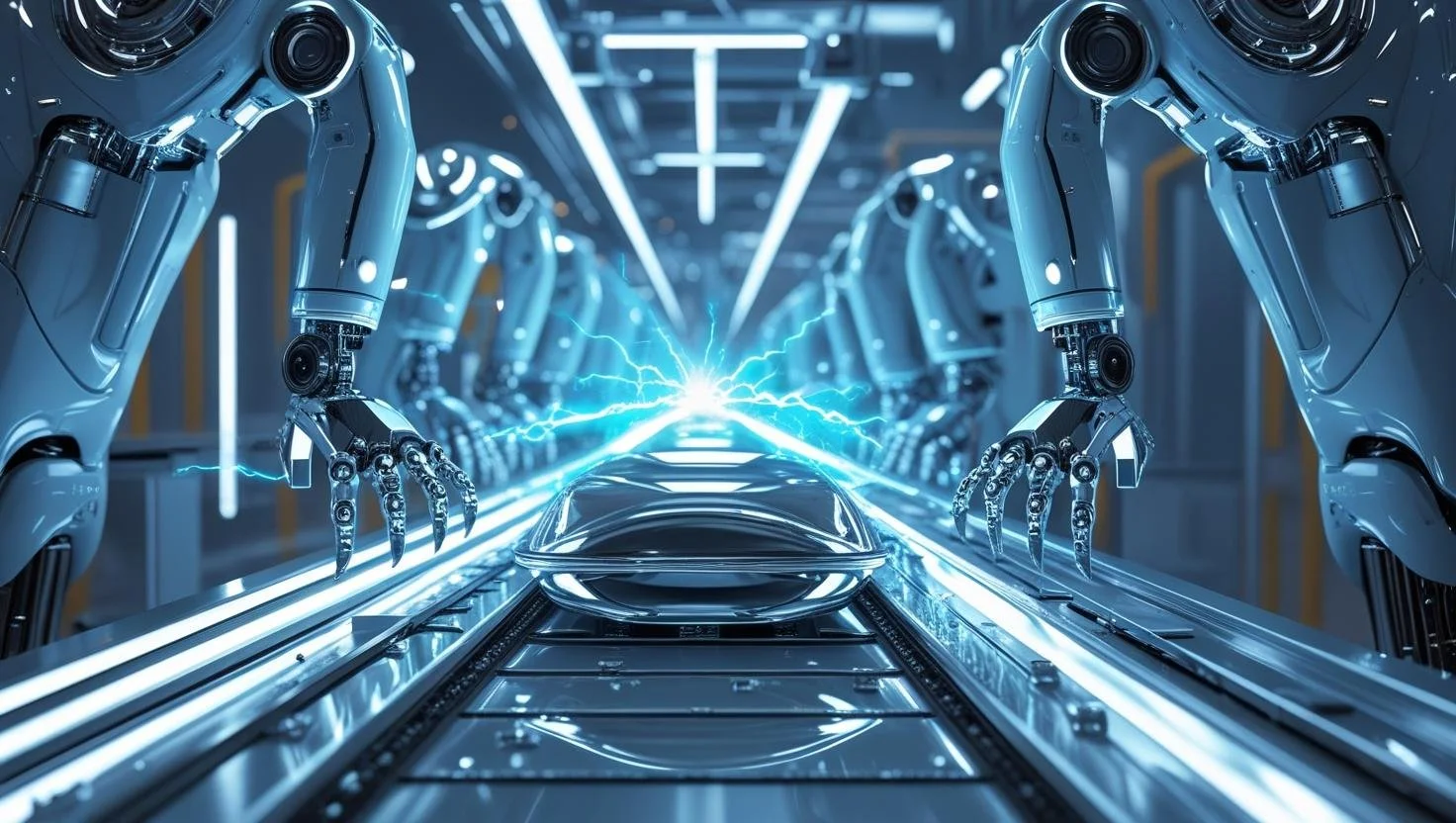
Manufacturing is changing quickly as companies look for better ways to produce goods faster while maintaining consistent quality. One of the technologies playing an important role in this transformation is robotics. From assembling components to inspecting finished products, robots are becoming part of everyday manufacturing operations.
The use of robotics in manufacturing is not simply about replacing manual work. Modern robotic systems can work alongside employees, handle repetitive tasks, improve production consistency, and collect useful operational data. When implemented properly, they can help manufacturers improve both output and product quality.
How Robotics Is Changing Manufacturing
Traditional manufacturing often depends heavily on repetitive manual processes. Tasks such as picking components, welding, packaging, painting, and material handling can require workers to perform the same movements throughout a shift.
Robotic systems can perform many of these tasks with a high level of repeatability. They can be programmed to follow specific movements and production instructions, helping businesses maintain consistent processes across large production runs.
This consistency becomes particularly useful when manufacturers need to produce thousands or millions of similar products while keeping quality standards stable.
Robotics Helps Increase Production Output
One of the biggest advantages of robotics in manufacturing is the ability to maintain steady production.
Unlike human workers, industrial robots do not experience physical fatigue in the same way. Depending on the application and safety requirements, robotic systems can operate for extended periods with limited interruptions.
Robots can also move materials and components quickly between production stages. For example, an automated picking system can identify an item, collect it, and place it in the correct location repeatedly. This can reduce delays between individual manufacturing steps.
Higher output does not necessarily mean simply making machines work faster. Manufacturers also benefit when robots reduce bottlenecks, shorten cycle times, and make production processes more predictable.
Better Product Quality Through Consistency
Quality control is another area where robotics can make a significant difference.
Human workers can perform tasks extremely well, but repetitive operations can become difficult to maintain consistently over long periods. Small variations in positioning, pressure, temperature, or timing may affect the final product.
Robots can repeat programmed movements with precise positioning. This is useful for processes such as welding, adhesive application, assembly, and component placement.
Robotic inspection systems can also use cameras and sensors to identify defects. Instead of relying only on visual inspection, manufacturers can combine robotics with machine vision and artificial intelligence to detect issues that may be difficult to identify manually.
Robots Improve Workplace Safety
Manufacturing environments can include tasks involving heavy materials, high temperatures, chemicals, sharp components, or repetitive movements.
Robotics can take on some of these higher-risk activities, reducing the amount of direct exposure for employees. For example, robots can be used for material handling, welding, painting, and working in environments where conditions may be uncomfortable or hazardous.
This does not eliminate workplace safety responsibilities. Robotic systems must be properly installed, programmed, maintained, and operated according to applicable safety requirements.
The goal is to create a workplace where automation and human expertise work together safely.
Human Workers and Robots Can Work Together
Modern manufacturing is increasingly moving toward collaborative automation rather than complete separation between people and machines.
Collaborative robots, often called cobots, are designed for applications where humans and robotic systems may work in close proximity under appropriate safety conditions. A worker might handle a complex decision-making task while the robot performs repetitive lifting, positioning, or assembly work.
This approach allows businesses to combine human strengths with machine capabilities.
Employees can focus on activities requiring judgment, problem-solving, creativity, quality decisions, and process improvement, while robots handle repetitive physical operations.
Robotics Can Reduce Production Errors
Manufacturing errors can lead to wasted materials, rework, production delays, and customer complaints. Automation can help reduce some types of errors by following predefined processes consistently.
For example, a robotic assembly system can be programmed to place a component in a specific position and follow a defined sequence. Sensors can then check whether the component has been positioned correctly.
When robotics is combined with real-time monitoring, manufacturers can identify process problems earlier instead of discovering them only after products have reached the end of the production line.
Data Makes Robotic Manufacturing Smarter
Today’s robotic systems are increasingly connected to manufacturing software, sensors, industrial networks, and analytics platforms.
These connections allow businesses to collect information about production cycles, machine performance, downtime, errors, and maintenance requirements.
Manufacturers can use this data to understand where production is slowing down and where equipment may require attention.
Predictive maintenance is one example. Instead of waiting for a machine to fail, companies can monitor equipment conditions and identify warning signs that may indicate a potential problem.
This can help reduce unexpected downtime and support more reliable production planning.
Robotics Supports Flexible Manufacturing
Manufacturers today often need to respond to changing customer requirements. Product designs, order volumes, and production schedules can change frequently.
Modern robots can be reprogrammed for different tasks, making them useful in production environments that require flexibility.
For smaller production batches, manufacturers may use robots that can switch between tasks with limited setup changes. This flexibility can be particularly valuable for companies producing customized products or multiple product variations.
The Role of AI in Robotic Manufacturing
Artificial intelligence is expanding what robotic systems can do.
Traditional robots generally follow predefined instructions. AI-enabled systems can process information from cameras, sensors, and other data sources to make decisions within defined operating parameters.
For example, machine vision can help a robotic system identify different components and determine how they should be handled. AI can also support quality inspection by analyzing images and identifying patterns associated with defects.
As AI and robotics continue to develop, manufacturing systems are becoming more adaptive and data-driven.
Challenges Manufacturers Need to Consider
Although robotics offers many advantages, automation is not automatically the right solution for every manufacturing process.
The initial investment can be significant. Companies may need to purchase robotic equipment, sensors, software, safety systems, and supporting infrastructure. Integration with existing machinery can also require specialized expertise.
Employees may also need training to operate, monitor, troubleshoot, and maintain robotic systems.
Another important consideration is process selection. Automating a poorly designed process may simply make an inefficient process run faster. Manufacturers should first understand their workflow and identify where automation can provide measurable value.
The Future of Robotics in Manufacturing
Robotics is likely to become increasingly connected with artificial intelligence, industrial IoT, cloud platforms, machine vision, and advanced analytics.
Future manufacturing environments may use interconnected robotic systems that share production information in real time. This could allow factories to respond more quickly to changes in demand, equipment conditions, and quality requirements.
The focus will increasingly move beyond individual robots toward complete automated production systems.
Manufacturers that approach automation strategically can use robotics to improve productivity while creating more consistent and data-driven processes.
Conclusion
Robotics in manufacturing can help businesses increase production output, improve consistency, reduce certain errors, and support safer working environments. Its value comes from more than simply automating repetitive tasks.
When robots are combined with skilled employees, intelligent software, sensors, and reliable production data, they can become an important part of a modern manufacturing strategy.
The most effective approach is not to automate everything. Instead, manufacturers should identify processes where robotics can solve real production challenges and deliver measurable improvements in efficiency and quality.
As technology continues to advance, robotics will remain an important part of the evolution toward smarter, more flexible, and more connected manufacturing.
Frequently Asked Questions
1. How does robotics increase manufacturing output?
Robots can perform repetitive production tasks consistently and for extended periods, helping reduce cycle times, production delays, and workflow bottlenecks.
2. Can robotics improve product quality?
Yes. Robots can perform precise and repeatable tasks, while robotic inspection systems can use cameras and sensors to identify defects and quality issues.
3. Do robots replace human workers in manufacturing?
Robots can automate certain repetitive or hazardous tasks, but human workers remain important for decision-making, supervision, problem-solving, maintenance, and process improvement.
4. What role does AI play in manufacturing robotics?
AI can help robotic systems analyze data from cameras and sensors, recognize objects, detect quality issues, and adapt certain operations to changing production conditions.


