
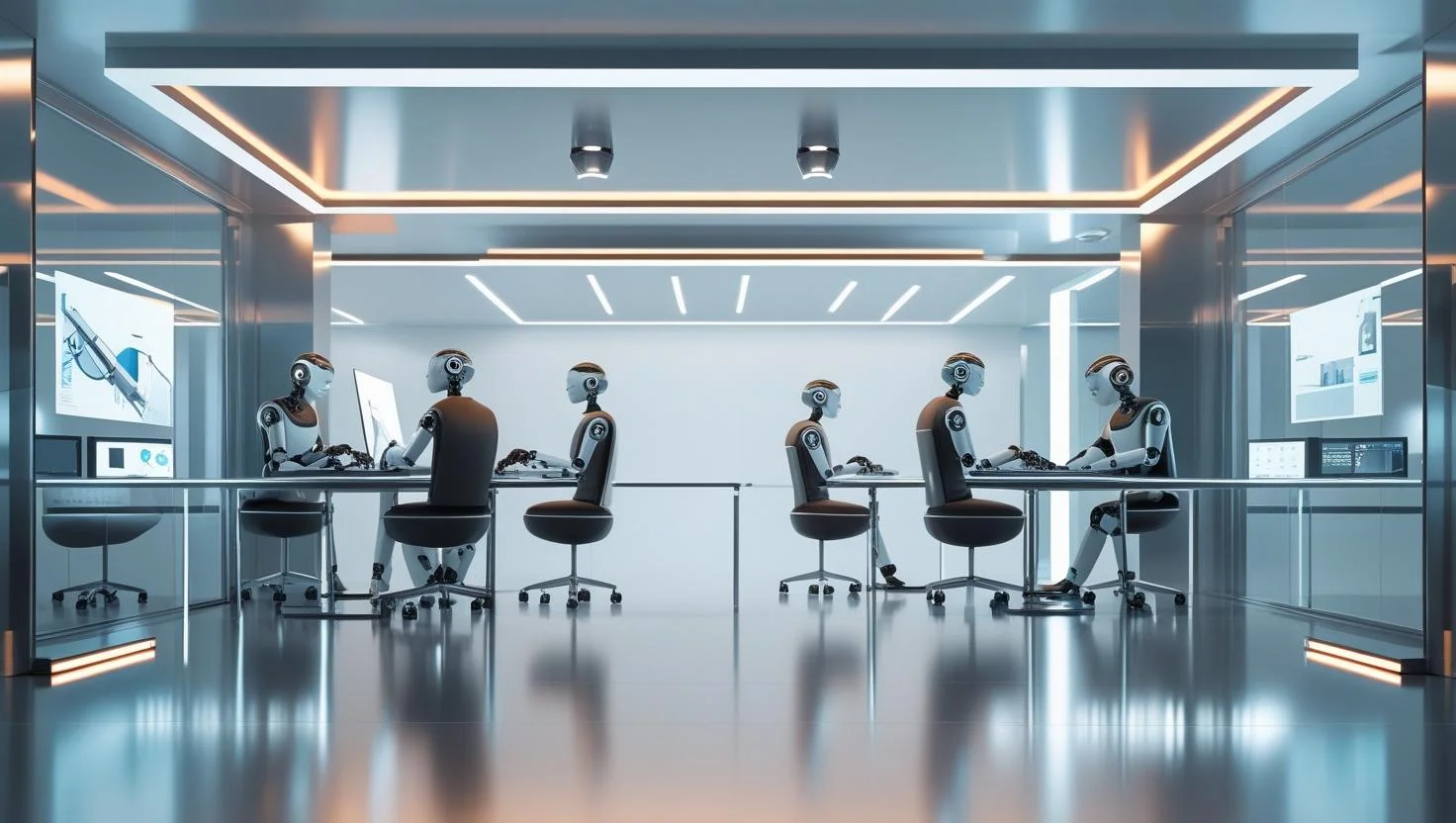
Artificial intelligence, automation, robotics, and connected technologies are changing how businesses operate and how people work. Tasks that once required hours of manual effort can now be completed in minutes with the help of intelligent systems.
However, the future of work is not simply about humans being replaced by machines. It is increasingly about human-machine collaboration, where people and technology work together to achieve better results.
In 2026, businesses are using intelligent technologies to automate repetitive work, analyze information, improve productivity, and support decision-making. At the same time, human creativity, judgment, communication, and problem-solving remain essential.
The organizations and professionals that understand how to combine these strengths will be better prepared for a technology-driven workplace.
In this article, we explore five practical ways to build stronger human-machine collaboration and thrive in 2026.
What Is Human-Machine Collaboration?
Human-machine collaboration is the process of people and intelligent technologies working together to complete tasks, solve problems, and achieve common objectives.
Machines are particularly effective at processing large amounts of data, identifying patterns, performing repetitive tasks, and operating continuously. Humans, on the other hand, bring creativity, emotional intelligence, contextual understanding, critical thinking, and ethical judgment.
For example, an AI system can analyze thousands of customer interactions and identify common complaints. A human employee can then use those insights to understand customer expectations and develop a better solution.
This combination allows businesses to use automation without removing the human element from important processes.
Why Human-Machine Collaboration Matters in 2026
AI and automation are becoming part of everyday business operations. Organizations are adopting intelligent technologies for customer service, cybersecurity, manufacturing, data analysis, marketing, healthcare, and many other areas.
As technology becomes more capable, employees also need to learn how to work effectively with these systems.
Human-machine collaboration can help businesses:
- Reduce repetitive manual work
- Improve operational efficiency
- Process information faster
- Support better decision-making
- Identify problems earlier
- Improve employee productivity
- Create more responsive customer experiences
- Adapt to changing technology
The goal is not to automate everything. Instead, businesses should identify where machines can provide support and where human involvement creates greater value.
Top 5 Ways to Thrive With Human-Machine Collaboration
1. Develop Strong AI and Technology Skills
The first step toward effective human-machine collaboration is understanding the technology you are working with.
You do not need to become a software developer or AI specialist to benefit from intelligent technologies. Basic knowledge of AI, automation, data, cybersecurity, and digital tools can help employees understand how technology can support their daily responsibilities.
For example, an employee might use an AI assistant to organize information, summarize lengthy documents, generate ideas, or automate routine tasks.
The important point is to understand both what the technology can do and where its limitations begin.
How to build technology skills
- Learn the basics of AI and automation.
- Experiment with relevant digital tools.
- Understand how automated workflows operate.
- Learn how to evaluate AI-generated information.
- Stay informed about emerging technologies.
- Apply new tools to practical workplace tasks.
Technology literacy allows employees to become active users of automation rather than simply passive recipients of technological change.
2. Strengthen Human Skills
As machines become better at repetitive and analytical tasks, human skills become increasingly important.
Creativity, communication, critical thinking, collaboration, leadership, and emotional intelligence are difficult to replicate through automation alone.
Imagine a customer-service system that automatically identifies a customer’s problem. The technology may provide useful information, but a human employee may still need to understand the customer’s emotions and determine the most appropriate response.
This is where human judgment adds value.
Important human skills to develop include:
- Critical thinking
- Creative problem-solving
- Communication
- Emotional intelligence
- Leadership
- Collaboration
- Adaptability
- Decision-making
Technology can provide recommendations, but people still need to understand the situation and decide how those recommendations should be used.
3. Automate Repetitive Work and Focus on Higher-Value Activities
One of the biggest benefits of human-machine collaboration is the ability to reduce repetitive work.
Employees often spend significant amounts of time on activities such as data entry, routine reporting, scheduling, document processing, system monitoring, and repetitive communication.
Many of these activities can be supported or automated using intelligent technologies.
For example:
Machine: Collects and organizes data
Machine: Detects patterns
Machine: Generates a preliminary report
Human: Reviews the information
Human: Adds business context
Human: Makes the final decision
This approach allows employees to spend more time on strategic and creative activities.
The objective should not be simply to remove human involvement. Instead, automation should give people more time to focus on work that requires experience, judgment, and creativity.
4. Keep Human Oversight in Important Decisions
Automation can make processes faster, but speed should not replace human oversight.
When automated systems influence important business decisions, organizations should establish appropriate review processes.
A useful human-in-the-loop approach can look like this:
AI analyzes → AI recommends → Human reviews → Human decides → System executes
This model can be particularly useful in areas such as cybersecurity, financial operations, customer management, healthcare, and other situations where incorrect automated decisions can have significant consequences.
Human oversight also helps organizations identify inaccurate information, unexpected system behavior, poor-quality data, and situations that fall outside an automated system’s original design.
The combination of automation and human accountability can create more responsible technology adoption.
5. Make Continuous Learning a Priority
Technology does not remain static.
New AI systems, automation platforms, cybersecurity technologies, robotics solutions, and connected devices continue to appear and evolve.
Because of this, professionals should develop a habit of continuous learning.
Instead of learning only one tool, focus on developing the ability to understand and adapt to new technologies.
A simple approach is:
Learn → Practice → Apply → Evaluate → Improve
Start by learning how a technology works. Then use it on a practical task, evaluate the results, and identify where human input improved the outcome.
Organizations can also support this process through:
- Employee training programs
- Technology workshops
- AI literacy sessions
- Internal experimentation
- Cross-functional learning
- Skills development programs
Continuous learning helps employees remain adaptable as technology changes.
Human-Machine Collaboration Across Industries
Human-machine collaboration is already relevant across many industries.
Manufacturing
Robots and automated machinery can perform repetitive production tasks while employees monitor operations, handle exceptions, maintain equipment, and improve processes.
Cybersecurity
Automated security systems can continuously monitor networks and identify suspicious activity. Security professionals can investigate alerts, understand the wider context, and determine appropriate responses.
Healthcare
AI can support data analysis, administrative processes, and information management, while healthcare professionals provide human judgment, communication, and patient-centered decision-making.
Smart Cities
IoT sensors and intelligent systems can collect information about traffic, energy consumption, infrastructure, and public services. Human teams can use these insights to make informed operational decisions.
Business Operations
Businesses can use automation for reporting, workflow management, customer support, data processing, and other repetitive activities, allowing employees to concentrate on strategy and innovation.
Challenges of Human-Machine Collaboration
Although collaboration between humans and machines provides significant opportunities, it also creates challenges.
Lack of Technology Skills
Employees may struggle to use new technologies effectively without proper training.
Overdependence on Automation
Relying too heavily on automated systems can create problems when unusual situations require human judgment.
Data and Security Risks
AI and automated systems depend on data. Poor data management can create security, privacy, and accuracy concerns.
Resistance to Change
Employees may be hesitant to adopt new technologies when they do not understand how those technologies will affect their work.
Lack of Clear Responsibility
Organizations should clearly define who is responsible when an automated system produces an incorrect recommendation or outcome.
Addressing these challenges requires a combination of technology, training, governance, and human oversight.
How Businesses Can Prepare for the Future
Businesses can take several practical steps to create effective human-machine collaboration.
First, identify repetitive processes that could benefit from automation. Next, determine which parts of those processes still require human judgment.
Organizations should then provide employees with appropriate training and establish clear guidelines for using AI and automation.
A successful approach can be built around three principles:
Automate what machines do well.
Keep humans involved where judgment matters.
Continuously improve the relationship between people and technology.
This creates a workplace where technology supports employees instead of simply adding another layer of complexity.
The Future of Work Is Human + Machine
The rise of AI and automation does not necessarily mean that humans become less important.
Instead, the nature of human work is changing.
Machines can process information quickly, monitor systems continuously, and perform repetitive activities efficiently. Humans can provide creativity, context, empathy, strategic thinking, and accountability.
When these capabilities are combined effectively, businesses can create smarter and more flexible workflows.
The key question for 2026 is therefore not whether humans or machines will control the workplace.
It is how effectively organizations can bring human expertise and machine intelligence together.
Conclusion
Human-machine collaboration is becoming an important part of the modern digital workplace. As AI, automation, robotics, and connected technologies continue to develop, businesses and employees will need to learn how to use these technologies effectively while maintaining human judgment.
The five key steps are simple:
- Build AI and technology literacy.
- Strengthen human skills.
- Automate repetitive work.
- Maintain human oversight.
- Make continuous learning a priority.
The future belongs to workplaces where technology handles what it does best and people focus on the areas where human insight matters most.
By developing the right combination of technology skills and human capabilities, businesses can create a more productive, adaptable, and responsible approach to the future of work.
Frequently Asked Questions
1. What is human-machine collaboration?
Human-machine collaboration is the process of people and intelligent technologies working together to complete tasks, solve problems, and improve business outcomes. Machines can handle repetitive and data-intensive activities, while humans provide creativity, judgment, communication, and contextual understanding.
2. Why is human-machine collaboration important in 2026?
Human-machine collaboration is important in 2026 because AI, automation, robotics, and intelligent systems are becoming increasingly common in modern workplaces. Combining machine efficiency with human expertise can help businesses improve productivity, decision-making, innovation, and adaptability.
3. How can employees prepare for working with AI and automation?
Employees can prepare by developing AI and technology literacy while strengthening human skills such as critical thinking, communication, creativity, problem-solving, collaboration, and adaptability. Continuous learning and practical experience with new technologies can also help employees adjust to changing workplace requirements.
4. Will machines replace humans in the future of work?
Machines are likely to automate many repetitive and data-intensive activities, but human judgment, creativity, communication, and accountability remain important. The future of work is increasingly focused on using machines to support human capabilities and improve how people perform their work.


