
Technology has changed the way people work, communicate, shop, and manage their daily routines. Now, it is also changing the way we live inside our homes. From lights that turn on automatically to smart appliances that can be controlled from a smartphone, tech in smart homes is making everyday tasks simpler, faster, and more convenient.
A smart home is not simply a house filled with connected gadgets. The real value comes from how these devices work together to reduce repetitive tasks and give people greater control over their living spaces. As connected technology continues to improve, smart homes are becoming more practical for everyday households.
What Is Tech in Smart Homes?
Tech in smart homes refers to connected devices and systems that can monitor, automate, or control different parts of a home. These technologies commonly communicate through wireless networks and can often be managed through mobile applications, voice assistants, sensors, or automated routines.
For example, a homeowner can create a routine that turns off unnecessary lights, adjusts the thermostat, locks selected doors, and activates security systems when everyone leaves the house.
The goal is straightforward: use technology to make everyday living more comfortable and less demanding.
How Smart Home Technology Makes Life Easier
Smart technology can take care of many small tasks that people normally have to remember throughout the day.
1. Automated Lighting
Smart lighting systems allow homeowners to control lights remotely or automate them according to schedules and conditions. Motion sensors can switch lights on when someone enters a room and turn them off when the space is empty.
Some systems can also adjust brightness based on the time of day. This provides convenience while potentially reducing unnecessary energy consumption.
2. Smarter Temperature Control
Smart thermostats can learn household routines and adjust indoor temperatures automatically. Instead of manually changing settings throughout the day, users can create schedules that match their lifestyle.
For instance, a system could reduce heating or cooling when nobody is home and restore a comfortable temperature before residents return.
3. Connected Home Security
Security is another important area where smart technology is making a difference. Smart cameras, doorbells, locks, and motion sensors can provide homeowners with better visibility around their properties.
Many connected security devices can send notifications when unusual activity is detected. This means homeowners can check what is happening even when they are away.
However, smart security devices should be configured carefully and protected with strong passwords and regular software updates.
4. Voice-Controlled Devices
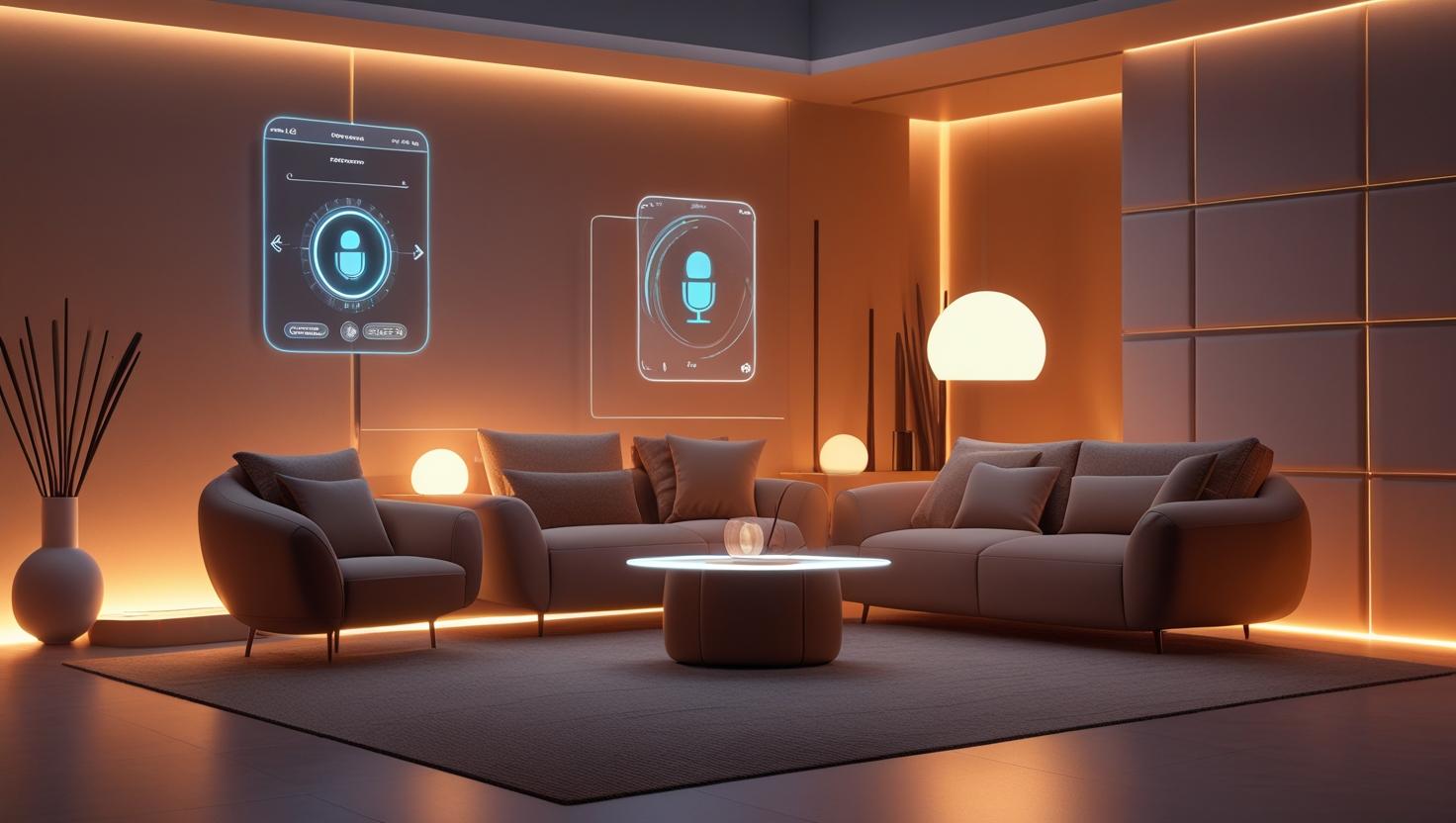
Voice assistants have made interacting with smart devices more natural. Instead of opening an app or searching for a physical switch, users can give simple voice commands.
People can use voice control to perform tasks such as:
- Turning lights on or off
- Adjusting room temperature
- Playing music
- Checking compatible appliances
- Creating reminders
- Controlling connected entertainment systems
For older adults and people with mobility challenges, voice-based controls can also provide an additional way to interact with household technology.
5. Smart Appliances
Modern appliances are becoming increasingly connected. Smart refrigerators, washing machines, ovens, vacuum cleaners, and other devices can provide useful information and automation features.
A smart washing machine, for example, may notify a user when a cycle is finished. A robotic vacuum can follow a predefined cleaning schedule without requiring someone to manually operate it every time.
These small conveniences can make a noticeable difference in busy households.
6. Energy Management
Energy efficiency is becoming an important consideration for homeowners. Smart plugs, energy monitors, thermostats, and connected lighting can help people understand how electricity is being used.
Some systems can identify devices that remain active unnecessarily and provide information about consumption patterns. This can help households make more informed decisions about their energy usage.
When combined with renewable energy technologies such as solar panels and home energy storage, smart systems can support more efficient energy management.
The Role of IoT in Smart Homes
The Internet of Things (IoT) is one of the technologies behind modern smart homes. IoT allows physical devices to connect to networks and exchange information.
A smart home might contain dozens of connected devices, including sensors, cameras, appliances, lights, thermostats, and entertainment systems. When these devices communicate effectively, homeowners can create automated routines that respond to specific conditions.
For example, a motion sensor could detect movement in a hallway and trigger a light. Similarly, a door sensor could communicate with a security system when a door is opened.
This interaction between devices is what makes a smart home more than a collection of individual gadgets.
Smart Home Technology and Personalization
One of the biggest advantages of connected technology is personalization. Different households have different schedules, preferences, and priorities.
A smart home can be configured around those habits.
A morning routine might gradually increase lighting, adjust the thermostat, and start a coffee maker. An evening routine could dim the lights, lock selected doors, and adjust the temperature for sleeping.
Instead of expecting users to control every device manually, automation allows the home to respond to predefined routines.
Are Smart Homes Completely Automatic?
Not necessarily.
Good smart-home technology should provide automation without removing user control. Homeowners should be able to override automated settings whenever necessary.
For example, an automated thermostat might follow a normal schedule, but a user should still be able to change the temperature manually when circumstances change.
The best systems balance automation, convenience, control, and security.
Challenges of Smart Home Technology
Despite its benefits, smart-home technology also comes with challenges.
Privacy Concerns
Connected devices may collect information about household activity, device usage, or user preferences. Consumers should understand what information their devices collect and how it is handled.
Cybersecurity Risks
Every internet-connected device can become a potential security concern if it is poorly configured. Strong passwords, multi-factor authentication where available, secure Wi-Fi, and regular firmware updates can reduce unnecessary risks.
Compatibility Problems
Not every smart device works seamlessly with every platform. Consumers should check compatibility before purchasing multiple devices from different manufacturers.
Internet Dependence
Some smart-home features depend heavily on an internet connection or cloud services. If connectivity is interrupted, certain functions may become unavailable.
What Does the Future of Smart Homes Look Like?
The future of smart homes is likely to focus less on individual gadgets and more on intelligent systems that work together.
Artificial intelligence could help connected homes better understand routines and respond to changing conditions. Sensors may become more capable, while energy-management systems could become increasingly sophisticated.
We may also see stronger integration between smart homes, electric vehicles, renewable energy systems, health-focused technologies, and home security.
The important shift will be from manually controlling connected devices to creating intelligent environments that respond naturally to everyday needs.
Final Thoughts
Tech in smart homes is transforming ordinary household routines by combining connectivity, automation, sensors, artificial intelligence, and smart appliances. The biggest benefit is not having more devices—it is reducing unnecessary effort.
When designed thoughtfully, a smart home can make lighting, security, temperature control, entertainment, cleaning, and energy management easier to handle.
As the technology matures, smart homes will likely become more integrated, personalized, and useful. For homeowners, the best approach is to focus on practical needs first and choose technologies that genuinely improve everyday living rather than simply adding another connected gadget.
Frequently Asked Questions
1. What is tech in smart homes?
Tech in smart homes refers to connected devices and systems that automate household tasks, improve convenience, support security, and help manage energy usage.
2. How does smart home technology make daily life easier?
Smart home technology can automate lighting, temperature control, security, appliances, and entertainment, reducing the need for repetitive manual tasks.
3. Is smart home technology secure?
Smart home technology can be secure when users follow good security practices such as using strong passwords, enabling multi-factor authentication, securing Wi-Fi, and keeping devices updated.
4. Can smart home devices work together?
Yes. Compatible smart devices can communicate through supported platforms and networks, allowing homeowners to create automated routines that control multiple devices together.


