
Technology has changed the way people work for decades, but the pace of change is becoming much faster. From artificial intelligence and robotics to cloud platforms and intelligent software, businesses are using automation to complete tasks that once required significant amounts of human time.
This shift has created an important conversation around technology and jobs. Will automation eliminate jobs, create new opportunities, or change the skills people need to succeed?
The answer is more complicated than simply saying that machines will replace workers. In many industries, automation is taking over repetitive activities while people continue to handle decision-making, communication, creativity, and problem-solving. At the same time, new roles are emerging around technologies that did not exist a few years ago.
Understanding this changing relationship between technology and employment can help businesses and workers prepare for the future.
What Is Automation in the Workplace?
Workplace automation refers to using software, machines, artificial intelligence, or other technologies to perform tasks with limited human intervention.
Automation can be relatively simple, such as software automatically organizing customer information, or highly advanced, such as robots working alongside employees in manufacturing environments.
Common examples include:
- Automated customer-support chatbots
- Robotic systems in warehouses and factories
- AI-powered data analysis
- Automated payroll and accounting processes
- Software testing and monitoring
- Marketing automation platforms
- Intelligent scheduling systems
- Automated inventory management
The goal is often not simply to remove people from a process. Instead, companies use automation to reduce repetitive work, improve consistency, save time, and allow employees to concentrate on more valuable activities.
How Automation Is Changing Existing Jobs
One of the biggest effects of automation is that it changes the tasks included in many existing jobs.
For example, an employee who once spent several hours entering information into spreadsheets may now use software that completes much of the process automatically. The employee can then spend more time checking results, interpreting information, or communicating with customers.
This means that some jobs may not disappear completely, but their responsibilities can change.
Employees increasingly need to understand how automated systems work and how to use them effectively. Basic digital knowledge is becoming useful across industries, from healthcare and finance to manufacturing and retail.
Will Automation Replace Human Workers?
Automation can replace certain tasks, particularly work that is repetitive, predictable, and highly structured. However, a job usually consists of many different tasks, and not all of them can be easily automated.
Human abilities remain particularly valuable in areas such as:
- Creative thinking
- Leadership
- Negotiation
- Emotional intelligence
- Strategic decision-making
- Relationship building
- Complex problem-solving
- Handling unexpected situations
For example, an automated system may analyze thousands of customer records quickly, but a human manager may still need to decide what action the company should take based on that information.
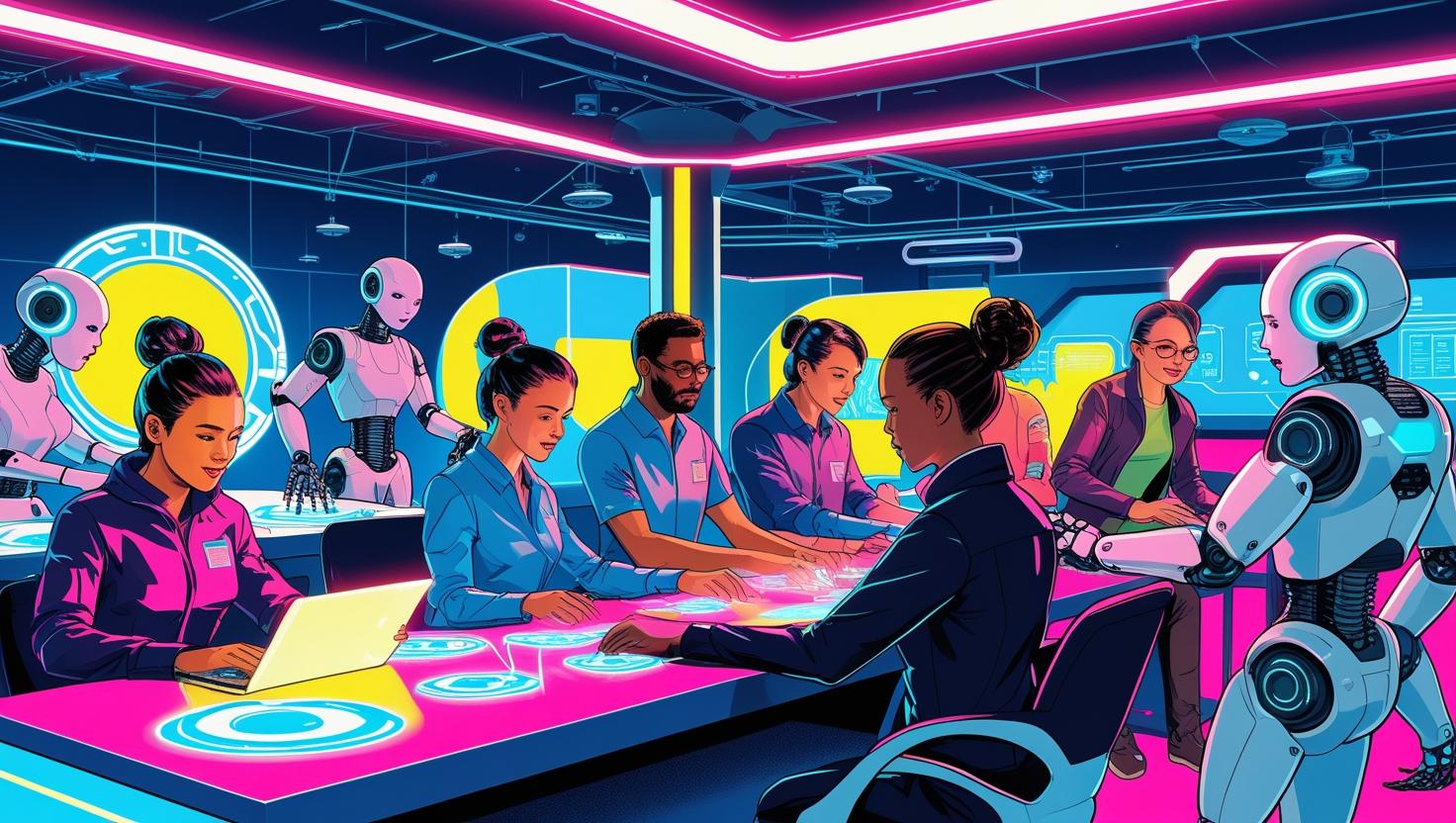
The future of work is therefore likely to involve a combination of automated systems and human expertise rather than a simple replacement of people with machines.
Technology Is Also Creating New Jobs
While automation can reduce demand for some tasks, technological change can also create entirely new types of work.
Businesses need people who can develop, manage, monitor, secure, and improve technology. This has increased demand for roles connected with areas such as artificial intelligence, cybersecurity, robotics, data analysis, cloud computing, and automation management.
Emerging and growing roles can include:
- AI specialists
- Data analysts
- Automation engineers
- Robotics technicians
- Cybersecurity professionals
- Cloud specialists
- AI governance professionals
- Technology implementation managers
Some of these careers did not exist in their current form when earlier generations entered the workforce.
The Growing Importance of Reskilling
As technology changes job responsibilities, workers may need to learn new skills throughout their careers.
This process is commonly described as reskilling or upskilling.
Reskilling involves learning new capabilities that can help someone move into a different type of role. Upskilling focuses on improving skills needed for a person’s existing career.
For example, a marketing professional might learn how to use AI-powered analytics tools, while a manufacturing employee could receive training to operate and maintain automated machinery.
Continuous learning can help employees adapt as their industries change.
Human Skills Will Still Matter
Technical skills are becoming increasingly important, but technology does not eliminate the value of human skills.
Communication, collaboration, adaptability, creativity, and critical thinking can become even more important when employees work alongside automated systems.
Imagine a workplace where software handles routine reports. Employees may have more time to discuss business problems, develop ideas, communicate with clients, and make strategic decisions.
In this environment, technology handles more routine work while people focus on activities that require judgment and context.
Automation and Workplace Productivity
Another major impact of automation is increased productivity.
Automated systems can operate continuously, process large amounts of information, and perform repetitive activities consistently. This can allow businesses to complete certain processes faster and potentially reduce operational costs.
For employees, productivity improvements can mean less time spent on administrative tasks.
For example, an automated workflow could move information between different business applications without requiring an employee to manually copy the same data multiple times.
However, productivity gains depend on how technology is implemented. Poorly designed automation can create additional problems instead of solving them. Businesses need to understand their processes before automating them.
The Role of AI in the Future Workplace
Artificial intelligence is adding another layer to workplace automation.
Traditional automation generally follows predefined rules. AI-based systems can analyze information, identify patterns, generate content, make predictions, and support certain decisions.
This creates opportunities across areas such as:
- Customer service
- Marketing
- Software development
- Healthcare administration
- Financial analysis
- Supply chain management
- Human resources
- Business intelligence
However, AI systems still require appropriate human oversight. Organizations need processes for checking outputs, protecting sensitive information, managing risks, and ensuring that technology is used responsibly.
Challenges Created by Workplace Automation
Automation can bring benefits, but it also creates challenges.
Workers may face uncertainty when their responsibilities change. Some employees may need extensive training to work effectively with new systems. Businesses may also struggle with the cost and complexity of implementing automation.
Other concerns include:
- Skills gaps
- Employee resistance to change
- Data privacy
- Cybersecurity risks
- Unequal access to training
- Dependence on technology
- Changes in workplace culture
These challenges show why automation should be treated as a people-and-technology issue, not simply a technical project.
How Businesses Can Prepare for the Future of Work
Companies can take several practical steps to prepare their workforce for increasing automation.
1. Identify Repetitive Tasks
Businesses should first determine which activities consume significant time without requiring much human judgment. These tasks may be suitable candidates for automation.
2. Invest in Employee Training
Technology investments are more effective when employees understand how to use new systems. Training can help workers build confidence and develop relevant skills.
3. Keep Humans Involved
Not every decision should be automated. Organizations should determine where human review, judgment, and accountability remain necessary.
4. Introduce Technology Gradually
Testing automation on a smaller scale can help businesses identify technical or operational problems before expanding the system.
5. Measure the Results
Companies should track whether automation is actually improving productivity, quality, customer experience, or employee efficiency.
What Workers Can Do to Stay Adaptable
Employees can also take an active role in preparing for workplace changes.
Learning how to use modern digital tools is a useful starting point. Workers can also strengthen skills that technology does not easily reproduce, such as communication, creative thinking, leadership, and complex problem-solving.
Rather than viewing technology only as a threat, employees can learn to treat it as a tool that can extend their capabilities.
The ability to work effectively with technology may become just as important as having expertise in a particular profession.
The Future of Technology and Jobs
The relationship between technology and jobs will continue to evolve.
Some tasks will become automated. Some existing jobs will change. New occupations will emerge, while certain roles may become less common.
The most important shift may be the way people define their work. Instead of spending most of their time completing repetitive processes, employees may increasingly supervise automated systems, interpret information, solve complex problems, and focus on human-centered activities.
Businesses that prepare their employees for this transition can create a workforce that is better equipped for technological change.
Conclusion
Automation is reshaping the workplace by changing how tasks are completed and what skills employers need. While some repetitive activities can be performed by machines and software, technology is also creating new opportunities and allowing people to focus on work that requires creativity, judgment, communication, and problem-solving.
The future of technology and jobs is therefore not simply about humans versus machines. It is about learning how humans and technology can work together effectively.
For businesses and employees alike, adaptability, continuous learning, and responsible technology adoption will be important as the workplace continues to evolve.
Frequently Asked Questions
1. How is automation changing jobs?
Automation is taking over repetitive tasks while allowing employees to focus more on creative thinking, decision-making, communication, and problem-solving.
2. Will automation replace human workers?
Automation can replace some repetitive tasks, but many jobs still require human judgment, creativity, emotional intelligence, and the ability to handle complex situations.
3. What skills are important in the future of work?
Digital skills, adaptability, communication, critical thinking, creativity, and problem-solving can help workers adapt to changing technology and workplace requirements.
4. How can businesses prepare employees for automation?
Businesses can prepare employees by providing training, introducing automation gradually, identifying suitable tasks, and keeping people involved in important decisions.


