

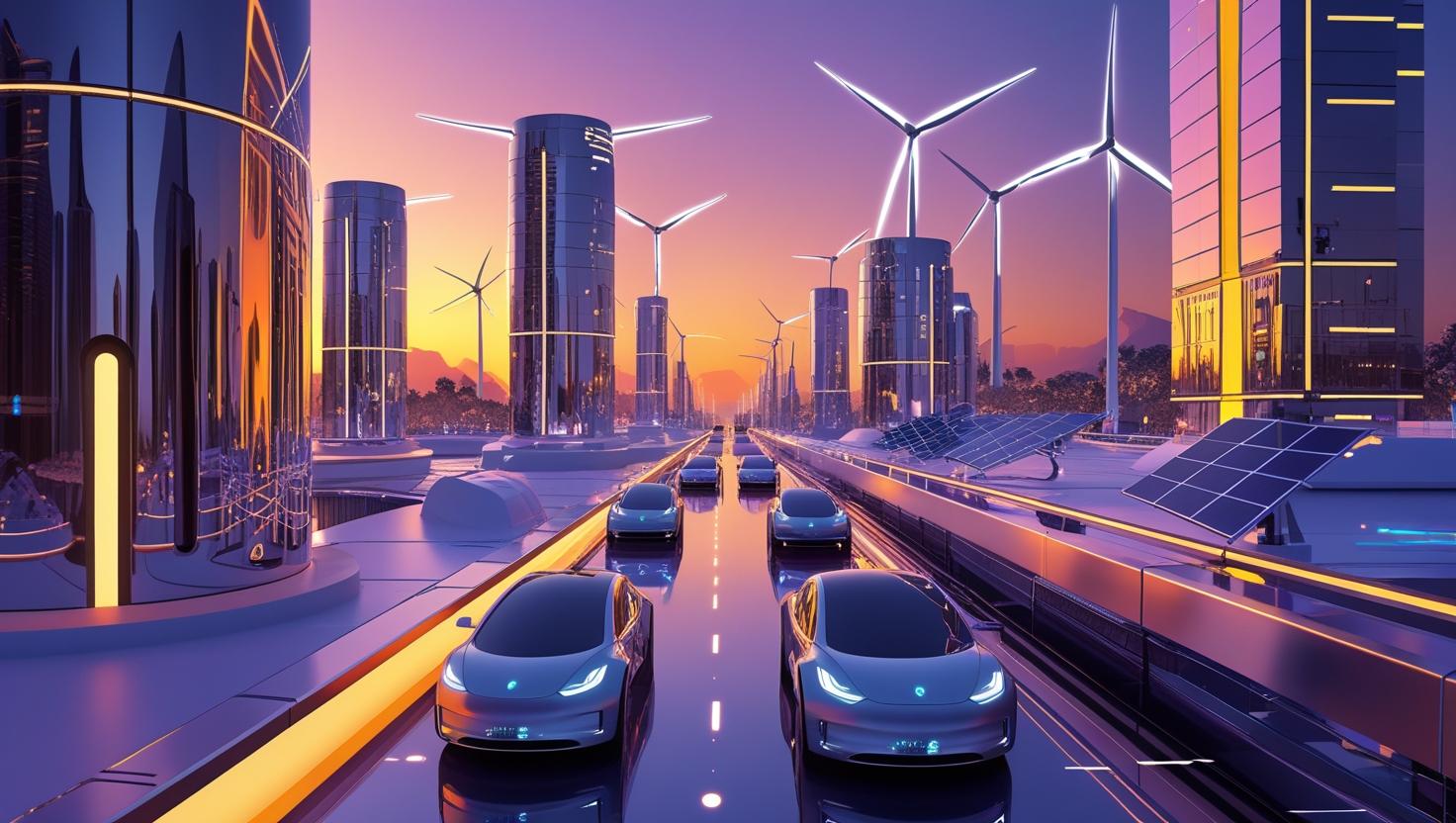
Urban mobility is becoming more complex as cities grow. A smart transportation strategy can connect buses, trains, roads, parking facilities, cycling infrastructure, and pedestrian systems through digital platforms.
Real-time transportation data can help operators understand where demand is increasing. Public transport agencies can use this information to adjust schedules, monitor vehicle locations, and identify delays.
For commuters, digital applications can provide arrival information, route updates, and alternative travel options. This can make daily journeys easier to plan.
Smart mobility can also support electric buses, charging infrastructure, shared transportation, and other lower-emission alternatives. The broader objective is to create transportation systems that are convenient while using urban resources more efficiently.
Smart Buildings and Energy-Efficient Infrastructure
Buildings have a major influence on the energy consumption of urban areas. Smart building technologies can monitor electricity use, temperature, lighting, ventilation, and occupancy.
Automated systems can adjust building operations according to real-time conditions. For instance, lighting and cooling systems can operate differently in occupied and unoccupied spaces.
Building-management platforms can also provide facility managers with information about equipment performance. This can make it easier to identify unusual energy consumption or maintenance requirements.
When smart building technologies are combined with renewable energy and efficient infrastructure, they can support wider urban sustainability objectives.
Connected Roads and Infrastructure
Roads and other infrastructure can also become part of a connected urban network.
Sensors can monitor traffic movement, road conditions, temperature, vibration, and other indicators. This information can help maintenance teams understand where infrastructure may require attention.
Connected infrastructure can support proactive maintenance rather than relying entirely on fixed inspection schedules.
For example, if monitoring equipment identifies unusual changes in a bridge or road structure, the relevant team can investigate the issue. This does not replace professional inspections, but it can provide additional information for infrastructure management.
Smart Agriculture Around Urban Areas
As cities expand, the relationship between urban areas and food production becomes increasingly important.
Technology can support urban and nearby agriculture through connected irrigation systems, soil sensors, weather monitoring, automated equipment, and data analytics.
Sensors can help growers understand moisture levels and environmental conditions. Automated irrigation can then provide water according to actual requirements instead of following a simple fixed schedule.
These technologies can support more efficient resource use and demonstrate how smart-city principles can extend beyond traditional city infrastructure.
The Importance of 5G and Advanced Connectivity
Reliable connectivity is a foundation for many smart-city applications.
Modern communication networks can connect large numbers of devices and support applications that require rapid data exchange. This can be useful for connected transportation, industrial systems, public services, surveillance-free environmental monitoring, and other IoT applications.
As connected devices become more common, cities also need to consider network reliability and coverage. A smart system cannot provide consistent value if its underlying communication infrastructure is unreliable.
Connectivity planning therefore needs to be considered alongside sensors, software, cloud platforms, and other digital technologies.
Cloud Computing and Urban Data Platforms
Smart cities generate information from many different sources. Cloud computing can provide the infrastructure needed to store, process, and analyze large datasets.
A centralized data platform can bring information from transportation, energy, environmental monitoring, public services, and other systems into a common environment.
This can make it easier for authorized teams to identify patterns and coordinate operations.
However, centralizing information also increases the importance of cybersecurity and access controls. Cities need clear rules for who can access information and how different systems should exchange data.
Cybersecurity in Smart Cities
The growing number of connected systems creates an expanded cybersecurity responsibility.
A compromised smart device may seem like a small problem, but interconnected infrastructure can create wider risks if systems are poorly secured.
Smart-city programs should therefore consider security throughout the technology lifecycle. This includes secure device configuration, software updates, access management, encryption where appropriate, network monitoring, and incident-response planning.
Cybersecurity should not be treated as an additional feature added after deployment. It needs to be considered during the design and implementation of connected urban systems.
Sustainable Technology Adoption
Smart-city development should also consider the environmental impact of technology itself.
Sensors, servers, communication equipment, batteries, and electronic devices require materials and energy. Eventually, many of these components will need to be replaced or recycled.
Cities can therefore consider factors such as device lifespan, energy efficiency, repairability, responsible procurement, and electronic-waste management when selecting technologies.
A sustainable smart city is not simply one that uses digital technology. It is one that considers the environmental impact of the entire technology lifecycle.
Open Data and Innovation
When appropriate safeguards are in place, public datasets can support innovation.
Cities can publish selected non-sensitive information about transportation, infrastructure, weather, environmental conditions, and public services. Researchers, developers, startups, and community organizations can use these datasets to create new applications and analyze urban challenges.
Open data can also improve transparency by helping residents understand how their city operates.
At the same time, information that could expose personal or sensitive details should not be made public simply for the sake of openness. Responsible data governance needs to remain a priority.
Technology and Accessibility
Smart-city services should work for people with different abilities, ages, languages, and levels of digital experience.
A digital public-service platform, for example, should be designed with accessibility in mind. Important services should not become available only to residents who have advanced digital skills or reliable internet access.
Cities can maintain multiple access channels, including physical services and assisted digital options, where necessary.
Inclusive design helps ensure that technological progress benefits a broader section of the population.
Creating a Long-Term Smart-City Strategy
Smart-city transformation is not something that can be completed through a single technology installation.
Cities need a long-term strategy that identifies specific problems, establishes measurable objectives, selects appropriate technologies, and evaluates results over time.
A practical strategy may involve:
- Identifying major urban challenges.
- Collecting reliable baseline data.
- Selecting technology based on actual needs.
- Testing projects on a manageable scale.
- Measuring operational and community outcomes.
- Improving systems based on results.
- Expanding successful approaches gradually.
- Maintaining cybersecurity and data-governance standards.
This approach reduces the risk of investing in technology without a clear purpose.
The Role of Human Expertise
Even highly automated cities still depend on people.
Urban planners, engineers, cybersecurity specialists, transportation professionals, data analysts, public administrators, and community representatives all contribute to successful technology programs.
Automation can reduce repetitive work and provide useful information, but human expertise remains important for interpreting data, handling unusual situations, setting policies, and making decisions.
The strongest smart-city systems therefore combine technological capabilities with human knowledge.
Smart Cities and the Next Generation
As younger generations grow up surrounded by connected technology, expectations for urban services may continue to change.
Residents may increasingly expect real-time information, digital access, sustainable transportation, efficient public services, and responsive infrastructure.
This does not mean every service needs to become an app. Instead, cities can focus on creating seamless experiences where technology operates in the background and makes everyday tasks easier.
The long-term opportunity is to create urban environments where digital systems support people without becoming an unnecessary burden.
Key Takeaways
Smart-city technology can influence many areas of urban life, including:
- Transportation and mobility
- Energy and smart buildings
- Water and waste management
- Environmental monitoring
- Public healthcare services
- Infrastructure maintenance
- Emergency response
- Digital government services
- Cybersecurity
- Sustainability
- Citizen participation
- Urban planning
The value of these technologies depends on implementation. Reliable infrastructure, responsible data practices, cybersecurity, accessibility, and long-term planning are just as important as the technology itself.
Looking Ahead
The evolution of smart cities will likely continue as artificial intelligence, IoT, edge computing, advanced connectivity, automation, and data analytics become more integrated.
Future urban systems may become increasingly capable of detecting changes, analyzing conditions, and supporting faster responses. Buildings, transportation networks, energy systems, and public infrastructure could operate as connected parts of a larger urban ecosystem.
But technology should remain a means rather than the final objective.
A successful smart city is ultimately measured by whether residents experience safer streets, cleaner environments, easier transportation, more efficient services, and better access to opportunities.
Technology can provide the tools. Careful planning and human-centered design determine how effectively those tools improve urban living.
Frequently Asked Questions
1. What is a smart city?
A smart city uses technologies such as IoT, artificial intelligence, sensors, cloud computing, and data analytics to improve urban services, infrastructure, sustainability, and everyday living.
2. How does technology improve smart cities?
Technology can help cities manage transportation, energy, water, waste, public services, and infrastructure more efficiently. Real-time data can also help authorities identify problems and respond faster.
3. What technologies are used in smart cities?
Common smart-city technologies include Internet of Things devices, artificial intelligence, edge computing, cloud platforms, smart sensors, connected transportation systems, digital twins, and advanced communication networks.
4. What are the main challenges of smart cities?
Smart cities can face challenges related to cybersecurity, data privacy, infrastructure costs, digital inequality, system interoperability, and long-term maintenance. Strong planning and responsible technology management are important for addressing these challenges.


