
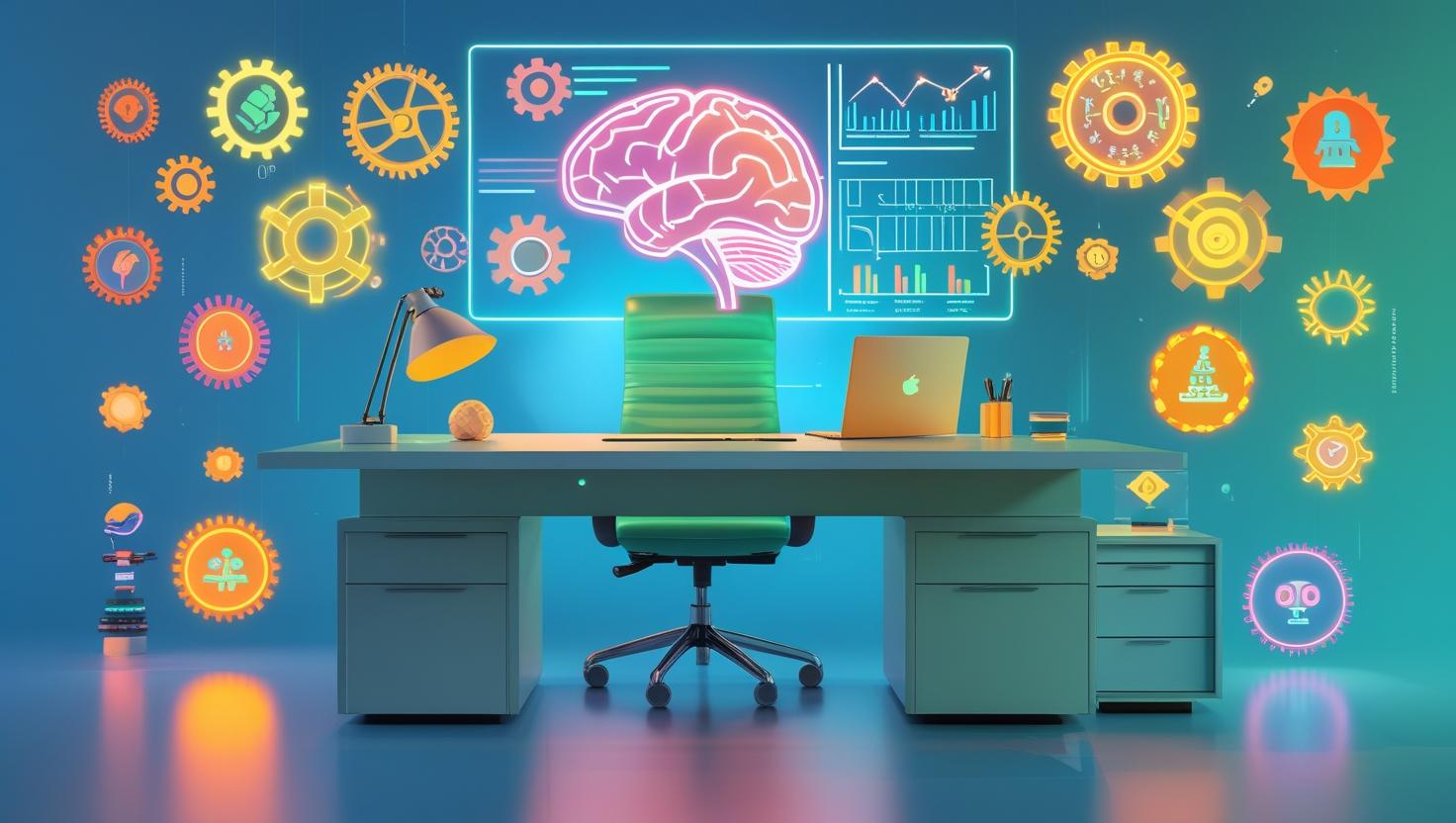
Artificial intelligence is changing the way people work. From automating repetitive activities to helping employees analyze information, communicate with customers, and make decisions, AI is becoming part of everyday workplace processes.
As businesses adopt more AI-powered technologies, employees also need to develop new skills. Knowing how to use an AI tool is only one part of the process. Employees also need analytical thinking, digital literacy, creativity, problem-solving abilities, and the judgment to determine when AI-generated information should be trusted or verified.
The combination of AI and human skills can help organizations create more efficient workflows while allowing employees to focus on work that requires creativity, collaboration, and decision-making.
What Is AI in the Workplace?
AI in the workplace refers to the use of artificial intelligence technologies to support employees, automate processes, analyze information, and improve business operations.
Organizations can use AI for a wide range of activities, including:
- Automating repetitive tasks
- Analyzing business data
- Supporting customer service
- Assisting with research
- Generating and organizing content
- Improving workflows
- Supporting employee productivity
- Identifying patterns and trends
AI can function as an assistant that helps employees complete certain tasks more efficiently. Human oversight remains important, especially when decisions involve business risks, customers, confidential information, or important organizational outcomes.
Why AI Skills Matter for Modern Employees
The workplace is becoming increasingly technology-driven. Employees who understand how to work with AI can adapt more easily as organizations introduce new digital tools and automated processes.
AI skills can also help employees reduce time spent on repetitive work. Instead of manually performing every routine activity, employees can use appropriate AI and automation tools to support parts of their workflow.
At the same time, human skills remain important. Employees need to understand AI results, identify potential errors, communicate effectively, and make decisions based on context.
The World Economic Forum’s Future of Jobs Report 2025 identifies AI and big data, technological literacy, analytical thinking, and creative thinking among important skills for the changing workplace.
Top Ways AI Can Enhance Workplace Skills
1. Build AI Literacy
AI literacy is an important starting point for employees who want to work effectively with artificial intelligence.
Employees should understand basic concepts such as generative AI, machine learning, automation, AI assistants, prompts, and AI limitations.
They should also know that AI-generated information can contain errors. Understanding this limitation encourages employees to verify important information before using it in professional work.
Basic AI knowledge can help employees identify suitable use cases without assuming that every workplace task should be automated.
2. Improve Digital Skills
AI does not operate separately from other workplace technologies. It often works alongside cloud platforms, productivity software, databases, automation systems, and collaboration tools.
Employees can improve their digital skills by learning how to work with:
- AI productivity tools
- Workflow automation platforms
- Data analysis applications
- Digital collaboration tools
- AI assistants
- Cloud-based systems
- Business software
Stronger digital skills make it easier for employees to understand where AI can fit into their existing workflows.
3. Strengthen Analytical Thinking
AI can process large amounts of information quickly, but employees still need to evaluate the results.
Analytical thinking helps employees:
- Compare different sources
- Identify patterns
- Question unexpected results
- Examine AI recommendations
- Recognize inconsistencies
- Make evidence-based decisions
For example, an AI system may identify a change in customer behavior. An employee still needs to investigate why that change occurred and determine whether the information is relevant to the business.
AI can support analysis, but human reasoning remains an important part of the process.
4. Learn Effective Prompting
Generative AI tools respond to the instructions they receive. Employees who understand how to provide clear instructions can often obtain more useful results.
A workplace prompt can include:
- A specific objective
- Relevant context
- Clear instructions
- Desired output format
- Important limitations
- Examples when necessary
Employees can use effective prompting for brainstorming, research, summarization, planning, documentation, and other suitable activities.
Learning prompting is therefore becoming part of practical AI literacy.
5. Develop Data Skills
Data plays an important role in modern AI systems. Employees who understand basic data concepts can make better use of AI-powered reports and recommendations.
Useful data skills include understanding:
- Business metrics
- Dashboards
- Reports
- Trends
- Data quality
- Spreadsheets
- Basic data visualization
AI can help process large amounts of information, but employees need sufficient data knowledge to determine whether the output is meaningful and accurate.
6. Improve Problem-Solving Abilities
AI can generate possible solutions, but employees must first understand the actual problem.
A practical AI-supported problem-solving process can involve identifying the issue, gathering information, generating possible approaches with AI, evaluating the suggestions, and testing the selected solution.
Employees can use AI to explore different possibilities while still applying their own knowledge and experience.
This creates a collaborative approach in which AI supports problem-solving rather than completely replacing human decision-making.
7. Use AI to Support Creativity
AI can quickly generate ideas, making it useful for brainstorming and creative exploration.
Employees can use AI to develop initial ideas for:
- Marketing campaigns
- Content topics
- Product concepts
- Presentations
- Customer experiences
- Business processes
- Workflow improvements
However, AI-generated ideas still need human evaluation. Employees can refine, combine, modify, or reject suggestions depending on the audience, business objectives, and available resources.
8. Strengthen Communication Skills
AI can help employees draft emails, reports, summaries, presentations, and other forms of workplace communication.
However, effective communication requires more than generating text.
Employees still need to understand:
- Who they are communicating with
- What information the audience needs
- How formal the message should be
- Whether the information is accurate
- How the message may be interpreted
AI can assist with drafting and editing, while employees remain responsible for the final communication.
9. Learn Responsible AI Practices
Using AI at work also requires an understanding of responsible technology practices.
Employees should learn how to handle:
- Confidential information
- Customer data
- Business-sensitive information
- AI-generated errors
- Potential bias
- Copyright considerations
- Company AI policies
Organizations should establish clear guidelines explaining which AI tools employees can use and what types of information should not be entered into those systems.
Responsible AI use helps businesses gain the benefits of automation while reducing avoidable risks.
10. Make Continuous Learning a Habit
AI technology continues to develop rapidly. New tools and capabilities can change the way employees perform their jobs.
For this reason, workplace learning should not stop after a single AI training session.
Employees can continue developing their skills through:
- Online courses
- Workplace training
- AI workshops
- Practical experimentation
- Peer learning
- Technology research
- Regular practice
Continuous learning helps employees remain adaptable as AI becomes more integrated into workplace processes.
AI Skills and Human Skills Must Work Together
AI adoption does not eliminate the importance of human capabilities.
Instead, modern workplaces can combine AI skills with abilities such as creativity, communication, critical thinking, empathy, collaboration, and leadership.
For example, AI can analyze customer feedback, but an employee may need empathy and communication skills to understand the customer’s concerns.
Similarly, AI can generate a business recommendation, while a manager may need to consider organizational priorities, customer expectations, risks, and available resources before making a final decision.
The strongest workplace workflows can therefore combine AI capabilities with human judgment.
How Businesses Can Help Employees Build AI Skills
Organizations can support employees by creating structured opportunities to learn and practice AI.
Businesses can begin by identifying important skill gaps across different departments. Training can then be designed around specific roles and responsibilities.
Organizations can also:
- Provide practical AI training
- Establish clear AI usage guidelines
- Encourage safe experimentation
- Provide approved AI tools
- Share successful workplace use cases
- Encourage collaboration between teams
- Track the results of training programs
- Promote continuous learning
Training should also be relevant to the employee’s actual responsibilities. A marketing employee may need AI skills related to content and analytics, while an operations employee may benefit more from workflow automation.
What Is the Future of AI in the Workplace?
AI is likely to become increasingly connected with everyday workplace systems and processes.
Employees may work with AI assistants, automated workflows, intelligent analytics systems, and other technologies as part of their normal responsibilities.
This does not mean that every task should be automated. Instead, businesses can identify repetitive or information-heavy activities where AI can provide useful support while keeping humans involved in tasks requiring judgment and accountability.
The future of workplace skills will therefore involve both technical adaptability and human capabilities.
Final Thoughts
AI in the workplace is changing how employees perform tasks, solve problems, analyze information, and learn new skills.
Developing AI literacy, digital skills, analytical thinking, prompting abilities, data knowledge, creativity, communication, problem-solving, and responsible AI practices can help employees adapt to technology-driven workplaces.
However, AI skills should complement rather than replace human capabilities. Creativity, critical thinking, communication, adaptability, and continuous learning remain important as technology continues to evolve.
By combining artificial intelligence with human expertise, businesses and employees can create smarter workflows and become better prepared for the future of work.
Frequently Asked Questions
1) How can AI enhance employee skills in the workplace?
AI can help employees improve productivity, analytical thinking, problem-solving, digital skills, data skills, and creativity by supporting everyday workplace tasks.
2) What AI skills should employees develop?
Employees should develop AI literacy, prompt writing, digital skills, data analysis, problem-solving, and responsible AI usage to work effectively with AI technologies.
3) Can AI replace human skills in the workplace?
AI can automate repetitive tasks, but human skills such as creativity, communication, critical thinking, collaboration, and decision-making remain important.
4) Why is continuous learning important when using AI at work?
Continuous learning helps employees keep up with changing AI technologies, learn new tools, improve their skills, and adapt to evolving workplace requirements.


