
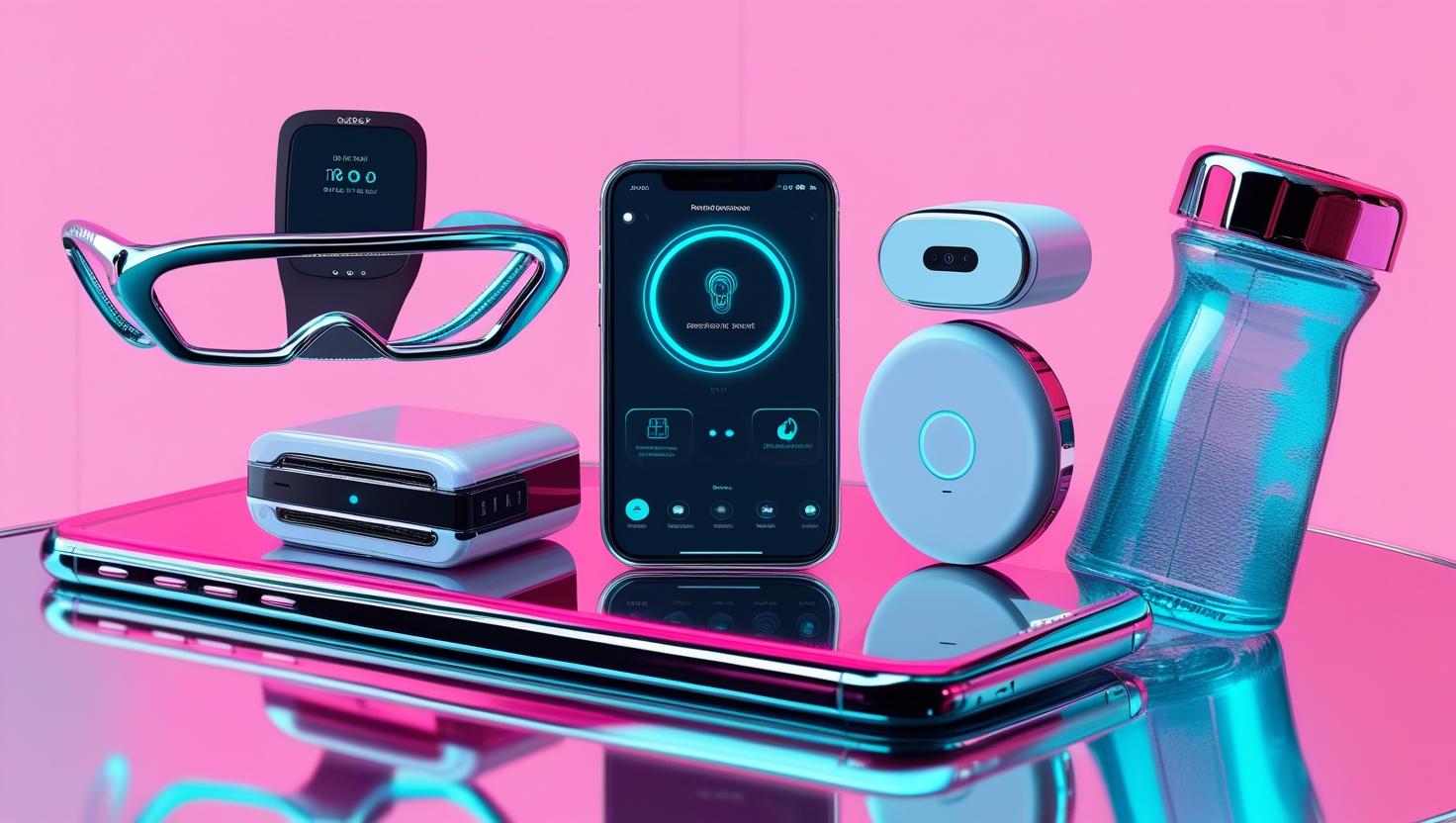
Technology is changing faster than ever, and gadgets are at the center of that transformation. From smarter phones and wearable devices to AI-powered home equipment and advanced productivity tools, modern gadgets are becoming more than convenient accessories. They are influencing how people work, communicate, travel, manage their homes, and interact with digital services.
The most successful gadgets today are not simply packed with features. They solve everyday problems, save time, improve convenience, and create experiences that people are willing to pay for. This combination of useful technology, thoughtful design, and intelligent software is helping certain gadgets gain a strong position in competitive markets.
So, what makes these products stand out? Let’s explore six cutting-edge gadgets that demonstrate how modern technology is shaping consumer demand and leading markets.
1. AI-Powered Smartphones
Smartphones have evolved from communication devices into personal digital assistants. Modern smartphones increasingly use artificial intelligence to improve photography, search, translation, writing, security, battery management, and personalization.
AI can automatically enhance photographs, summarize information, organize content, and provide contextual suggestions. On-device AI can also perform certain tasks without continuously sending information to a remote server, which can improve responsiveness and potentially offer additional privacy benefits.
Another important development is generative AI integration. Users can increasingly interact with their devices through natural language instead of navigating multiple menus or applications.
The market advantage of AI-powered smartphones comes from their ability to combine familiar hardware with increasingly intelligent software. Instead of requiring users to learn completely new devices, manufacturers can introduce new capabilities through software updates and upgraded processors.
Why They Lead
AI-powered smartphones remain highly competitive because they combine several technologies in one portable device. Their cameras, processors, connectivity, applications, and AI capabilities make them useful across work, entertainment, communication, and everyday tasks.
2. Smartwatches and Health-Focused Wearables
Wearable technology has become an important part of the modern consumer electronics market. Smartwatches can provide notifications, navigation, communication features, fitness tracking, activity monitoring, and other personalized functions directly from the wrist.
Modern wearable devices can collect information such as heart rate, movement, sleep patterns, and exercise activity. Depending on the device and region, some products also offer additional health-related monitoring capabilities.
The biggest strength of wearables is convenience. Users do not always need to take their phones out of their pockets to check information or perform simple actions.
For businesses, wearable technology also creates opportunities around personalization. Devices can use collected data to provide recommendations, reminders, and insights tailored to individual usage patterns.
Why They Lead
Wearables succeed because they combine portability, personalization, and continuous access to useful information. As sensors become smaller and software becomes smarter, these devices are becoming increasingly capable without becoming significantly harder to use.
3. AI-Powered Smart Home Hubs
Smart home technology is moving beyond individual connected appliances. Modern smart home hubs can bring lights, thermostats, security devices, speakers, sensors, and other equipment together within a connected environment.
AI is making these systems more useful by allowing devices to understand patterns and respond to contextual situations. For example, a smart home system may adjust lighting based on routines or provide alerts when unusual activity is detected.
Voice interaction is another important part of the experience. Instead of opening several applications, users can control compatible devices through natural-language commands.
The real market opportunity lies in integration. Consumers increasingly want their devices to work together rather than operate as isolated products.
Why They Lead
Smart home hubs simplify connected-device management. When several products can communicate through a common ecosystem, the overall experience becomes more convenient and valuable.
4. Advanced Wireless Earbuds
Wireless earbuds have developed considerably from their early focus on basic music playback. Today’s premium models can include active noise cancellation, environmental awareness, voice assistants, spatial audio, improved microphones, and intelligent sound adjustment.
One reason these devices are gaining attention is their versatility. People use them while commuting, exercising, working remotely, attending virtual meetings, listening to podcasts, and consuming entertainment.
Noise cancellation is particularly valuable in busy environments. It can help users concentrate on audio without constantly increasing the volume to overcome surrounding sounds.
Better microphone systems are also making wireless earbuds useful for professional communication. As remote and hybrid work continue to influence workplace habits, compact audio devices have become an important part of many people’s everyday technology setups.
Why They Lead
Their success comes from combining portability with multiple functions. A small device can now serve as an entertainment tool, communication accessory, productivity aid, and smart assistant interface.
5. Portable AI and Productivity Devices
A new generation of gadgets is focusing specifically on productivity. These include compact AI-enabled devices, intelligent digital assistants, portable computing accessories, and specialized tools designed to reduce repetitive tasks.
Instead of relying entirely on traditional application interfaces, these products can allow users to interact with technology through natural language, voice commands, or simplified workflows.
For example, an AI-enabled productivity device may help organize notes, summarize information, manage reminders, or assist with routine digital tasks. The exact capabilities vary considerably between products, but the broader trend is clear: technology is becoming more conversational.
This shift could change how people interact with digital systems. Rather than learning where a particular feature is located inside an application, users may increasingly describe what they want to accomplish.
Why They Lead
These devices appeal to consumers who value efficiency. When technology can reduce small repetitive tasks, users can spend more time on creative, strategic, or personal activities.
6. Next-Generation AR Glasses
Augmented reality glasses are another category attracting attention as hardware, displays, sensors, and computing systems continue to improve.
Unlike traditional screens, AR glasses can place digital information within the user’s physical environment. Depending on the technology, users may be able to view navigation information, notifications, interactive objects, or other digital content while remaining aware of their surroundings.
The potential applications extend beyond entertainment. Businesses could use AR for training, remote assistance, industrial workflows, education, design, and maintenance.
However, widespread adoption still depends on factors such as comfort, battery life, privacy, price, software support, and display quality.
Why They Lead
AR glasses represent a possible shift from screen-based computing toward more immersive and spatial experiences. As the technology matures, they could become an important interface between physical environments and digital information.
What Makes These Gadgets Market Leaders?
Having advanced technology does not automatically make a gadget successful. Market-leading products usually combine innovation with usability.
Several factors help determine whether a gadget can stand out.
1. Practical Problem Solving
Consumers generally want technology that makes something easier, faster, safer, or more enjoyable. Features become valuable when they solve a genuine problem.
A gadget with hundreds of functions may struggle if users rarely need them. Meanwhile, a simpler product can become successful when it solves one important problem extremely well.
2. Better User Experience
Modern consumers expect technology to be intuitive. Complicated setup processes, confusing interfaces, and unreliable connections can quickly discourage adoption.
Successful gadgets usually focus heavily on usability. Simple controls, quick setup, reliable performance, and seamless software integration can make a major difference.
3. AI Integration
Artificial intelligence is becoming a major differentiator across consumer technology.
AI can help devices understand user behavior, automate repetitive actions, personalize experiences, and process information more efficiently.
However, AI should provide meaningful value rather than exist simply as a marketing label. Consumers are becoming more interested in what AI actually helps them accomplish.
4. Ecosystem Compatibility
A gadget becomes more valuable when it works well with other devices and services.
For example, a smartwatch that communicates smoothly with a smartphone, earbuds, health platform, and other connected devices can create a stronger overall experience than a standalone product.
This ecosystem effect can also encourage customer loyalty.
5. Design and Portability
Consumers increasingly expect powerful technology without unnecessary bulk.
Manufacturers are therefore investing in smaller components, efficient processors, improved batteries, lightweight materials, and compact designs.
A gadget that looks good and feels comfortable can gain an advantage even when competing products offer similar technical specifications.
6. Privacy and Security
Connected gadgets collect and process significant amounts of information. As adoption grows, consumers are paying greater attention to how their data is handled.
Strong security, transparent privacy controls, software updates, and responsible data practices can influence purchasing decisions.
Companies that treat privacy as part of product design rather than an afterthought can build stronger long-term trust.
How Gadgets Are Changing Competition
The gadget market is no longer defined only by hardware specifications.
In many categories, competition now depends on the relationship between hardware, software, AI, cloud services, applications, and connected ecosystems.
A smartphone is no longer simply a device with a processor and camera. A smartwatch is not merely a digital watch. Smart earbuds can function as communication tools, and home devices can become part of larger automated environments.
This shift creates new opportunities for technology companies. Businesses that can combine strong hardware with useful software and reliable services have the potential to create much stronger customer experiences.
At the same time, competition is becoming more difficult. Consumers have access to more choices, while technology cycles are becoming shorter. Companies must continuously improve their products without sacrificing reliability or affordability.
The Future of Cutting-Edge Gadgets
The next stage of gadget development will likely focus on making technology more intelligent, connected, and natural to use.
AI will continue moving closer to the device itself. Sensors will become more capable, connectivity will improve, and software will become increasingly personalized.
We may also see greater convergence between categories. Smartphones, wearables, smart home systems, computers, vehicles, and AR devices could increasingly operate as parts of interconnected digital ecosystems.
Another important trend will be invisible computing. Instead of requiring users to constantly interact with screens, future technology may respond through voice, gestures, environmental awareness, and automated actions.
The most successful gadgets will therefore not necessarily be the ones with the longest feature lists. They will be the products that fit naturally into people’s lives.
Conclusion
Cutting-edge gadgets are leading markets because they combine technological innovation with practical everyday value. AI-powered smartphones, smartwatches, smart home hubs, wireless earbuds, AI productivity devices, and AR glasses each demonstrate a different way technology can improve how people interact with the digital world.
The strongest products are not successful simply because they are new. They succeed because they are useful, convenient, connected, and easy to integrate into daily routines.
As AI, sensors, wireless connectivity, and computing continue to advance, the gadget market will become even more competitive. Companies that understand real consumer needs and turn emerging technology into simple, reliable experiences will have the strongest opportunity to lead the next generation of digital products.
Frequently Asked Questions
1. What are cutting-edge gadgets?
Cutting-edge gadgets are modern devices that use advanced technologies such as AI, smart sensors, wireless connectivity, and automation.
2. Which gadgets are leading the market?
AI smartphones, smartwatches, wireless earbuds, smart home devices, AI productivity gadgets, and AR glasses are among the leading categories.
3. How does AI improve modern gadgets?
AI can make gadgets more personalized and efficient by helping with automation, recommendations, voice interaction, image processing, and data analysis.
4. Why are smart gadgets becoming popular?
Smart gadgets are becoming popular because they can save time, simplify everyday tasks, improve connectivity, and provide more convenient user experiences.


