

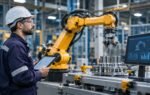
Industrial engineer monitoring a robotic arm in an automated manufacturing facility.

Why Human Expertise Still Matters in an Automated World

Automation has changed the way businesses operate. Tasks that once required hours of manual effort can now be completed using intelligent machines, connected systems, and advanced software. Manufacturing companies are using automated production lines, warehouses are adopting smart inventory systems, and businesses are relying on technology to manage everyday operations. These developments have made workplaces…

Read Full News
Artificial intelligence improving manufacturing reliability through predictive maintenance, quality inspection, and industrial automation.

Can Artificial Intelligence Make Manufacturing More Reliable?

Manufacturing reliability is not just about keeping machines running. It is about ensuring that every production process works as expected, products meet quality standards, and orders are completed without unnecessary delays. But maintaining this consistency is not always easy. A machine can develop a fault without warning, a small production error can affect an entire…

Read Full News
Factory workers using connected technology and digital devices to manage manufacturing operations

How Connected Worker Technology Is Changing Factory Operations

Factories have changed significantly over the years. Machines are faster, production systems are becoming smarter, and manufacturers are finding new ways to improve their daily operations. However, one important part of manufacturing sometimes receives less attention: the people working on the factory floor. Machine operators, maintenance technicians, quality inspectors, and production supervisors all play an…

Read Full News
Smart metering system monitoring energy consumption across factory machines and equipment

Smart Metering in Manufacturing: Understanding Where Factory Energy Is Used

In a manufacturing facility, energy is used almost everywhere. Production machines, conveyor belts, air compressors, cooling systems, lighting, and heating equipment all require power to keep daily operations running. However, many manufacturers know how much energy their entire facility consumes without knowing exactly which machines or departments use the most. This lack of detailed information…

Read Full News
AI-based defect classification system inspecting industrial components.

AI-Based Defect Classification: Making Quality Inspection More Accurate

Quality inspection is one of the most important stages in any manufacturing process. Every product must meet certain standards before it reaches customers. Even a small defect, such as a surface scratch, incorrect dimension, missing component, or damaged edge, can affect product performance and customer satisfaction. Traditional inspection methods often depend on manual checking or…

Read Full News
Industrial control system integration connecting factory machines, robots, sensors, and conveyors.

Industrial Control System Integration: Connecting Machines for Better Operations

Modern manufacturing facilities depend on different machines, automation equipment, sensors, and software systems to maintain smooth production. However, when these technologies operate independently, managing industrial operations can become challenging. Employees may struggle to monitor equipment, identify production delays, and access accurate information from different systems. This is where Industrial Control System Integration plays an important…

Read Full News
Automated changeover systems adjusting machinery on an industrial production line

Automated Changeover Systems: Reducing Production Line Setup Time

In manufacturing, time is one of the most valuable resources. Every minute a production line remains idle can affect output, delivery schedules, and overall productivity. One common reason for these delays is the time required to switch from producing one product to another. Workers may need to adjust machine settings, replace tools, reposition equipment, or…

Read Full News
Smart lubrication systems automatically lubricating industrial machinery components.

Smart Lubrication Systems: Automating Machinery Lubrication for Better Performance

Industrial machines work hard every day, and keeping them in good condition is essential for smooth production. From conveyor belts and robotic arms to heavy manufacturing equipment, moving parts experience friction whenever they operate. Without proper lubrication, this friction can lead to overheating, excessive wear, unexpected breakdowns, and expensive maintenance work. Traditional lubrication methods often…

Read Full News
Private 5G networks connecting industrial robots and smart factory equipment

Private 5G Networks in Smart Factories: Enabling Reliable Industrial Connectivity

Modern factories are becoming smarter with the help of industrial automation, connected machines, robotics, and real-time data monitoring. These technologies help manufacturers improve production efficiency, reduce operational delays, and make better decisions. However, they also require a reliable communication network that can connect different devices across the factory floor. Traditional wired networks and Wi-Fi remain…

Read Full News
Machine cycle time optimization to identify production bottlenecks

Machine Cycle Time Optimization: Finding Hidden Production Bottlenecks

In manufacturing, even a few seconds of delay can make a noticeable difference when a machine repeats the same operation hundreds or thousands of times a day. A production line may appear to run smoothly, yet small interruptions, unnecessary movements, or inconsistent processing times can quietly reduce its overall output. This is where machine cycle…

Read Full News